

In 2026, the rise of stablecoin payments has transformed contractor compensation, with USDC emerging as a preferred choice for its blockchain efficiency and low fees. Businesses managing crypto contractor payments US face heightened scrutiny over USDC payroll tax withholding, especially as global teams demand instant, borderless payouts. Yet, IRS guidelines clarify that independent contractors bear their own tax burdens, shifting focus from mandatory withholding to precise reporting and valuation. Platforms like USDCPayrollPro. com lead by automating these processes, minimizing errors in a volatile crypto landscape.
Contractor payments in USDC trigger ordinary income recognition at fair market value on receipt, per IRS rules. As of February 15,2026, no new regulations mandate employer withholding for contractors paid in USDC. Instead, self-employed individuals handle income and self-employment taxes. Businesses must issue Form 1099-NEC for payments exceeding $2,000 annually, a threshold updated this year. Tools from Riseworks and Toku automate KYC, AML, and documentation, but true programmable payroll USDC integrates seamless tax tracking on-chain.
Navigating 1099 Reporting in the Blockchain Era
Accurate valuation poses the biggest hurdle. USDC, pegged near $1 traditionally, now sees variants like Multichain Bridged USDC on Fantom trading at $0.0190, underscoring chain-specific risks. Businesses must capture fair market value at payout, often converting to fiat equivalents for reporting. Manual tracking invites audits; automated systems from Franklin or Bitwage provide audit trails, yet lack full programmability. USDCPayrollPro. com excels here, embedding tax calculations into smart contracts for blockchain payroll compliance 2026. Freelancers appreciate USDC tax deductions freelancers handled upfront, reducing year-end surprises.
Automation Bridges Compliance Gaps for Global Contractors
Consider a U. S. firm paying developers in Europe or Asia via USDC. Traditional wires incur delays and fees; blockchain delivers instantly. Remote and Deel enable USDC via Coinbase, but tax automation lags. JD Supra notes crypto payments demand withholding contributions or precise FMV logs. Programmable platforms fund in USD or USDC, execute recurring payouts, and generate forms. At USDCPayrollPro. com, conservative risk models ensure stability, drawing from my 11 years in management. We prioritize clean trails over flashy features, safeguarding against regulatory shifts.
Year-end reporting amplifies stakes. Rise's EOR guide stresses automatic fiat withholding covers, but for pure contractors, it's 1099 precision. Toku's zero-fee onboarding shines for 100 and countries, yet programmable withholding sets USDCPayrollPro apart. Businesses scale confidently, automating schedules while contractors receive stable USDC, valued precisely at $0.0190 for bridged assets today.
Multichain Bridged USDC (Fantom) Price Prediction 2027-2032
Forecasts based on current $0.0190 price (Feb 2026), USDC payroll adoption trends, Fantom network growth, and crypto market cycles
| Year | Minimum Price | Average Price | Maximum Price | YoY % Change (Avg from Prior) |
|---|---|---|---|---|
| 2027 | $0.0150 | $0.0250 | $0.0400 | +31.6% |
| 2028 | $0.0200 | $0.0350 | $0.0600 | +40.0% |
| 2029 | $0.0250 | $0.0500 | $0.0900 | +42.9% |
| 2030 | $0.0350 | $0.0750 | $0.1400 | +50.0% |
| 2031 | $0.0450 | $0.1100 | $0.2000 | +46.7% |
| 2032 | $0.0600 | $0.1500 | $0.2800 | +36.4% |
Price Prediction Summary
Bullish long-term outlook with average prices projected to grow over 7x from current levels by 2032, fueled by USDC integration in global payroll solutions, regulatory stability for crypto payments, and Fantom's scalability. Bearish mins account for market downturns and depegging risks, while maxes reflect adoption-driven bull runs.
Key Factors Affecting Multichain Bridged USDC (Fantom) Price
- Increased USDC adoption in automated payroll and contractor tax compliance platforms (e.g., Toku, Riseworks)
- Fantom network upgrades enhancing bridged asset efficiency and transaction speed
- Stable regulatory environment with 1099-NEC requirements for crypto payments over $2,000
- Broader crypto market cycles, including potential 2028-2029 bull market
- Competition from native USDC and other stablecoins on alternative L1/L2 chains
- Risks from bridging exploits, depegging events, and macroeconomic pressures on stablecoin demand
Disclaimer: Cryptocurrency price predictions are speculative and based on current market analysis. Actual prices may vary significantly due to market volatility, regulatory changes, and other factors. Always do your own research before making investment decisions.
Why Programmable USDC Payroll Minimizes Risk Exposure
Risk-managed payroll maximizes rewards, as I always say. Manual USDC transfers risk misvaluation; a $0.0190 bridged token demands vigilant monitoring. Competitors like Bitwage tout transparency, but lack tax-native code. USDCPayrollPro. com's hybrid approach blends blockchain speed with compliance layers, auto-filing 1099s and withholding opt-ins for voluntary coverage. In 2026's borderless economy, this cautious strategy prevents penalties, empowering crypto-forward enterprises to focus on growth, not audits.
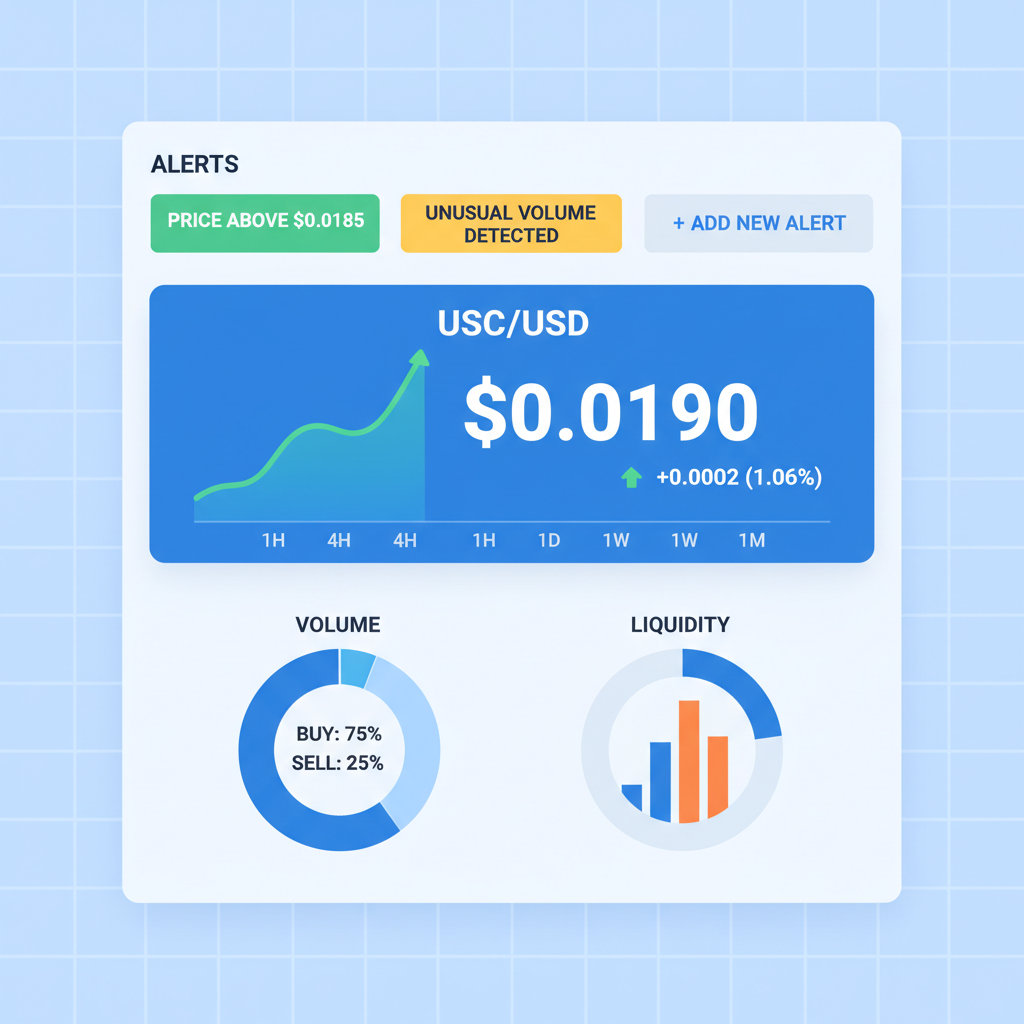
Volatility in bridged assets like Multichain USDC on Fantom, holding steady at $0.0190 with a modest 24-hour gain of 0.0242%, reminds us that even stablecoins demand rigorous oversight. Platforms such as Remote expand USDC to 70 countries, yet their focus remains payouts over embedded compliance. Toku's contractor tools cut fees to zero across 100 and nations, a boon for crypto contractor payments US, but programmable logic elevates USDCPayrollPro. com by scripting tax events directly on-chain.
Implementing Programmable Safeguards Step by Step
From my vantage in risk management, the path to flawless execution lies in structured automation. Businesses often stumble on integration; a deliberate rollout averts this. USDCPayrollPro. com streamlines setup, funding wallets in USD or USDC for instant global disbursement while logging FMV at $0.0190 for today's bridged variant.
Automate USDC Payroll Tax Compliance for Contractors: 5 Key Steps
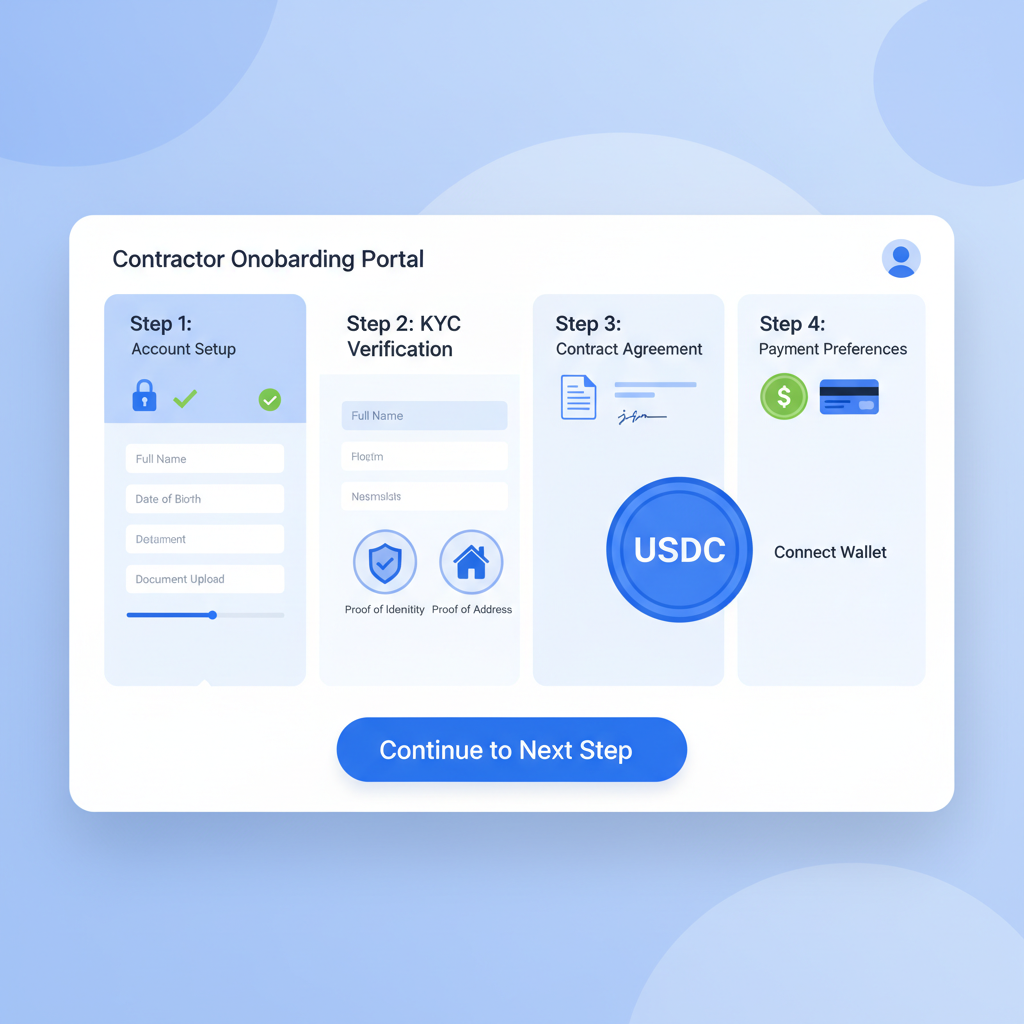
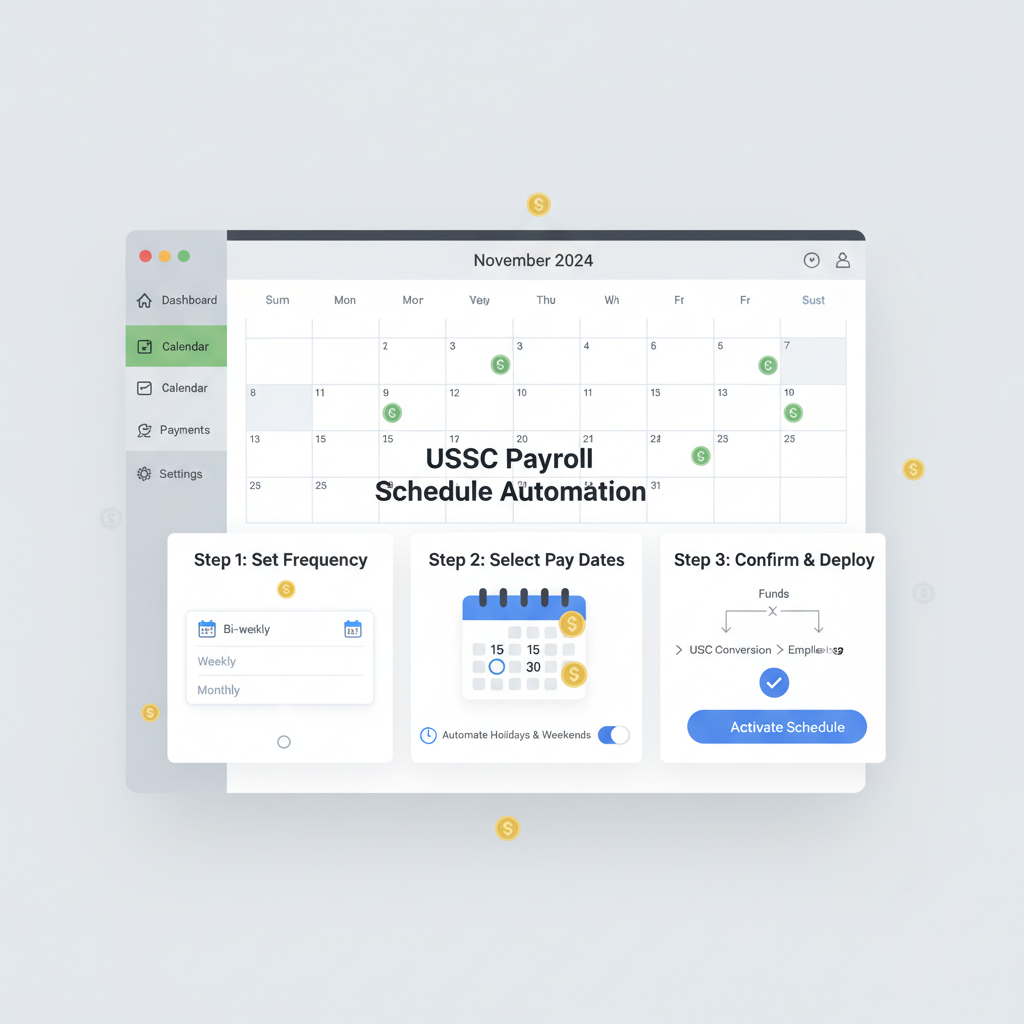
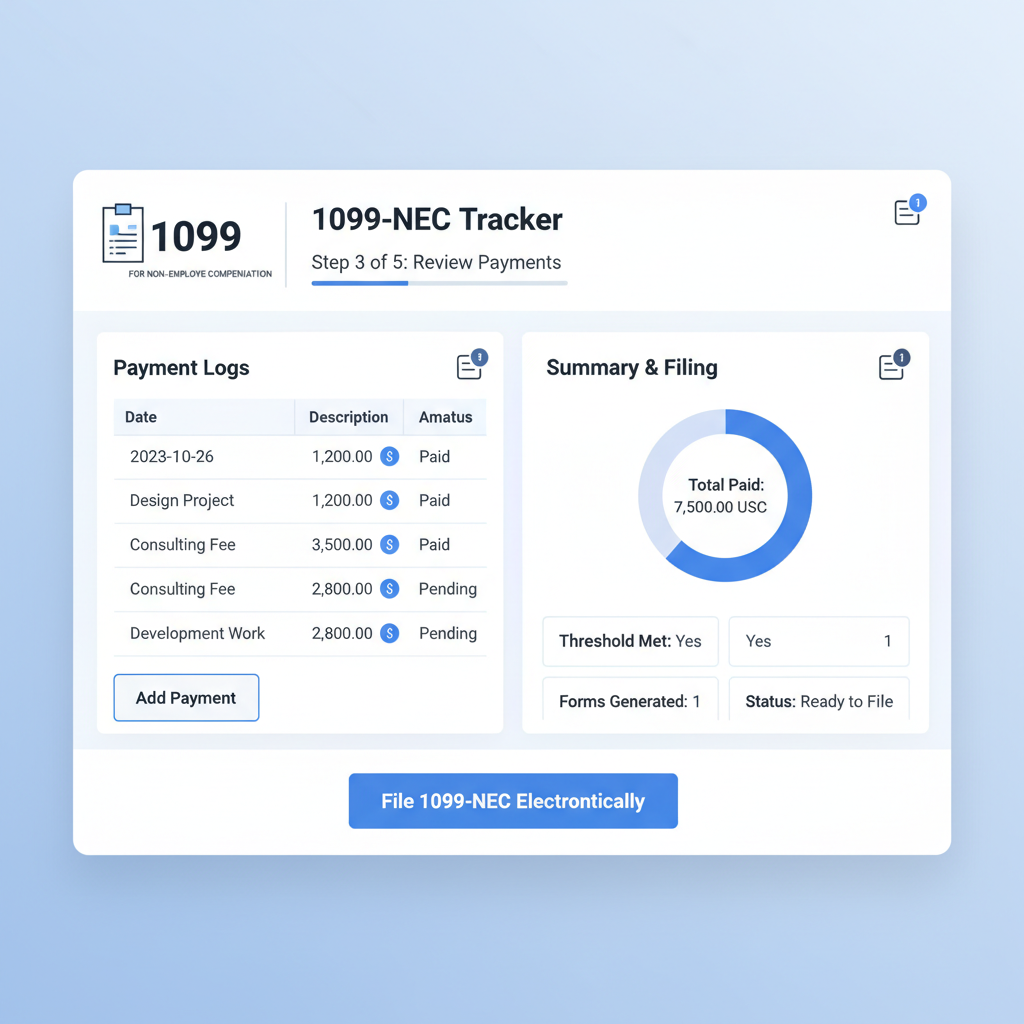
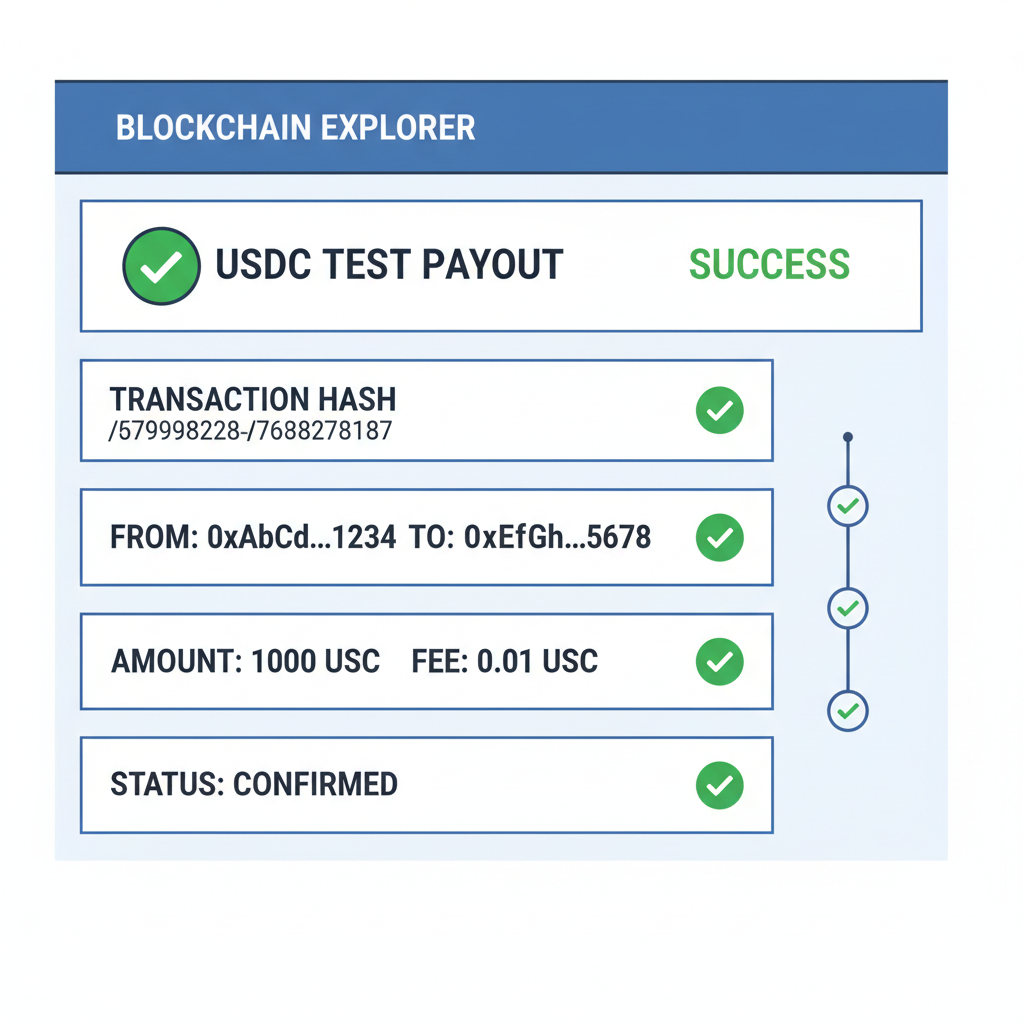
Once live, recurring payouts fire on schedule, deducting voluntary withholdings if opted. This contrasts Deel's Coinbase integration, which handles USDC but delegates taxes downstream. Our platform's smart contracts enforce USDC tax deductions freelancers prefer, converting volatility into predictable reports.
Compliance Checklist for 2026 Blockchain Payroll
Tick these off, and audits become formalities. Riseworks excels in EOR for employees, auto-withholding fiat, but contractors thrive under lighter regimes. Franklin's Avalanche tools compute taxes automatically, yet off-chain limits scalability. USDCPayrollPro. com fuses these strengths, prioritizing on-chain verifiability for enterprises eyeing hypergrowth.
Freelancers, too, gain from upfront clarity. Self-employment taxes hover at 15.3%, but platforms like ours flag deductions early, from home offices to software tools. In a market where Multichain Bridged USDC dips to $0.0185 intraday before climbing back, precise timing protects all parties.
Frequently Asked Questions on USDC Tax Withholding
Answering these dispels myths. No, IRS does not require withholding for USDC contractors, echoing fiat norms. But voluntary setups build loyalty; contractors paid promptly at fair value stick around. Bitwage's blockchain simplicity cuts cross-border friction, yet lacks our tax-native depth.
Scaling demands foresight. As crypto payroll matures, 2026's blockchain payroll compliance 2026 hinges on tools valuing payments accurately, issuing forms seamlessly. USDCPayrollPro. com, with its conservative hybrid model, positions businesses ahead of curves, not chasing them. Global teams paid in stable USDC at $0.0190 today access funds instantly, deducting what matters, reporting without sweat. This is payroll evolved: secure, compliant, unstoppable.




No comments yet. Be the first to share your thoughts!