
Get USDC payroll 2026 right
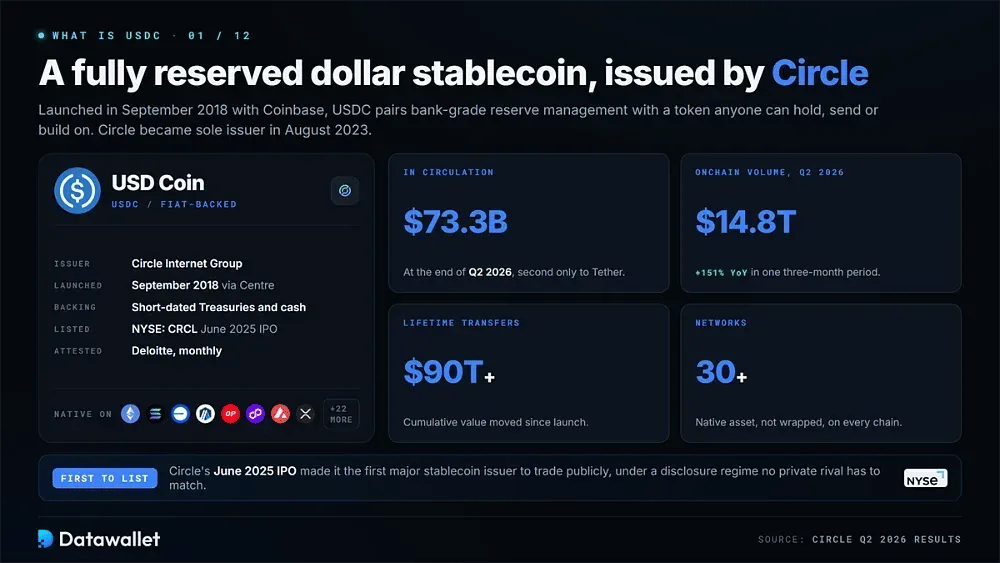
Before automating payroll, you must ensure your legal and financial infrastructure can handle stablecoin transactions. USDC payroll is no longer a niche experiment; it is a standard compensation method for global teams, but it carries specific compliance and operational risks that manual processes do not.
Verify regulatory classification in each jurisdiction
Stablecoin regulations vary significantly by country. In the US, USDC is issued by Circle, a registered money transmitter, which provides a layer of regulatory clarity that other stablecoins may lack. However, tax reporting for crypto assets remains complex. You must confirm that paying employees in USDC does not violate local labor laws or trigger unexpected taxable events for your business or the employee. Consult a legal expert familiar with crypto compensation in the employee’s specific country.
Confirm your banking partner’s crypto policies
Not all banks support direct fiat on-ramps and off-ramps for corporate crypto accounts. Before launching, verify that your corporate bank allows incoming and outgoing transfers from regulated crypto exchanges or payroll providers. If your bank blocks crypto-related transactions, your payroll will fail. Some institutions require pre-approval for high-volume stablecoin transactions to comply with anti-money laundering (AML) checks.
Choose a compliant payroll provider
Building an in-house system for USDC payroll is risky due to security and compliance burdens. Use a specialized payroll provider that handles the conversion, tax withholding, and distribution. These providers act as the bridge between your corporate bank and the blockchain, ensuring that every payment is recorded for audit purposes. Look for providers that are SOC 2 compliant and offer clear transaction histories for tax filing.
Prepare employee onboarding materials
Your employees need clear instructions on how to receive and manage USDC. Provide a simple guide on setting up a non-custodial wallet or using a custodial solution if your company offers one. Explain that while USDC is pegged to the US dollar, it is still a cryptocurrency. Include emergency contacts for support in case of transaction delays or wallet issues. Transparency reduces anxiety and ensures smoother adoption.
Work through the steps
Automated USDC payroll moves money faster than traditional banking rails, but it requires precise setup to avoid compliance errors. Follow this sequence to deploy your first stablecoin payroll cycle.

Choose a platform that supports USDC and integrates with your existing HRIS. Look for providers that handle KYC/AML checks automatically and support multi-chain settlements (e.g., Ethereum, Polygon, Solana) to minimize gas fees. Verify that the provider offers tax reporting tools compliant with IRS Form 1099-NEC or local equivalents.
Onboard employees by collecting their wallet addresses and ensuring they understand how to receive USDC. Use a provider that allows employees to link their own wallets or generate secure custodial wallets within the platform. Obtain explicit digital consent for crypto payments, as some jurisdictions require written authorization for non-fiat compensation.
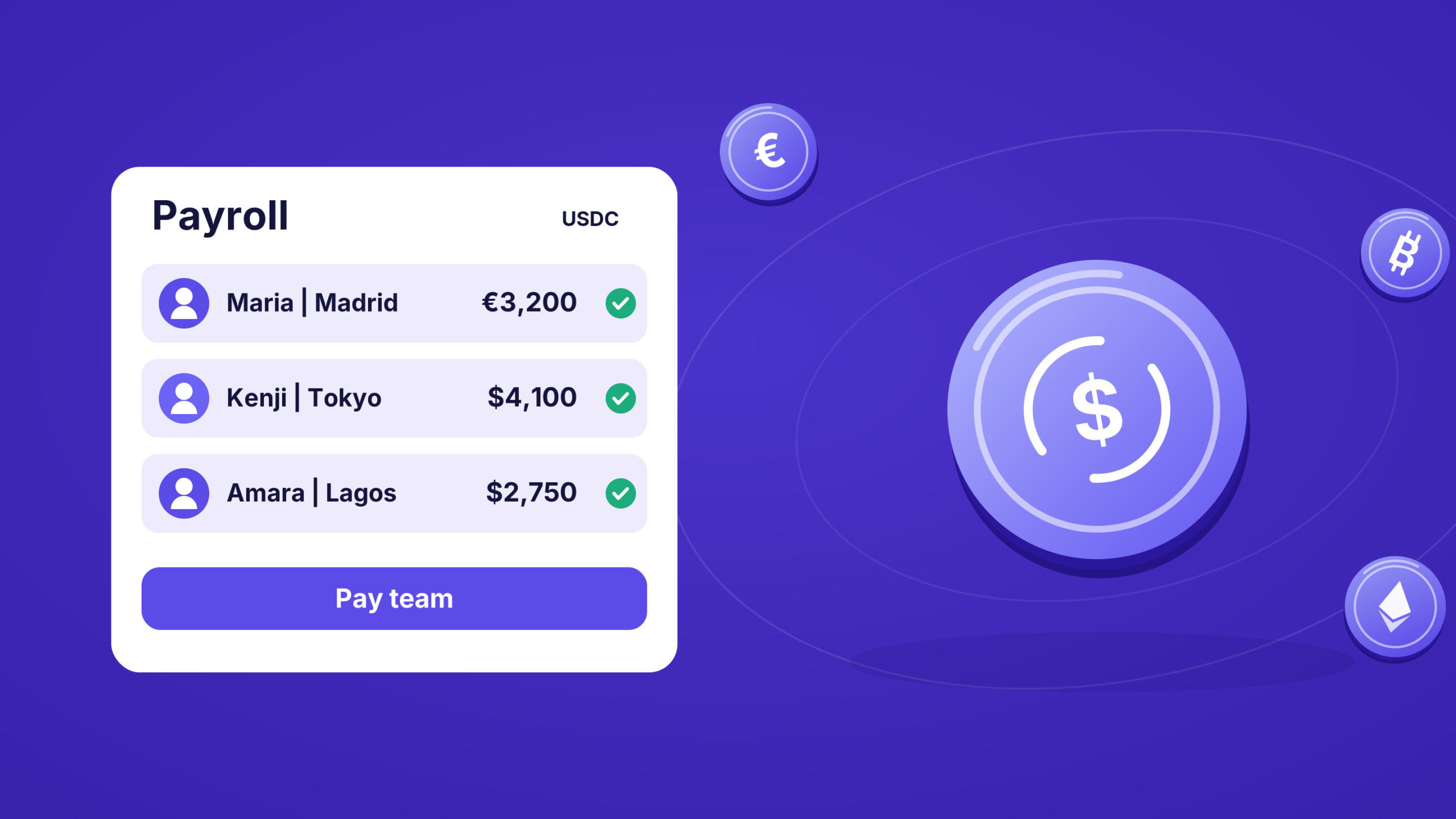
Define your payroll frequency (weekly, bi-weekly, monthly) and set up automated triggers. Configure exchange rate locks if you fund payroll in fiat (USD) but pay out in USDC, ensuring employees receive the exact agreed-upon amount regardless of market volatility. Test the flow with a small batch of employees before full deployment.
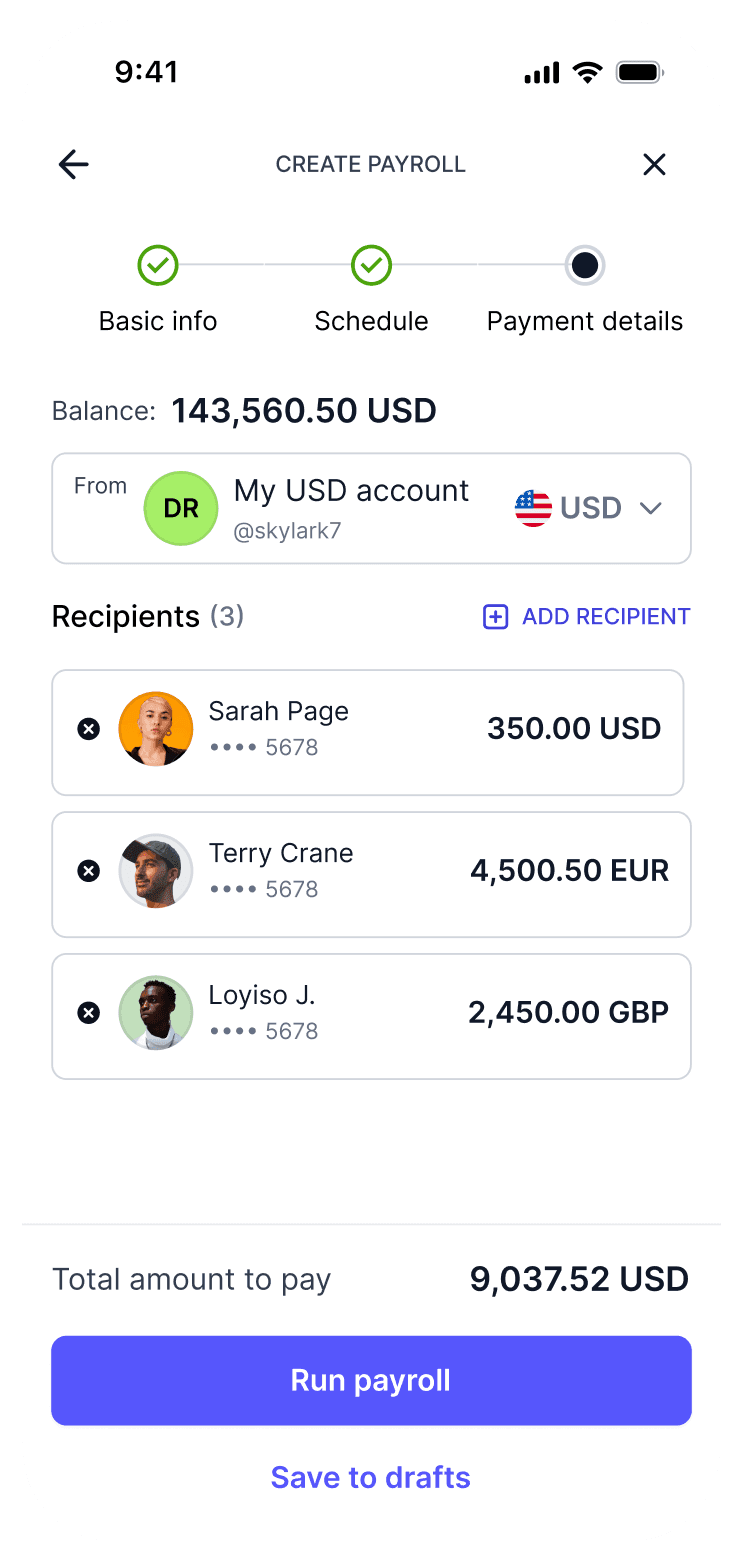
Run a live payroll cycle. Monitor the blockchain explorer to confirm transactions are confirmed on the chosen network. Verify that employee wallets received the correct USDC amount and that your company’s treasury account has been debited appropriately. Keep screenshots of transaction hashes for your audit trail.
After the cycle completes, reconcile the blockchain data with your internal accounting records. Generate tax reports from the provider’s dashboard to ensure accurate filing. Address any failed transactions or disputed amounts immediately to maintain employee trust and regulatory compliance.
-
Provider supports USDC on low-fee networks
-
Employee wallet addresses verified
-
Tax withholding rules configured
-
Test transaction completed successfully
-
Consent forms signed and stored
Fix common mistakes in automated USDC payroll
Even with automated tools, small configuration errors can trigger compliance flags or payroll delays. The following pitfalls are the most frequent causes of friction when running automated USDC payroll.
Ignoring local tax withholding rules
Stablecoins do not automatically calculate federal, state, or local income tax withholdings. If your payroll software treats USDC as a simple transfer rather than a wages payment, you risk under-withholding. This creates a liability gap where the employee owes taxes at filing time, but you have already distributed the full amount. Always ensure your payroll provider integrates with a tax calculation engine that understands crypto-specific reporting requirements in each jurisdiction.
Overlooking gas fee volatility
Many employers assume the transaction fee is negligible and fixed. On congested networks like Ethereum mainnet, gas fees can spike unpredictably, sometimes exceeding the value of small salary payments. This erodes the net pay for employees and complicates accounting. To avoid this, configure your payroll system to use Layer 2 networks (such as Arbitrum, Optimism, or Base) or select a provider that batches transactions to share gas costs across multiple employees.
Failing to reconcile on-chain data with HR records
Automated payroll does not automatically sync with your human resources information system (HRIS). If an employee leaves the company mid-cycle, the automated script may still attempt to send USDC. You must implement a "kill switch" or real-time sync between your HRIS and payroll provider to halt transactions for terminated or inactive employees. Without this manual or automated checkpoint, you risk sending funds to former employees, which is difficult to reverse on a blockchain.
Misclassifying USDC as a non-cash asset
The IRS treats cryptocurrency as property, not currency. When you pay an employee in USDC, the transaction is a taxable event for both parties at the fair market value on the date of payment. If you do not record the USD value of USDC at the exact moment of transfer, your company’s tax basis calculations will be incorrect. Use a payroll provider that automatically generates Form 1099-NEC or W-2 equivalents with accurate USD valuations for every transaction.
Usdc payroll 2026: what to check next
Stablecoin payroll tools are maturing fast, but practical questions remain about stability, conversion, and value. Here are the most common queries about using USDC for payroll and payments.
How much is $100 in USDC?
$100 USD converts to approximately 100 USDC. USDC is a stablecoin designed to maintain a 1:1 peg with the US dollar, meaning the exchange rate is typically one-to-one minus minimal network or platform fees.
Is USDC always $1 dollar?
USDC is engineered to stay at $1.00, but it can briefly fluctuate during periods of extreme market stress or liquidity issues. Historically, it has maintained its peg better than many competitors, but it is not a federally insured bank deposit.
Can I convert my USDC to cash?
Yes. You can convert USDC back to fiat currency through supported payroll providers like Deel or Eco, or by sending it to a crypto exchange to sell for USD. Some platforms allow direct withdrawal to linked bank accounts.
Is USDC a good crypto to buy?
USDC is not typically "bought" for investment growth since it lacks appreciation potential. It is used as a stable store of value or a medium of exchange. For payroll, its utility lies in speed and transparency, not speculative returns.
No comments yet. Be the first to share your thoughts!