
Why USDC payroll needs compliance checks
USDC Payroll works best as a clear sequence: define the constraint, compare the realistic options, test the tradeoff, and choose the path with the fewest hidden costs. That order keeps the advice usable instead of decorative. After each step, pause long enough to check whether the recommendation still fits the reader's actual situation. If it depends on perfect timing, unusual access, or a best-case budget, include a simpler fallback.
The simplest way to use this section is to keep the setup small, verify each change, and record the stable configuration before adding optional accessories.
Compare USDC vs USDT for employee payments
Choosing between USDC and USDT for payroll requires evaluating regulatory standing, network availability, and employee acceptance. USDC is the compliance-first choice for institutional payroll due to its regulated issuance and transparent reserves. USDT offers deeper liquidity but carries higher regulatory uncertainty.
Regulatory standing
USDC is issued by Circle, a New York-chartered money services business, and is fully backed by cash and short-term U.S. Treasuries. This structure aligns with traditional payroll compliance requirements. USDT is issued by Tether Limited, which has faced regulatory scrutiny and settlement agreements regarding reserve transparency. For payroll, USDC reduces legal risk.
Network availability
Both stablecoins operate on multiple blockchains, including Ethereum, Solana, and Tron. However, USDC has broader integration with enterprise payroll platforms and fiat on-ramps. USDT is more widely accepted in decentralized finance (DeFi) ecosystems. For employee payments, USDC offers more reliable fiat settlement pathways.
Employee acceptance
USDC is supported by major financial institutions and payroll providers, making it easier for employees to convert to fiat. USDT is more common in crypto-native communities but may be less familiar to traditional employees. For broad adoption, USDC is the safer choice.
| Feature | USDC | USDT |
|---|---|---|
| Issuer | Circle (NY-regulated) | Tether Limited |
| Reserves | Cash + U.S. Treasuries | Mixed (including commercial paper) |
| Regulatory Risk | Low | Medium-High |
| Payroll Platform Support | High | Medium |
| Employee Fiat Conversion | Easy via major banks | Variable |
Set up USDC payroll automation
Deploying USDC payroll requires a compliance-first architecture. Unlike traditional ACH transfers, stablecoin settlements are irreversible and operate across multiple blockchain networks. A single configuration error can result in lost funds or regulatory non-compliance. This guide outlines the mandatory sequence for establishing a secure, auditable USDC payroll infrastructure.
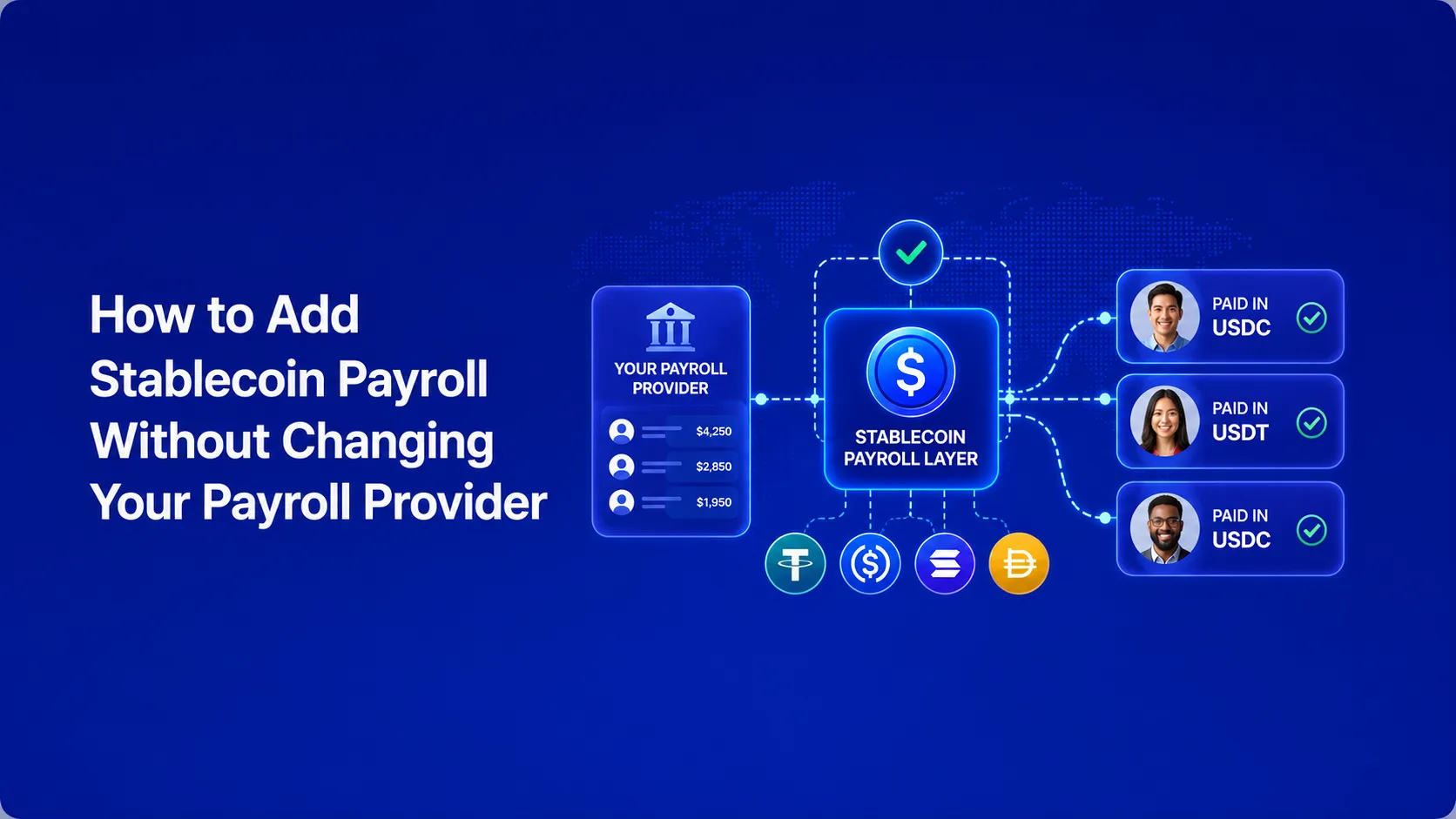
Choose a payroll vendor with explicit stablecoin support and regulatory licensing. Providers like Rise offer integrated compliance layers that handle the complex routing between fiat on-ramps and USDC settlements. Avoid generic wallet interfaces; they lack the tax reporting and audit trails required for employer-employee relationships. Verify that the provider supports your target blockchain network (e.g., Base, Ethereum, Polygon) to minimize gas costs.

Before funding any payroll batch, complete Know Your Customer (KYC) and Anti-Money Laundering (AML) checks for every recipient. The provider’s platform should enforce identity verification at the point of wallet registration. This step is non-negotiable for regulatory adherence. Ensure each employee’s wallet address is permanently linked to their verified identity within the system to prevent fraud and satisfy reporting requirements.
Stablecoins do not automatically calculate or remit taxes. You must manually configure deduction rules within the payroll software. Set up precise percentages for federal, state, and local taxes based on employee W-4 forms. Integrate with your existing accounting software to ensure that the USDC outflow matches your fiat liability. Failure to accurately deduct taxes shifts the compliance burden to the employer and exposes the company to severe penalties.
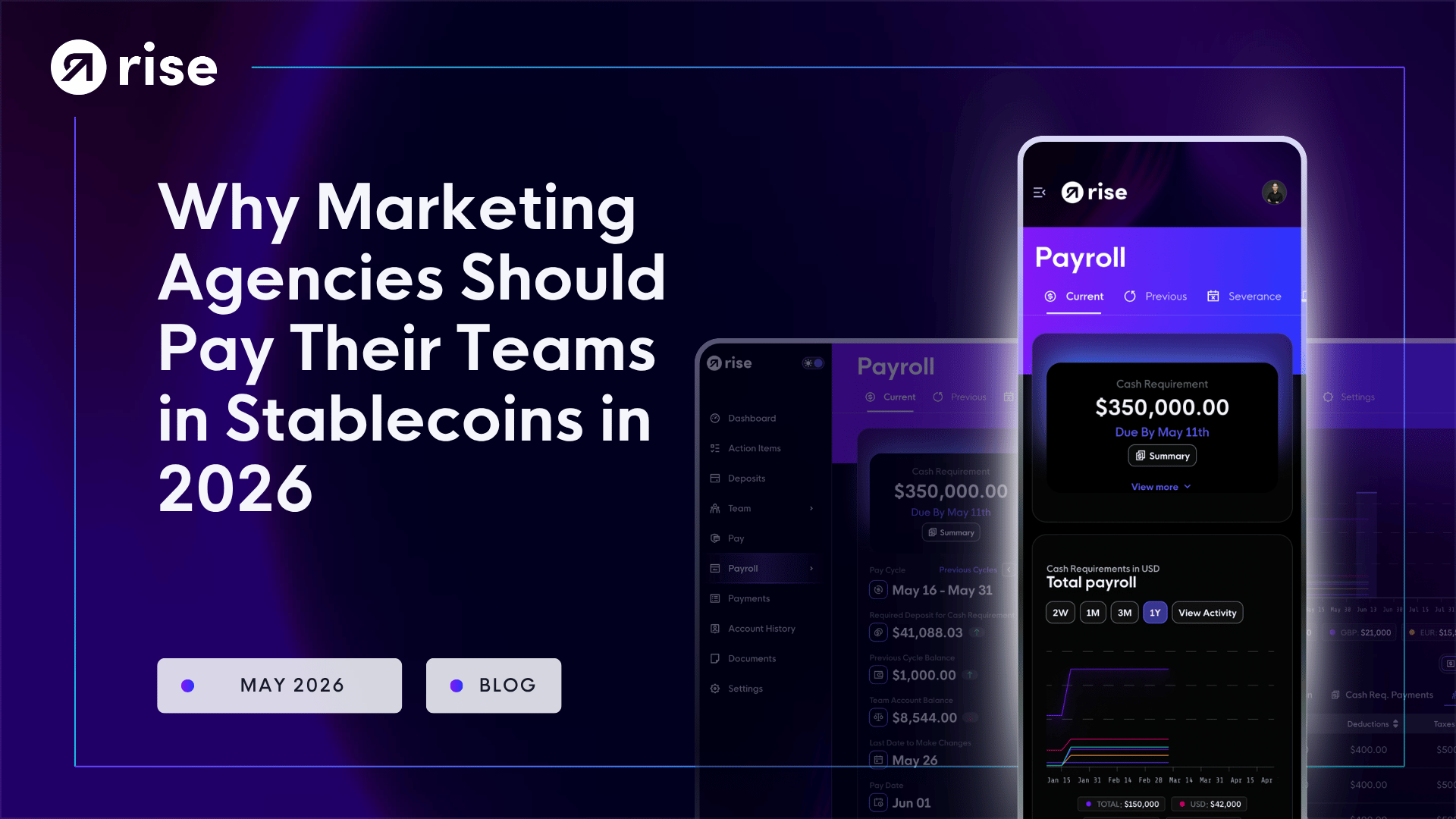
Never deploy a full payroll run without a prior test transaction. Send a minimal amount (e.g., $10 USDC) to a single verified employee wallet. Confirm that the transaction appears on the blockchain explorer and that the employee receives the funds. This step validates that your gas fee settings, network selection, and provider routing are functioning correctly. Once confirmed, proceed with the full batch.
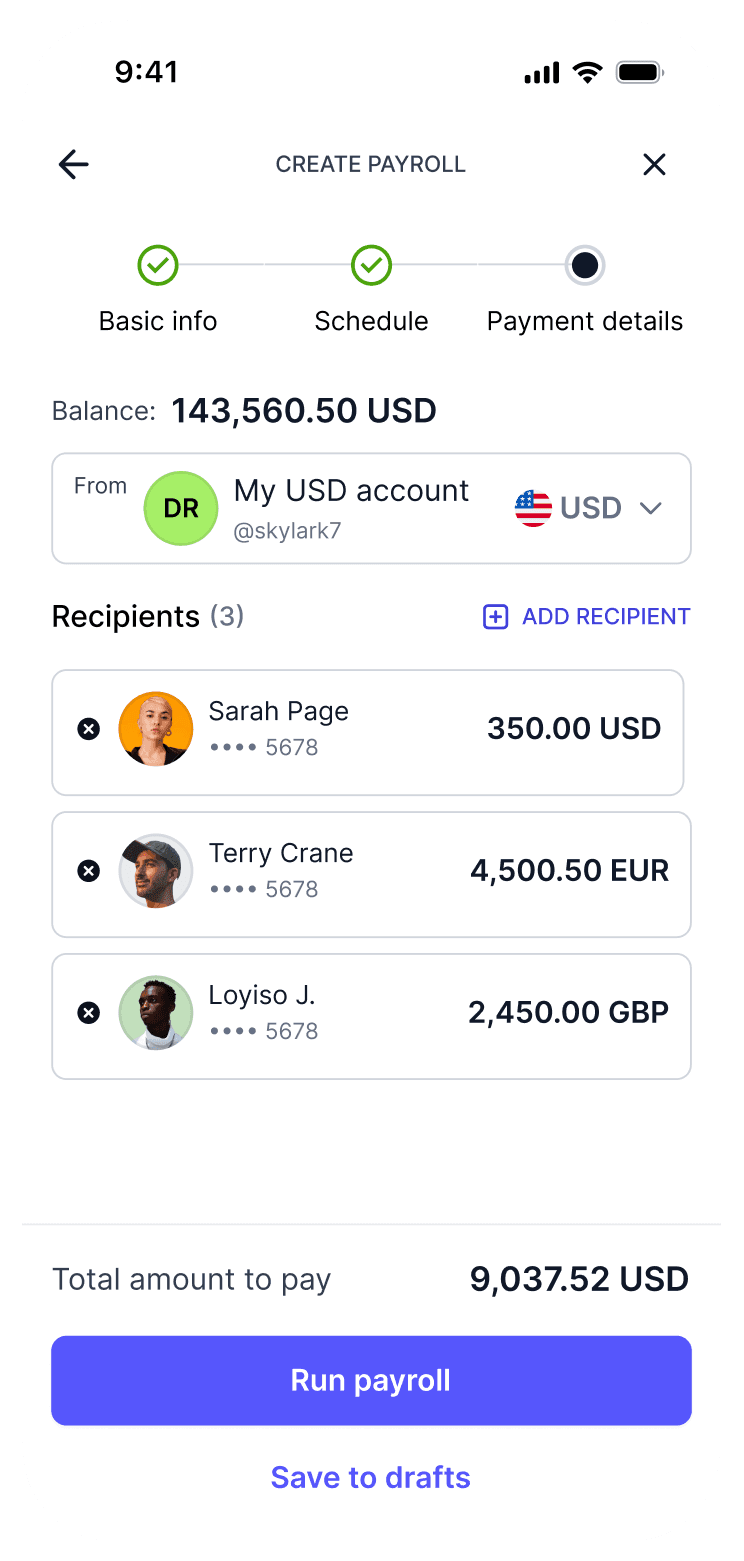
Immediately after the batch settles, reconcile the blockchain transaction hashes with your internal payroll ledger. Download the provider’s compliance report, which includes transaction IDs, timestamps, and recipient addresses. Store these records securely for audit purposes. Unlike traditional banking, crypto transactions are public; your internal records must provide the private context required by tax authorities and auditors.
Tax withholding and reporting requirements
Paying employees in USDC does not change how the IRS treats compensation. The agency views cryptocurrency as property, not currency. This classification means that every payroll cycle triggers a taxable event for the employee and a corresponding deduction obligation for the employer.
Calculate fair market value at payment
You must convert the USDC amount to its U.S. dollar equivalent at the exact moment of transfer. Use a reliable, real-time exchange rate from a major exchange like Coinbase or Kraken. Record this USD value in your payroll ledger. This figure determines the employee’s taxable income and the employer’s withholding responsibilities.
Withhold standard payroll taxes
Apply federal income tax, Social Security, and Medicare withholdings based on the USD value calculated above. These deductions must match what would have been withheld if the employee were paid in fiat. Failure to withhold correctly creates a tax liability for the employer. Use your existing payroll software to track the USD equivalent alongside the USDC transaction hash.
Issue correct tax forms
At year-end, report USDC payments on standard forms. Issue W-2s for employees and 1099-NEC for contractors. The amount reported must be the total USD value of all USDC payments made during the tax year. Include the transaction details in your internal records to support the reported values during an audit.
Common USDC payroll mistakes to avoid
Even with compliant infrastructure, execution errors can trigger tax liabilities or frozen funds. The following errors are the most frequent causes of payroll failure when moving to stablecoins.
Selecting the wrong network
USDC exists on multiple blockchains, including Ethereum, Solana, and Base. Sending payroll on a network your payroll provider does not support results in lost funds. Always verify the supported chain in your provider’s documentation before initiating a batch. Do not assume that “USDC” is a universal standard; the network layer determines settlement speed and gas costs.
Ignoring exchange rate volatility
Stablecoins are pegged to the US dollar, but the peg is not always exact, and fiat conversion happens later. If you do not lock the exchange rate at the moment of payment, the employee may receive less than their contracted wage due to slippage. Use a provider that offers real-time rate locking or instant fiat settlement to guarantee the gross pay amount matches the invoice.
Skipping employee consent
Regulatory frameworks require explicit consent for non-traditional compensation methods. Paying an employee in USDC without a signed agreement violates labor laws in many jurisdictions. Ensure every worker has reviewed and signed a digital compensation agreement that specifies the currency, the network, and the conversion terms.
USDC Payroll Compliance Checklist
Before processing your first USDC payroll run, ensure these compliance and operational steps are verified. This checklist aligns with regulatory standards for digital asset compensation and stablecoin settlement.
- Legal Classification: Confirm USDC is classified as property or currency in your jurisdiction and update employee contracts accordingly.
- Tax Withholding: Integrate stablecoin payroll with your existing payroll provider to automate tax calculations and reporting.
- Network Verification: Select a low-cost, high-security network (e.g., Base, Solana) and verify contract addresses with official sources.
- Employee Opt-In: Ensure employees have actively consented to receiving compensation in USDC and understand the volatility risks.
- Audit Trail: Verify that your payroll system logs all transactions with immutable timestamps for tax and legal audits.
No comments yet. Be the first to share your thoughts!