
USDC payroll compliance basics
USDC payroll is a legal payroll method in 2026, not a crypto experiment. The settlement asset changes how funds move, but it does not change the employer’s legal obligations. USDC is treated as property for tax purposes in the United States, meaning standard withholding rules still apply.
Mandatory tax withholding
You must calculate and withhold taxes based on the fair market value of the USDC at the time of payment. This value is typically the exchange rate at the moment the funds are sent to the employee’s wallet. If your payroll software does not automatically convert the USDC amount to USD for tax calculations, you must do it manually.
Withholding applies to all employees, regardless of their location or how they receive their pay. You must deposit these withheld taxes according to the IRS schedule (monthly or semi-weekly). Failure to deposit on time results in significant penalties.
Reporting and documentation
At the end of the year, you must issue W-2 forms to employees showing their total wages in USD. The form must reflect the value of the USDC paid throughout the year. You must also file Form 941 (quarterly) and Form 940 (annual) with the IRS.
Keep detailed records of every transaction. This includes the date, the amount of USDC sent, the USD value at the time of payment, and the recipient’s wallet address. These records are essential for audits and for helping employees report their own taxes correctly.
State and local obligations
State tax laws vary. Some states have specific rules for cryptocurrency transactions. You must check with your state’s department of revenue to ensure you are meeting all local reporting requirements. Some states may treat USDC differently for unemployment insurance or workers’ compensation purposes.
Failure to comply with state laws can result in additional fines and legal action. It is important to consult with a tax professional who understands both payroll and cryptocurrency to ensure full compliance.
Choose a compliant payroll provider
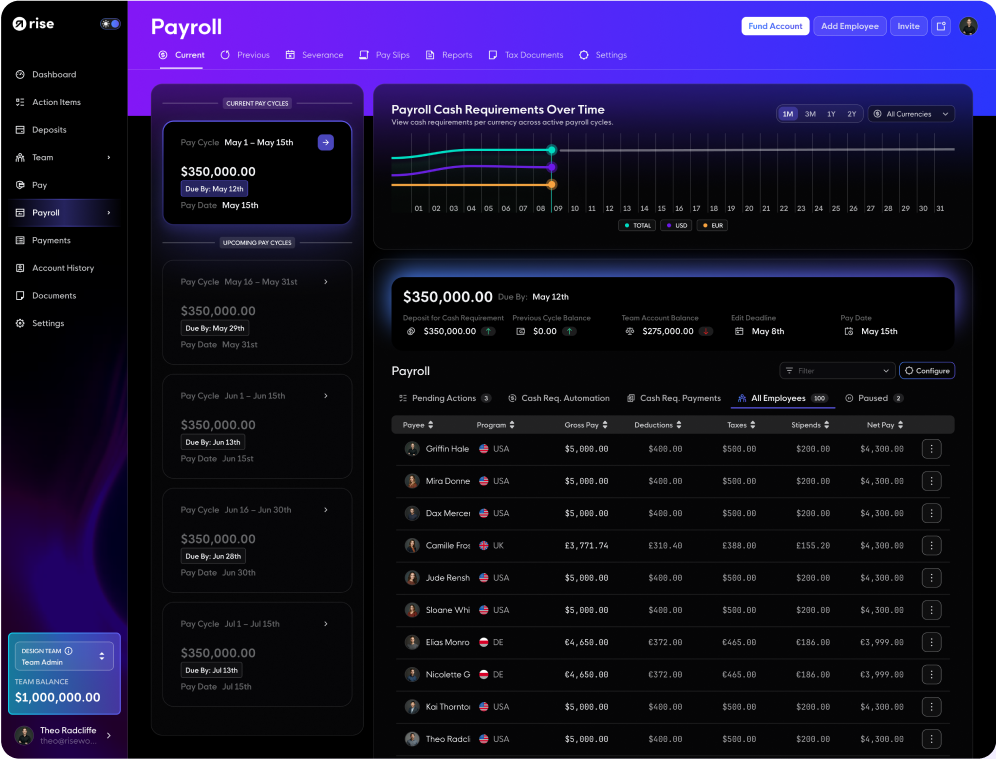
Selecting the right vendor is the most critical compliance decision in your USDC payroll setup. A qualified provider acts as the regulatory shield, handling tax withholding, W-2 generation, and 1099 reporting while you retain administrative control. You do not manage blockchain keys or direct on-chain transactions; the provider executes the stablecoin transfers through their licensed infrastructure.
When evaluating vendors, prioritize those with explicit jurisdictional coverage. As of Q1 2026, many platforms limit USDC payroll to specific chains like Base and restrict operations to US-based employers [src-4]. Verify that the provider supports your employee locations and can generate the required tax forms for each state or country. Failure to use a compliant processor shifts the entire regulatory burden—and liability—back to your entity.
Compare providers using the criteria below to ensure they meet your operational and legal requirements.
| Feature | Provider A | Provider B | Provider C |
|---|---|---|---|
| Supported Chains | Base, Ethereum | Base only | Ethereum, Polygon |
| US Employer Coverage | All 50 States | US Only | Global |
| Tax Reporting | W-2, 1099 | 1099 Only | W-2, 1099, Local Forms |
| Fiat Off-Ramp | Direct Bank ACH | Partner Exchange | Direct Bank ACH |
| Employee Onboarding | Self-Service Portal | Manual Entry | API Integration |
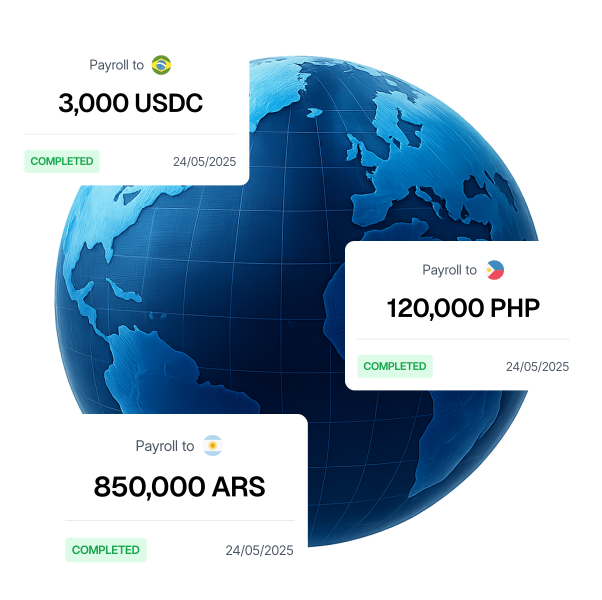
The provider you choose determines your employee experience. Ensure the platform offers a clear path for workers to convert USDC to fiat if they prefer traditional currency. This flexibility is often required by local labor laws and reduces friction during adoption. Once you select a vendor, the setup process begins with integration into your existing HRIS or accounting software.
Configure tax withholding and reporting
Paying employees in USDC does not exempt an employer from standard payroll tax obligations. The stablecoin nature of the payment is irrelevant to the Internal Revenue Service (IRS) and state agencies; the transaction is still compensation. Employers must map USDC payouts to traditional tax forms, ensuring that federal, state, and local withholdings are calculated, withheld, and remitted exactly as they would be for fiat payments.
1. Verify provider supports automated tax calculation
Before configuring your payroll system, confirm that your USDC payroll provider can handle tax calculations natively. Manual calculations introduce significant risk of under-withholding, which can trigger penalties for both the employer and the employee. Look for platforms that integrate with major tax filing services or provide real-time withholding rates based on employee W-4 and state residency data. If your provider only handles gross payouts, you must implement a separate, compliant tax engine to process withholdings before the net USDC amount is released.
2. Map USDC salary to gross pay
Establish a clear mapping protocol that treats the USDC amount as the gross compensation figure for tax purposes. The IRS views cryptocurrency as property, meaning the fair market value (FMV) of the USDC at the time of payment determines the taxable income. Your payroll system must record the USD-equivalent value of the USDC at the exact moment of disbursement. This FMV becomes the basis for all subsequent tax calculations, including Social Security and Medicare taxes. Ensure your accounting software logs this USD value alongside the USDC transaction hash for audit trails.
3. Configure withholding rates
Set up your payroll engine to automatically deduct federal income tax, Social Security, Medicare, and applicable state/local taxes from the gross USDC amount. These withholdings must be calculated on the USD-equivalent gross pay. The withheld amounts must be segregated from the net pay. Do not commingle tax liabilities with operational funds. Configure your system to generate a separate fiat liability report that details the total tax obligations incurred by the USDC payroll run. This report is critical for ensuring you have sufficient fiat currency in your bank account to remit taxes to the IRS and state agencies.
4. Test with a dummy payroll run
Before processing live payments, execute a dummy payroll run to verify the entire tax workflow. This test should simulate a full payroll cycle, including tax calculations, withholding segregation, and net payout distribution. Verify that the system correctly calculates the USD value of the USDC at the time of the test transaction. Check that the generated tax liability report matches your manual calculations. This step identifies configuration errors in tax tables or withholding rates before real money is involved. Once the dummy run confirms accurate tax mapping and withholding, you can proceed with live USDC payroll disbursements.
Onboard employees to stablecoin payments
Adding USDC to payroll requires a structured onboarding workflow that treats digital asset selection with the same regulatory rigor as direct deposit enrollment. Employers must verify that local employment laws permit stablecoin compensation before initiating the process, ensuring all mandatory tax withholding and reporting obligations remain intact.
The onboarding sequence follows a strict four-step protocol to mitigate compliance risk and technical failure.
Before an employee can receive USDC, the payroll platform must complete Know Your Customer (KYC) checks. This step mirrors standard tax form processing but extends to digital asset eligibility. The system validates the employee’s identity against regulatory databases to prevent fraud and ensure the worker is legally permitted to hold cryptocurrency in their jurisdiction.
During enrollment, the employee explicitly opts in to USDC as their primary or secondary payment method. This selection is not automatic; it requires affirmative consent. The platform presents the USDC option alongside traditional fiat rails, allowing the worker to choose their preferred settlement method based on their financial needs and local regulatory environment.
The employee must link a compliant digital wallet or a fiat-off-ramp bank account if they prefer to convert USDC to local currency immediately. Simultaneously, they must confirm that tax withholding forms are up to date. This dual confirmation ensures that the employer can deduct the correct amount of taxes regardless of whether the final settlement occurs in stablecoins or fiat.
Before processing full payroll, run a low-value test transaction to verify wallet connectivity and transaction speed. This step confirms that the employee can successfully receive and access the funds. Once the test payment is confirmed, the employee is fully onboarded and eligible for regular USDC payroll disbursement.
Use the checklist below to ensure no compliance or technical steps are missed during the onboarding process.
-
Verify identity (KYC)
-
Select payment method (USDC)
-
Confirm tax forms
-
Test first payment
Frequently Asked Questions About USDC Payroll
Addressing specific concerns regarding the mechanics and market position of USDC payroll helps clarify the compliance and operational landscape for 2026.
No comments yet. Be the first to share your thoughts!