
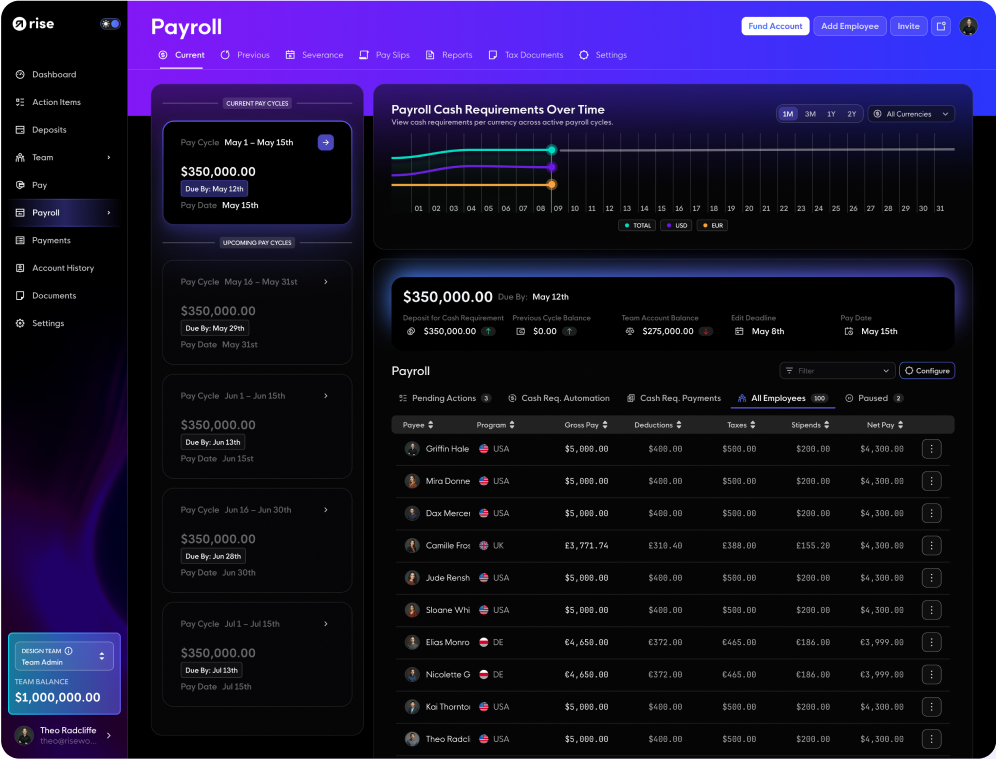
USDC Payroll Adoption Trends
In 2026, USDC payroll has transitioned from experimental pilot programs to operational infrastructure for global compensation. Companies are increasingly adopting stablecoin payroll to bypass slow traditional banking rails, reduce foreign exchange costs, and provide workers with faster access to earnings. This shift is driven by the need for efficiency in cross-border payments and the growing maturity of stablecoin infrastructure.
The adoption landscape is broadening significantly. USDC usage is expanding across more than 30 blockchain networks, supported by rising wallet adoption, increasing mint and redemption activity, and deeper institutional participation through partnerships with major financial technology firms. This widespread integration signals that USDC is no longer a niche tool but a serious component of global compensation strategies.
The stability and liquidity of USDC make it particularly suitable for payroll applications. Unlike volatile cryptocurrencies, stablecoins provide a predictable value proposition for both employers and employees, mitigating the risk associated with currency fluctuations. This predictability, combined with the speed and cost advantages of blockchain-based settlements, positions USDC as a practical solution for modern payroll needs.
Platform Comparison for Stablecoin Payroll
Selecting a USDC payroll platform requires evaluating three core dimensions: compliance infrastructure, supported blockchain networks, and fee structures. Because payroll involves sensitive financial data and regulatory scrutiny, the platform's ability to integrate with existing HR systems while maintaining audit trails is the primary differentiator.
The table below compares leading platforms based on their official capabilities regarding stablecoin support, network availability, and compliance features. Data reflects standard enterprise configurations as of early 2026.
| Platform | Supported Chains | Compliance & KYC | Fee Structure |
|---|---|---|---|
| Eco | Ethereum, Polygon, Solana, Base | Integrated KYC/AML, SOC 2 Type II | Per-transaction fee + network gas |
| Bitwage | Ethereum, Polygon, Arbitrum | IRS reporting, payroll tax withholding | Subscription + transaction fees |
| Toku | Ethereum, Polygon, BSC, Arbitrum | Real-time compliance checks, audit logs | Flat monthly fee + small tx fee |
| Rise | Ethereum, Polygon, Optimism | Automated tax forms, KYB/KYC | Per-payroll run fee |
Compliance and Regulatory Alignment
For legal and regulatory audiences, the most critical factor is how each platform handles Know Your Customer (KYC) and Anti-Money Laundering (AML) checks. Platforms like Eco and Toku integrate these checks directly into the onboarding flow, ensuring that only verified employees receive payments. This reduces the administrative burden on HR teams and minimizes the risk of non-compliant transactions.
Bitwage and Rise offer more traditional payroll tax withholding capabilities, which can be advantageous for US-based entities that need to remain integrated with existing tax reporting systems. When evaluating these platforms, verify that the compliance features are explicitly documented in the provider's official terms of service and privacy policy.
Supported Networks and Gas Efficiency
USDC is available on more than 30 blockchain networks, but payroll platforms typically support only a subset of the most liquid and cost-effective chains. Ethereum remains the most widely supported network, but gas fees can make it impractical for frequent, smaller payroll runs. Polygon and Arbitrum are frequently recommended for their lower transaction costs and faster settlement times.
The choice of network affects both the speed of payment and the total cost of payroll. For global teams, platforms that support multiple chains allow employers to optimize for cost by selecting the most efficient network for each employee's location. Always confirm the supported networks for your specific region, as some chains may have limited liquidity or regulatory restrictions.
Fee Structures and Total Cost of Ownership
Fee structures vary significantly across platforms. Some charge a flat monthly subscription, while others use a per-transaction model. For large teams, a flat fee may be more cost-effective, whereas smaller teams might prefer per-transaction fees to avoid unused capacity. It is essential to calculate the total cost of ownership, including network gas fees, which are paid separately to the blockchain network and not the platform.
When comparing fees, look for transparency in pricing. Avoid platforms with hidden costs or vague fee descriptions. Official documentation should clearly state all potential charges, including any fees for currency conversion, withdrawal, or administrative support. This transparency is critical for accurate budgeting and financial planning.
Regulatory compliance and tax withholding
Paying employees in USDC does not remove the employer’s obligation to comply with existing labor and tax laws. In 2026, the United States has not established a unified federal framework specifically for stablecoin payroll, unlike the EU and UK, which began rolling out their stablecoin regulations in March 2026. Until explicit federal guidance is issued, employers must treat stablecoin payments as taxable income in fiat currency at the time of transfer.
Tax reporting obligations
The IRS treats cryptocurrency, including stablecoins like USDC, as property for tax purposes. When you pay an employee in USDC, the transaction is a taxable event for both the employer and the employee. The fair market value of the USDC at the moment of payment determines the wage amount subject to withholding. You must report these wages on Form W-2 for employees or Form 1099 for contractors, converting the stablecoin amount to its USD equivalent at the time of distribution.
Failure to withhold federal income tax, Social Security, and Medicare taxes remains a liability for the employer, regardless of the payment currency. Payroll tax deposits must be made in fiat currency through traditional banking channels. The stablecoin itself does not bypass the requirement to remit taxes to the IRS or state revenue departments.
Regulatory landscape
The regulatory environment for stablecoin payroll remains fragmented. While the EU’s Markets in Crypto-Assets (MiCA) regulation and the UK’s recent financial promotions rules provide clearer paths for compliant stablecoin usage, the US lacks a corresponding federal statute. As of Q1 2026, no confirmed timeline exists for US stablecoin payroll legislation. Employers should monitor state-level initiatives, such as those in Wyoming or New York, which may impose additional licensing or consumer protection requirements.
Employers should also consider the reporting requirements for cross-border payments. If you employ contractors in other countries, sending USDC may trigger foreign bank account reporting (FBAR) or foreign gift reporting obligations, depending on the recipient’s location and the transaction’s value. Always verify the tax treaty implications between your jurisdiction and the employee’s residence.
Recordkeeping and audit trails
Maintaining accurate records is critical for compliance. Each USDC payroll transaction should be documented with the timestamp, the exchange rate to USD at the time of payment, and the recipient’s wallet address. Blockchain explorers can verify the transaction, but they do not provide the fiat-equivalent value needed for tax filing. Use a payroll provider that automatically generates these records and integrates with your accounting software to ensure your books balance in USD.
| Requirement | Action |
|---|---|
| Wage Calculation | Convert USDC to USD at time of transfer |
| Tax Withholding | Withhold federal/state taxes based on USD value |
| Form W-2/1099 | Report USD-equivalent wages on standard forms |
| Recordkeeping | Store transaction hash, timestamp, and exchange rate |
The lack of specific federal guidance means that existing tax codes apply by default. Employers who attempt to treat stablecoin payments as tax-free or non-reportable transactions risk severe penalties. The safest approach is to follow the same procedures used for traditional fiat payroll, substituting only the settlement mechanism.
Payroll Cost Analysis and Fee Structures
Evaluating USDC payroll requires comparing traditional banking fees against stablecoin transaction costs. Traditional payroll systems involve multiple layers of expense: processing fees, wire transfer charges, and currency conversion markups for international contractors. These costs accumulate significantly for companies managing a distributed workforce.
USDC payroll offers a different economic model. Transactions on supported blockchains incur network gas fees rather than percentage-based processing charges. For payroll volumes, this often results in lower total costs, particularly for cross-border payments where foreign exchange (FX) spreads add hidden expenses. The Circle documentation outlines the fee structure for USDC transactions, noting that costs depend on the specific blockchain network used.
| Cost Component | Traditional Banking | USDC Payroll |
|---|---|---|
| Processing Fee | 1-3% per transaction | Network gas fee (variable) |
| Wire Transfer | $15-$50 per transaction | Included in gas fee |
| FX Spread | 2-4% markup | Near-spot market rate |
| Settlement Time | 1-3 business days | Minutes to hours |
The economic benefit is most pronounced for international payments. Traditional banks charge significant FX spreads and wire fees, which can erode payroll budgets. USDC transactions bypass these intermediaries, allowing for faster settlement at a lower cost. This efficiency is critical for companies scaling their remote workforce in 2026.
Implementation checklist for employers
Deploying USDC payroll requires a structured workflow that balances operational efficiency with strict regulatory adherence. The process moves from internal legal review to final employee onboarding, ensuring every disbursement is auditable and compliant.
1. Legal and compliance review
Before technical integration, legal teams must verify jurisdictional allowances for crypto payroll. Consult the FinCEN guidelines on money transmission and ensure your payroll vendor meets KYC/AML standards. This step prevents regulatory penalties before the first payment is issued.
2. Platform vendor selection
Choose a payroll provider that offers USDC support and integrates with your existing HRIS. Compare features such as auto-tax withholding, multi-chain support, and employee wallet management. The vendor must provide clear audit trails for every transaction to satisfy accounting requirements.
3. Employee onboarding and consent
Employees must provide explicit written consent to receive wages in USDC. Provide clear education on how to set up a compatible wallet and manage volatility. Ensure they understand that while USDC is pegged to the dollar, they are responsible for converting it to fiat for personal use.
4. Test transactions
Run a small-scale pilot with a subset of employees or contractors. Verify that funds arrive correctly, tax forms are generated accurately, and the reconciliation process works as expected. This phase identifies technical glitches without risking significant capital.
5. Go-live and monitoring
Launch the payroll system for the next pay cycle. Monitor transaction success rates and employee feedback closely. Establish a support channel for immediate troubleshooting, particularly for employees unfamiliar with cryptocurrency wallets.
No comments yet. Be the first to share your thoughts!