
USDC payroll compliance basics
Paying employees in USDC requires treating the stablecoin as a taxable asset rather than simple currency. The Internal Revenue Service (IRS) classifies virtual currencies, including stablecoins, as property under Notice 2014-21. This classification means that USDC payroll transactions trigger the same federal income tax and FICA withholding obligations as traditional fiat payments.
When you issue a USDC paycheck, you are not bypassing tax law; you are fulfilling it using a different settlement rail. Employers must calculate withholdings based on the fair market value of the USDC at the time of payment. This value is typically pegged to $1.00 USD, but fluctuations or platform-specific pricing may require precise valuation at the moment of transfer.
Compliance also involves proper reporting on Form W-2 for employees and Form 1099-NEC for contractors. The taxable amount reported on these forms must reflect the USD value of the USDC received at the time of payment. Employers should ensure their payroll provider supports accurate valuation snapshots and generates compliant tax documents automatically.
State-level compliance varies. Some states have adopted federal property classifications, while others may have specific guidance on digital assets. Verify local regulations to ensure your USDC payroll program meets all state withholding and reporting requirements alongside federal obligations.
Set up payroll infrastructure
Building a compliant USDC payroll system requires a structured approach to vendor selection and technical integration. The goal is to create a workflow where stablecoin funds are routed securely and converted to fiat for employees without exposing the company to unnecessary regulatory risk. This section outlines the specific steps to configure your infrastructure.
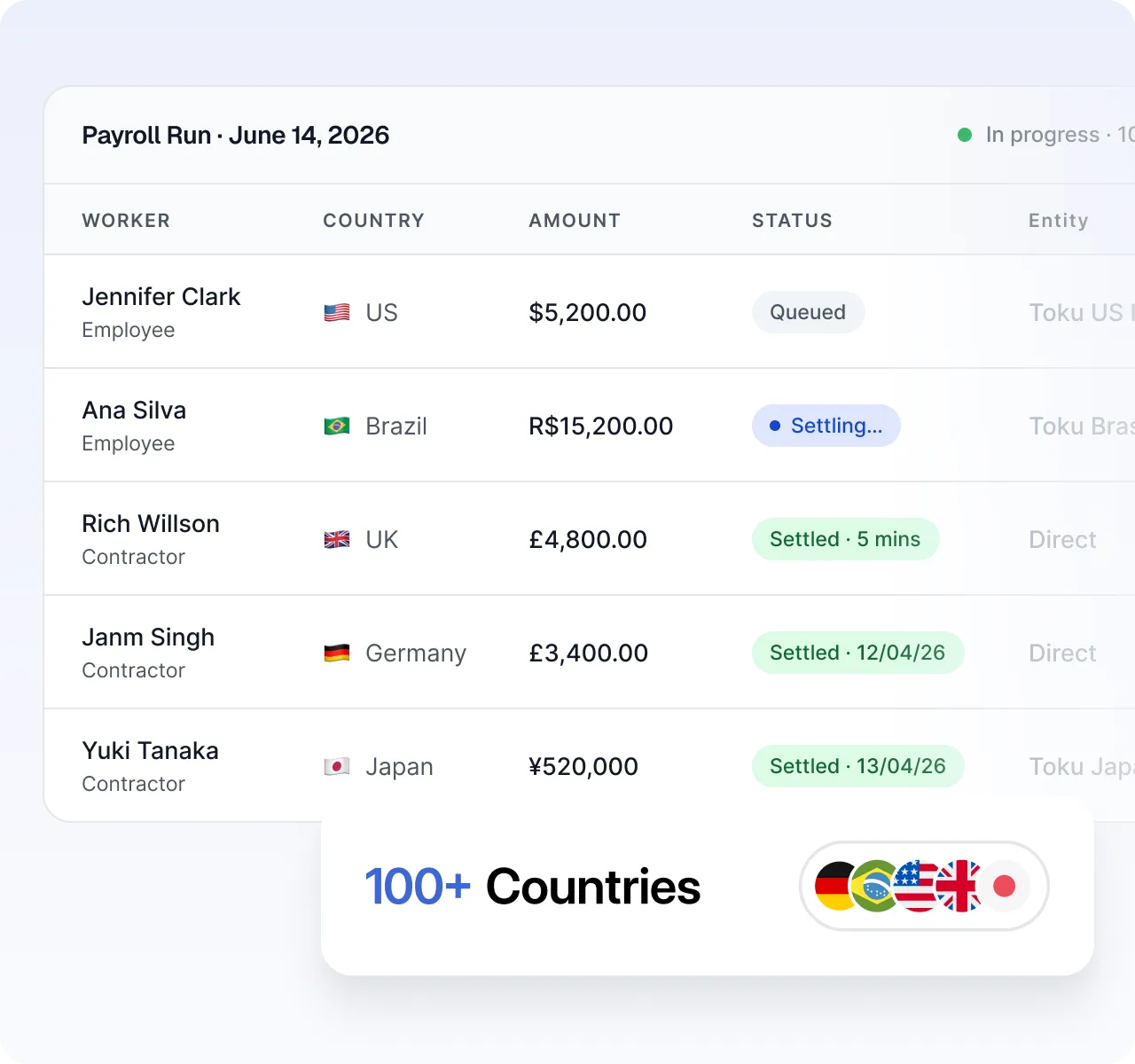
Start by identifying a payroll platform that explicitly supports USDC and operates within your jurisdiction. In 2026, leading providers like Eco and Rise have integrated stablecoin payments to bypass slow banking rails and reduce foreign exchange costs for cross-border teams. Ensure the vendor supports the specific asset types your company holds and offers robust compliance features, as most modern platforms now support USDC alongside USDT and other volatile assets. Verify that the provider maintains clear documentation on their regulatory posture and licensing in your region.
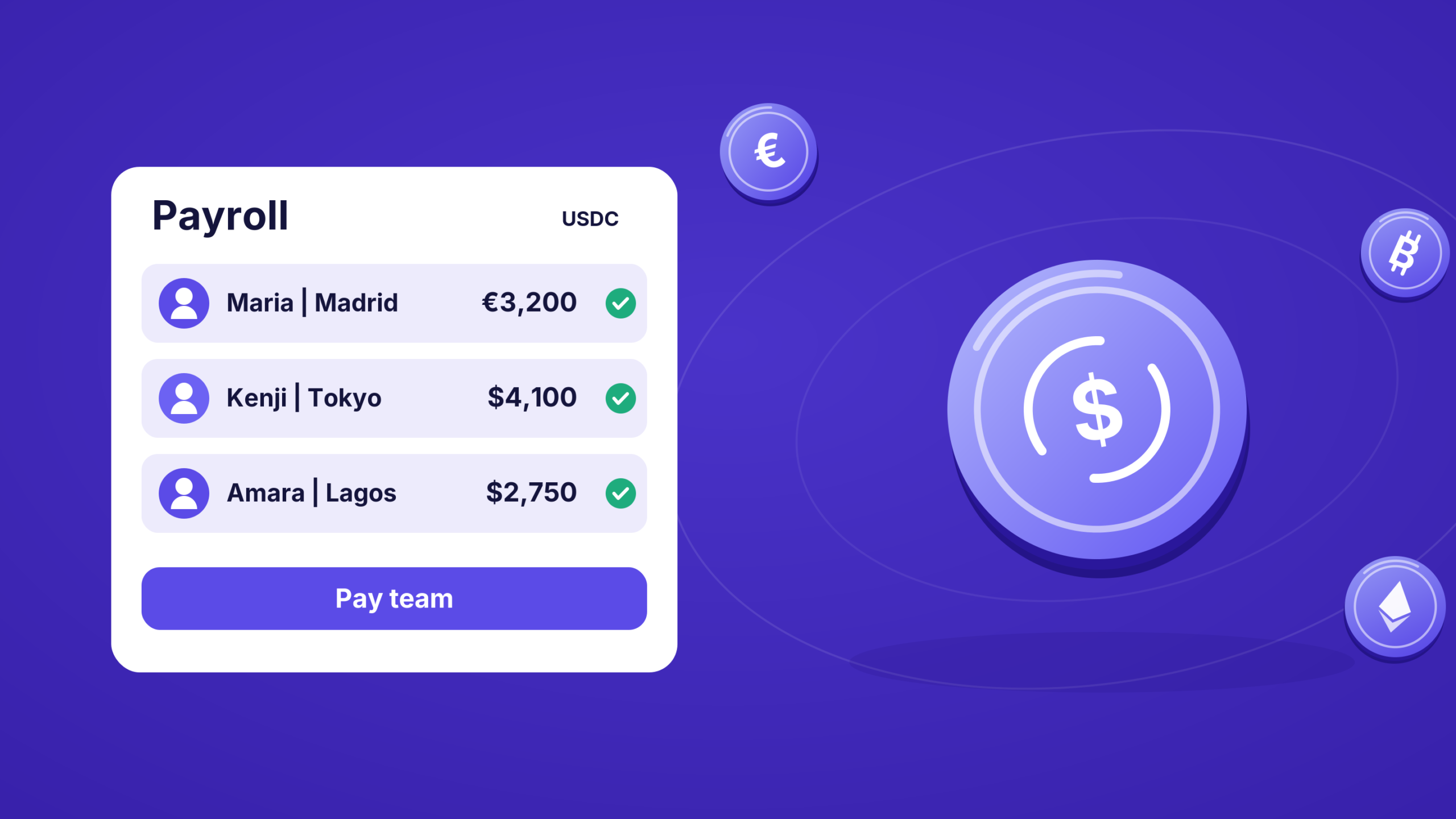
Before processing any payments, complete the provider’s Know Your Customer (KYC) and Anti-Money Laundering (AML) verification. This step is mandatory for both the employer entity and, in many cases, the individual employees receiving funds. The platform will require business registration documents, proof of address, and identification for authorized signatories. Proper verification ensures that your payroll account remains in good standing and prevents future freezes or compliance flags that could delay employee wages.
Link your company’s traditional bank accounts to the payroll platform to facilitate fiat off-ramping. Most USDC payroll workflows involve converting stablecoins to local currency before depositing into employee bank accounts. Configure these linked accounts carefully, ensuring that the banking details match the verified legal entity. This setup allows the platform to execute automatic conversions at the time of payroll run, shielding your company from stablecoin volatility while giving employees immediate access to spendable fiat.
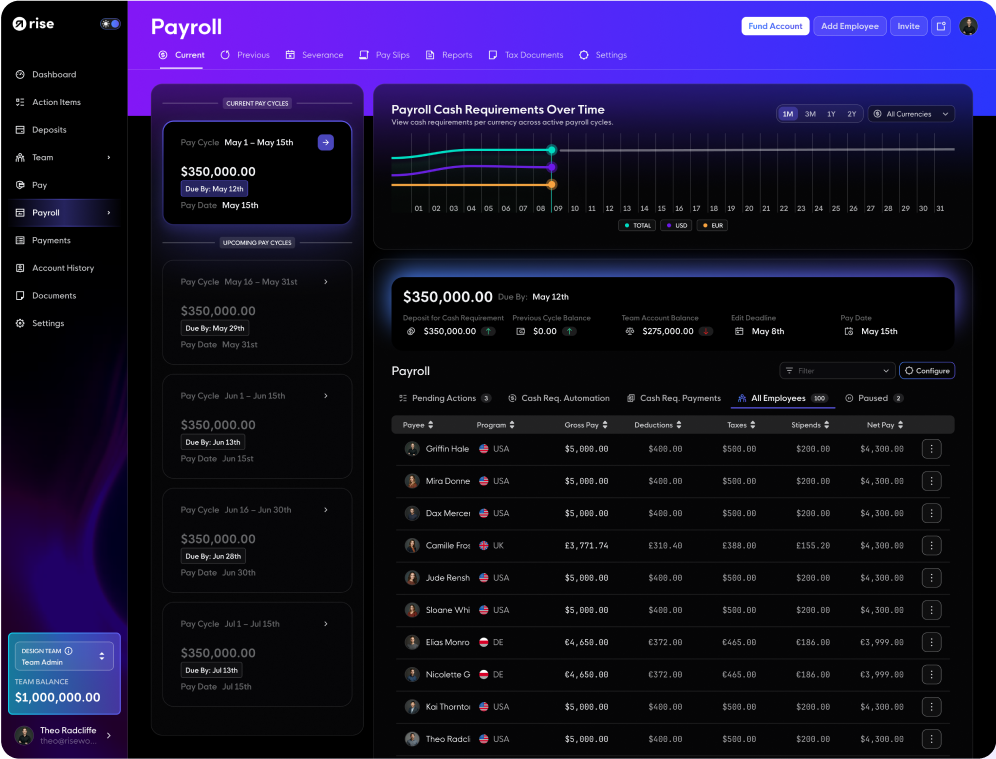
Conduct a controlled test transaction before deploying the full payroll cycle. Send a small USDC payment to a single employee or a test account to verify that the conversion rate, bank transfer timing, and notification systems function as expected. This pilot run helps identify any friction points in the workflow, such as delayed bank settlements or incorrect employee tax withholdings. Once the test is successful, you can confidently scale the infrastructure for your entire workforce.
Handle tax withholding and reporting
Withholding federal and state taxes before sending USDC is the primary compliance hurdle in crypto payroll. The stablecoin itself does not change your tax obligations; the IRS treats USDC as property, meaning you must follow the same withholding rules as fiat payroll.
1. Calculate withholdings using standard rates
Apply the same percentage-based calculations you use for traditional payroll. Use IRS Publication 15-T to determine federal income tax withholding based on employee W-4 forms. Calculate FICA (Social Security and Medicare) at the standard employer and employee rates.
2. Separate employee and employer contributions
You must track two distinct pools of funds. The employee portion is withheld from their gross pay. The employer portion is an additional cost to your business. When funding your payroll wallet, ensure you have enough USDC to cover both the net pay to the employee and the total tax liability.
3. Withhold state and local taxes
State income tax rules vary by jurisdiction. If your employees are in states with income tax, you must register and withhold those amounts. Local taxes may also apply depending on your city or county regulations. Consult your state labor department for specific withholding tables.
4. Classify workers correctly
Misclassification is a major risk. Employees require W-2 processing with full tax withholding. Independent contractors receive 1099-NEC forms and are responsible for their own taxes. Do not withhold taxes for contractors unless required by backup withholding rules.
-
Calculate federal income tax based on W-4
-
Apply standard FICA rates
-
Withhold state and local taxes
-
Verify employee vs. contractor classification
5. Deposit taxes on time
Federal and state taxes must be deposited into government accounts, not held in your payroll wallet. Use the IRS EFTPS system for federal deposits. Check your payroll calendar for deposit due dates, as late payments incur significant penalties.
Register for an EIN and state withholding accounts if you haven't already. Ensure your payroll provider is configured to calculate taxes correctly before your first run.
Process a single employee paycheck to verify that withholdings match your expectations. Check the net pay and the tax deduction amounts against your manual calculations.

Transfer the withheld tax amounts from your business bank account to the IRS and state agencies. Do not use USDC for these deposits unless your provider offers a specific fiat conversion service for tax payments.
Submit quarterly tax returns (Form 941) and annual reconciliations (Form 940). Issue W-2s to employees and 1099-NECs to contractors by the January deadline.
Compare top USDC payroll platforms
Choosing the right USDC payroll platform depends on your compliance needs and existing HR infrastructure. The leading tools—Eco, Rise, Bitwage, and Deel—offer distinct approaches to stablecoin payments, ranging from dedicated crypto-native solutions to integrated global payroll suites.
Use the comparison below to evaluate features like auto-withholding, supported blockchain networks, and regulatory certifications. This data helps you match platform capabilities to your specific operational requirements.
| Platform | Compliance Focus | Supported Chains | Auto-Withholding |
|---|---|---|---|
| Eco | US-focused, 1099-NEC | Ethereum, Polygon, Base | Yes |
| Rise | Global, multi-jurisdiction | Ethereum, BSC, Polygon | Yes |
| Bitwage | US-focused, IRS-compliant | Ethereum, Bitcoin (via Lightning) | Yes |
| Deel | Global entity/EOR | Ethereum, Polygon, Optimism | Yes |
No comments yet. Be the first to share your thoughts!