
USDC payroll 2026 regulatory landscape
The legal baseline for USDC payroll in 2026 remains anchored in the Internal Revenue Service’s classification of virtual currency as property. This designation, established in Notice 2014-21, means that paying employees in USDC is not a cash transaction for tax purposes. Instead, it is treated as a payment in kind. Employers must calculate federal income tax withholding, Social Security, and Medicare taxes based on the fair market value of the USDC at the exact moment the payment is made. The stablecoin’s peg to the dollar does not exempt the employer from these standard withholding obligations; it only simplifies the valuation process.
The 2026 regulatory environment introduces specific statutory changes that intersect with crypto payroll. The Social Security wage base for 2026 has been set at $184,500. This cap applies to the total wages paid, regardless of the currency used. Employers must track the USD-equivalent value of USDC payments against this limit. Once an employee’s cumulative USDC compensation exceeds this threshold, the 6.2% Social Security tax no longer applies to subsequent payments for that year. Medicare tax, however, remains uncapped.
| Tax Type | 2026 Rate | Wage Base Limit | Crypto Payroll Impact |
|---|---|---|---|
| Social Security | 6.2% | $184,500 | Cap applies to USD value of USDC paid |
| Medicare | 1.45% | No Limit | Applies to all USDC compensation |
| Federal Income | 10-37% | N/A | Withheld based on FMV at payment time |
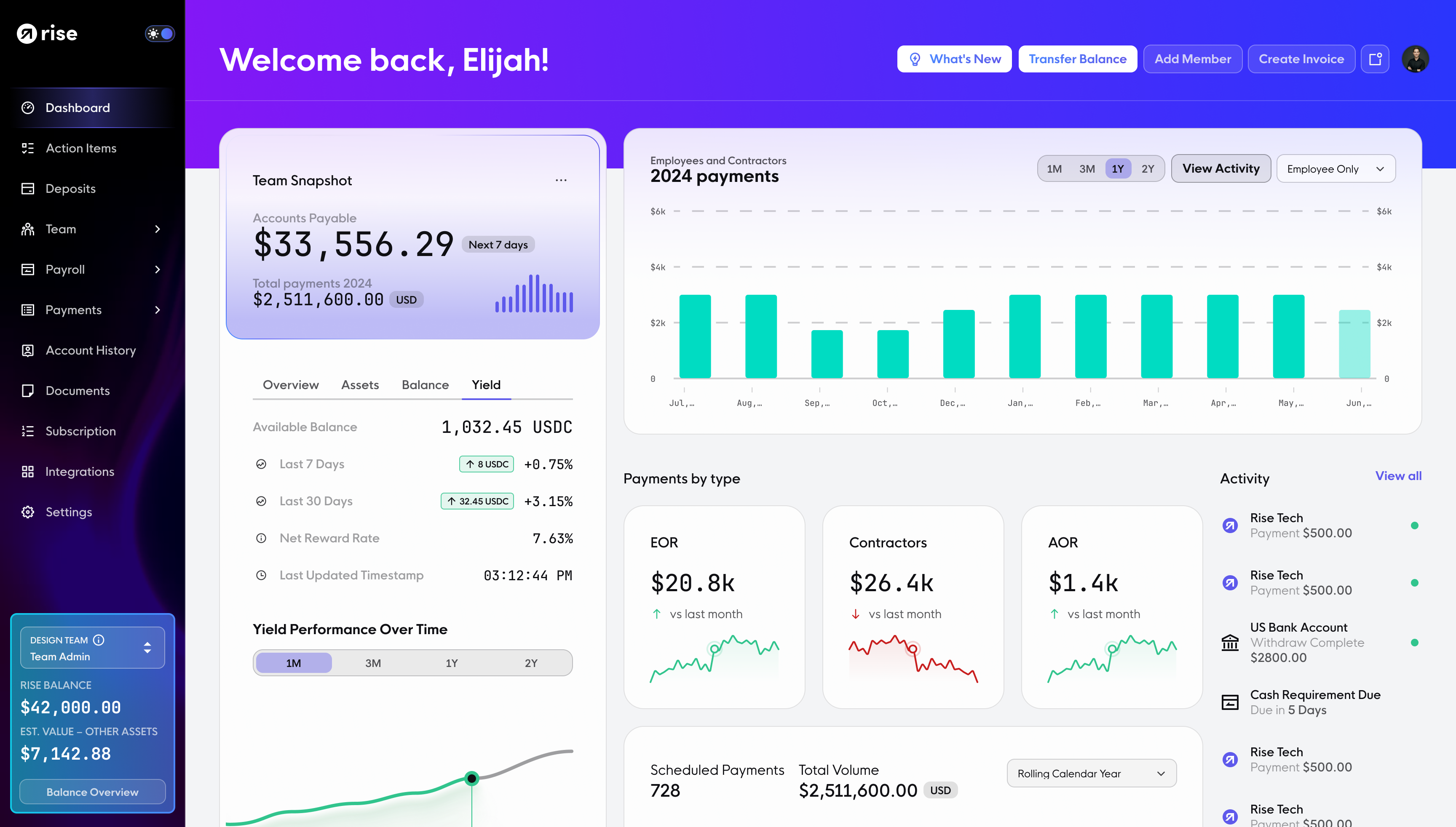
Stablecoins like USDC are distinct from volatile cryptocurrencies in how they are handled during payroll processing. While Bitcoin or Ethereum payments require complex fair market value assessments at each pay period, USDC’s peg reduces valuation friction. However, the legal obligation to report and withhold remains identical. Employers using platforms like Deel or Rise to facilitate USDC payroll must ensure these platforms provide accurate USD-equivalent reporting for W-2 and 1099 forms. The platform’s ability to settle in seconds does not alter the employer’s liability for timely tax deposits.
The 2026 payroll calendar presents a unique logistical challenge. Because 2026 is a 27-pay-period year for biweekly schedules, employers must account for an extra pay cycle. When combined with USDC payments, this requires precise tracking of the USD value at each of the 27 intervals. A single fluctuation in the USDC peg, however minor, can shift the total annual taxable wages reported to the IRS. Employers must maintain rigorous records of the exchange rate at each of these 27 payment events to ensure compliance with federal reporting standards.
2026 payroll tax changes affecting crypto wages
The statutory framework governing USDC payroll is anchored in federal tax code, not blockchain mechanics. For employers processing wages in stablecoins, the 2026 adjustments to Social Security and Medicare thresholds directly dictate withholding precision. A miscalculation in these fiat-denominated caps creates immediate compliance liability, regardless of the settlement currency.
The Social Security wage base for 2026 is set at $184,500. This figure represents the maximum annual earnings subject to the 6.2% tax rate for both employee and employer. Once an employee’s cumulative USDC-equivalent wages exceed this threshold, the Social Security withholding rate drops to zero for the remainder of the calendar year. The maximum deduction for a single employee is capped at $11,439. Employers must track cumulative fiat values in real-time to avoid over-withholding.
Medicare tax operates differently. The 1.45% rate applies to all wages with no upper limit. For high earners, the Additional Medicare Tax of 0.9% triggers on wages exceeding $200,000 in a calendar year. This threshold is not indexed for inflation and does not adjust for filing status. USDC payroll systems must integrate fiat conversion logic to accurately trigger these withholdings at the exact moment the threshold is breached.
The following table summarizes the mandatory 2026 withholding rates and caps. These figures are static statutory requirements; they do not fluctuate with USDC market performance.
| Tax Type | Employee Rate | Wage Base / Threshold |
|---|---|---|
| Social Security | 6.2% | $184,500 |
| Medicare | 1.45% | No limit |
| Additional Medicare | 0.9% | $200,000 |
Comparing USDC payroll platforms for 2026
Selecting a payroll vendor for stablecoin compensation requires balancing regulatory compliance against operational friction. The 2026 landscape is defined by platforms that bridge traditional tax withholding with blockchain settlement. Employers must verify that their chosen provider supports USDC across target jurisdictions while maintaining the audit trails required by the IRS and local labor authorities.
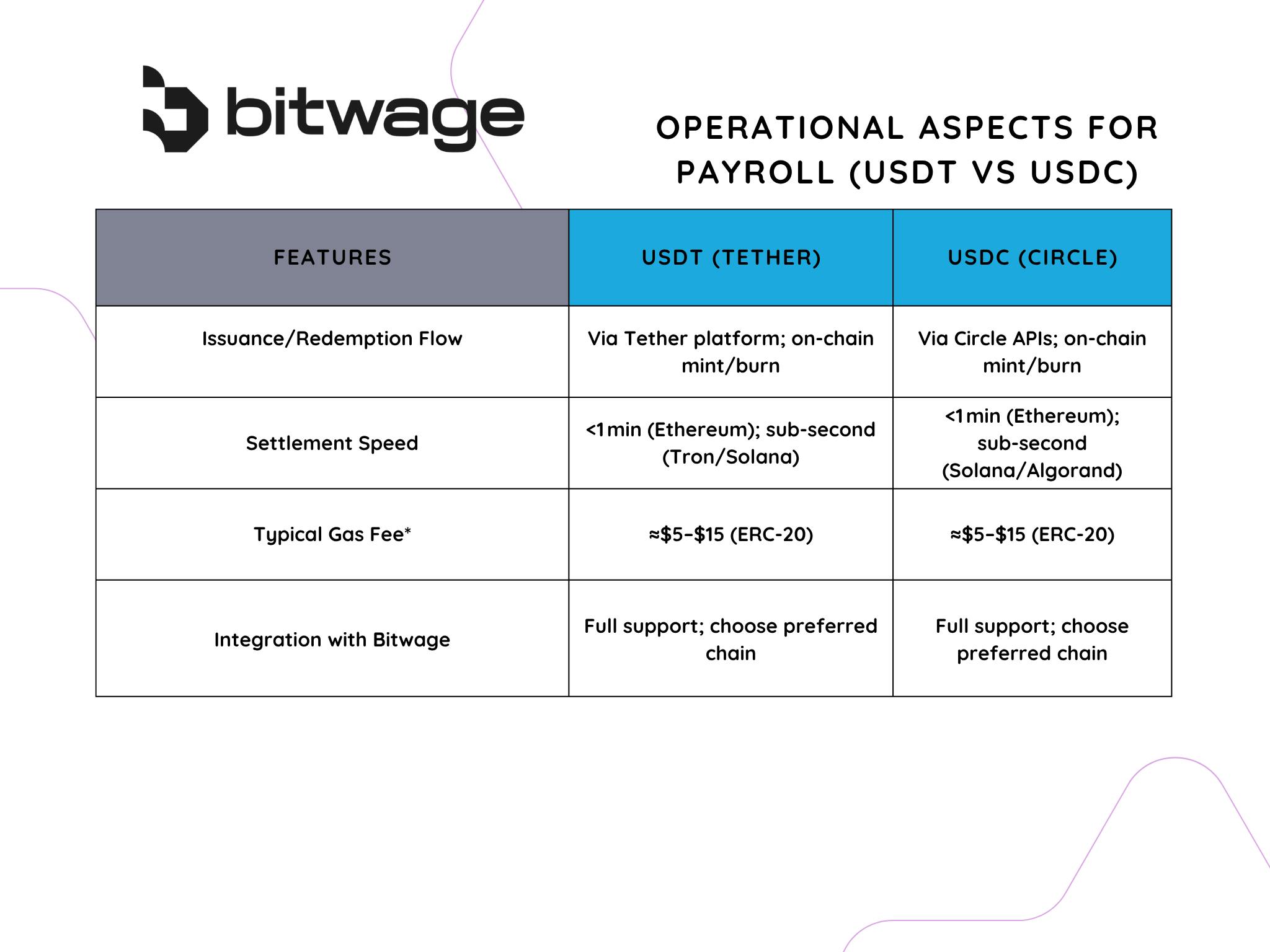
The following comparison evaluates four primary vendors: Deel, Toku, Rise, and Bitwage. Each platform approaches the USDC integration differently, affecting how companies handle currency conversion, employee withdrawals, and statutory deductions.
| Platform | USDC Support | Tax Withholding | Global Coverage | Settlement |
|---|---|---|---|---|
| Deel | Direct funding via USDC | Automated in 150+ countries | 180+ countries | Variable (stablecoin to fiat) |
| Toku | Native USDC payroll | Automated (US-only focus) | United States only | Instant on-chain |
| Rise | USDC and USDT | Automated (US-only focus) | United States only | Near-instant |
| Bitwage | USDC and USDT | Manual or automated (US-only) | United States only | Same-day fiat or crypto |
Deel operates as the most comprehensive global solution, allowing companies to fund payroll directly in USDC from crypto wallets. This capability reduces FX friction for multinational teams but requires careful reconciliation of on-chain transactions against off-chain tax liabilities. Toku and Rise offer more streamlined, US-centric experiences, prioritizing instant on-chain settlement for employees who prefer to hold stablecoins. Bitwage serves as a bridge for traditional payroll systems, allowing employees to split direct deposits between fiat and USDC.
For employers focused on US-based teams, Toku and Rise provide the lowest operational overhead for pure USDC payouts. However, for organizations with distributed workforces, Deel’s automated tax withholding across 150+ jurisdictions remains the only viable option that mitigates cross-border compliance risk. The choice ultimately depends on whether the primary constraint is global reach or settlement efficiency.
USDC Price Stability and Valuation Timing
Payroll compliance requires precise valuation at the moment of payment. Unlike volatile assets such as Bitcoin, USDC maintains a stable peg to the US dollar, which is a prerequisite for accurate tax reporting and wage calculation. The Internal Revenue Service treats cryptocurrency as property, meaning the fair market value at the time of distribution determines taxable income for employees and withholding obligations for employers. Using a stablecoin eliminates the risk of sudden valuation swings that could distort wage data or trigger unexpected capital gains liabilities.
The stability of USDC is not an assumption; it is enforced by Circle’s reserve structure. USDC is backed by short-dated US Treasury bills and cash deposits, ensuring that the digital token remains redeemable one-to-one with the US dollar. This structural backing provides the reliability needed for statutory wage payments, where even minor deviations from the dollar standard can complicate Social Security and Medicare tax calculations. For 2026, with the Social Security wage base set at $184,500, precise dollar-equivalent tracking is essential to avoid under- or over-reporting wages.
Valuation timing is the critical compliance variable. Employers must capture the USDC price at the exact second of transaction settlement, not at the end of the day or the close of the business week. A delay in recording the exchange rate can lead to discrepancies between the reported wage and the actual dollar value received by the employee. This precision is particularly important for international workers, where currency conversion and local tax thresholds depend on the accurate timestamped value of the payment.
Setting up compliant USDC payroll workflows
Funding payroll in USDC requires treating stablecoin transfers with the same procedural rigor as wire transfers, with added attention to blockchain finality and regulatory reporting. Employers must establish a clear operational chain that separates treasury management from payroll execution to ensure tax compliance and audit readiness.
Fund the payroll treasury
Employers must first move fiat or existing USDC into a designated corporate wallet or custodial account. This step isolates payroll funds from operational expenses. The transfer should be executed on a network with low latency, such as Ethereum or Solana, depending on your payroll provider's supported chains. Ensure the receiving address is verified against your payroll vendor's official documentation to prevent irreversible loss.
Convert to fiat for tax remittance
While employees may receive USDC, tax authorities require remittance in local fiat currency. Most compliant payroll platforms automatically convert the USDC portion of the payroll into fiat for tax withholding and Social Security contributions. This conversion must happen before or simultaneously with the payroll run to ensure funds are available for IRS and SSA filings. Failure to segregate tax liabilities from net pay can result in severe penalties.
Execute payroll and distribute
Once taxes are reserved, the remaining USDC is distributed to employee wallets. Employers should use a payroll platform that supports direct USDC transfers to ensure accurate record-keeping. The platform should generate a transaction hash for each payment, which serves as the immutable proof of payment. This hash must be linked to the employee's payroll record for year-end reporting.
Reconcile and report
Post-payroll, employers must reconcile the blockchain transactions with their internal ledger. The transaction hash and timestamp serve as the primary audit trail. This data must be reported on Form W-2 (or equivalent) as wages paid. The value of the USDC at the time of distribution is the taxable income amount, as defined by IRS Notice 2014-21.
| Step | Action | Compliance Risk |
|---|---|---|
| 1 | Fund Treasury | Low if using verified addresses |
| 2 | Convert for Taxes | High if not reserved before distribution |
| 3 | Distribute USDC | Medium if transaction hashes are lost |
| 4 | Reconcile | Low if automated by platform |


Common usdc payroll compliance: what to check next
Employers adopting USDC for payroll must navigate specific 2026 regulatory shifts and structural anomalies. The following addresses high-stakes compliance queries regarding wage bases, pay period frequency, and the definition of on-chain compensation.
USDC vs. Fiat Payroll Comparison
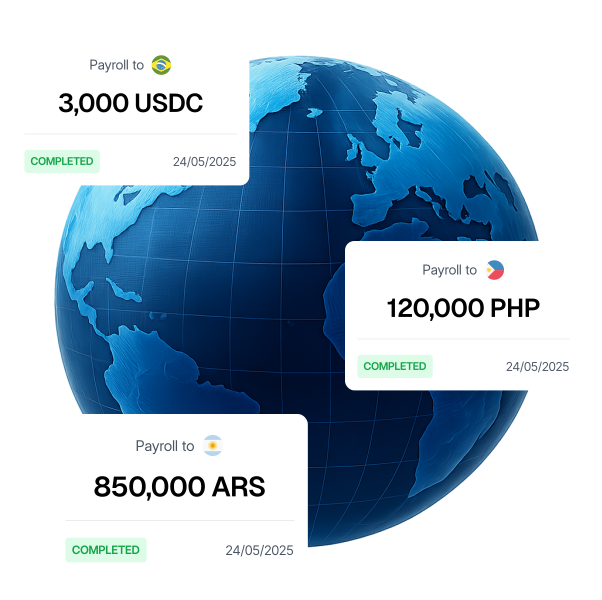
The shift from fiat to stablecoin payroll introduces distinct operational and compliance trade-offs. While USDC reduces friction for international teams, it requires rigorous tax withholding management.
| Feature | Fiat Payroll | USDC Payroll |
|---|---|---|
| Settlement Speed | 1-3 business days | Seconds |
| Cross-Border Fees | High (SWIFT/FX) | Low (Gas only) |
| Tax Withholding | Automated by platform | Manual or API-integrated |
| Volatility Risk | None | Minimal (stablecoin) |
No comments yet. Be the first to share your thoughts!