
Why USDC payroll matters in 2026
The global compensation landscape is undergoing a structural shift in 2026. Crypto payroll is becoming a serious part of global compensation, particularly through stablecoins like USDC and USDT. This transition is driven by the urgent need to reduce foreign exchange (FX) friction and accelerate settlement times for cross-border teams.
Traditional wire transfers involve multiple intermediaries, resulting in high fees and delays that can span several days. In contrast, USDC operates on blockchain infrastructure that settles transactions in seconds with negligible gas costs. This efficiency eliminates the FX fees and chargeback risks associated with card-based payments, providing a more predictable cost structure for employers and immediate liquidity for employees.
The stability of USDC is critical for payroll compliance. Unlike volatile cryptocurrencies, USDC is a fully-backed digital dollar, ensuring that the value transferred remains constant from authorization to receipt. This stability allows finance teams to budget accurately and maintain regulatory adherence without exposing the company to market fluctuations.
As adoption grows, the distinction between "crypto" and "traditional" payroll is blurring. USDC offers the speed and transparency of blockchain technology with the price stability required for legal and financial compliance. For organizations managing global workforces, this represents a significant operational advantage in the 2026 market.
How crypto payroll automation works
USDC payroll 2026 relies on automated workflows that bridge traditional banking rails with blockchain settlement. The process converts fiat currency into stablecoins, executes on-chain payments to employee wallets, and handles local tax withholdings through integrated compliance layers. This workflow reduces settlement times from days to seconds while maintaining regulatory transparency.
Fiat on-ramp and stablecoin conversion
Employers deposit fiat currency (USD, EUR, GBP) into a regulated crypto payroll platform. The platform automatically converts these funds into USDC at real-time market rates. This conversion occurs on-chain, typically on networks like Ethereum or Base, where USDC is fully backed and audited. The conversion rate is locked at the moment of deposit to prevent volatility risk during the payroll cycle.
On-chain payment execution
Once funds are converted, the platform distributes USDC to employee wallets. Payments are executed via smart contracts or automated transfer protocols. For USDC on Base, settlements occur in seconds with minimal gas fees, making it cost-effective for frequent or small-value payments. Employees receive stablecoins directly, avoiding traditional banking delays and cross-border FX fees.
Automated tax withholding and compliance
The most complex aspect of USDC payroll 2026 is handling local tax obligations. Platforms integrate with tax compliance engines to calculate withholdings for income tax, social security, and other local mandates. The system automatically deducts these amounts before distributing net pay to employees. Withheld funds are often routed to separate compliance wallets or directly to tax authorities via fiat off-ramps, ensuring employers remain compliant with local labor laws.
Employers fund the payroll account with traditional currency. The platform locks the exchange rate and converts the deposit into USDC on the selected blockchain network.
Set up employee wallets, tax jurisdictions, and withholding percentages. The system calculates net pay by deducting local taxes and contributions from the gross USDC amount.
The platform broadcasts payment transactions to the blockchain. Employees receive USDC in their wallets within seconds, with transaction hashes recorded for audit trails.
Generate compliance reports for tax authorities and internal records. The platform provides a unified ledger of all on-chain transactions, fiat conversions, and tax withholdings.
| Feature | Traditional Payroll | USDC Payroll |
|---|---|---|
| Settlement Time | 1-3 business days | Seconds to minutes |
| Cross-Border Fees | High (FX + wire fees) | Low (network gas only) |
| Tax Withholding | Manual or integrated software | Automated via compliance engine |
| Transparency | Bank statements only | On-chain audit trail |
Top platforms for USDC payroll
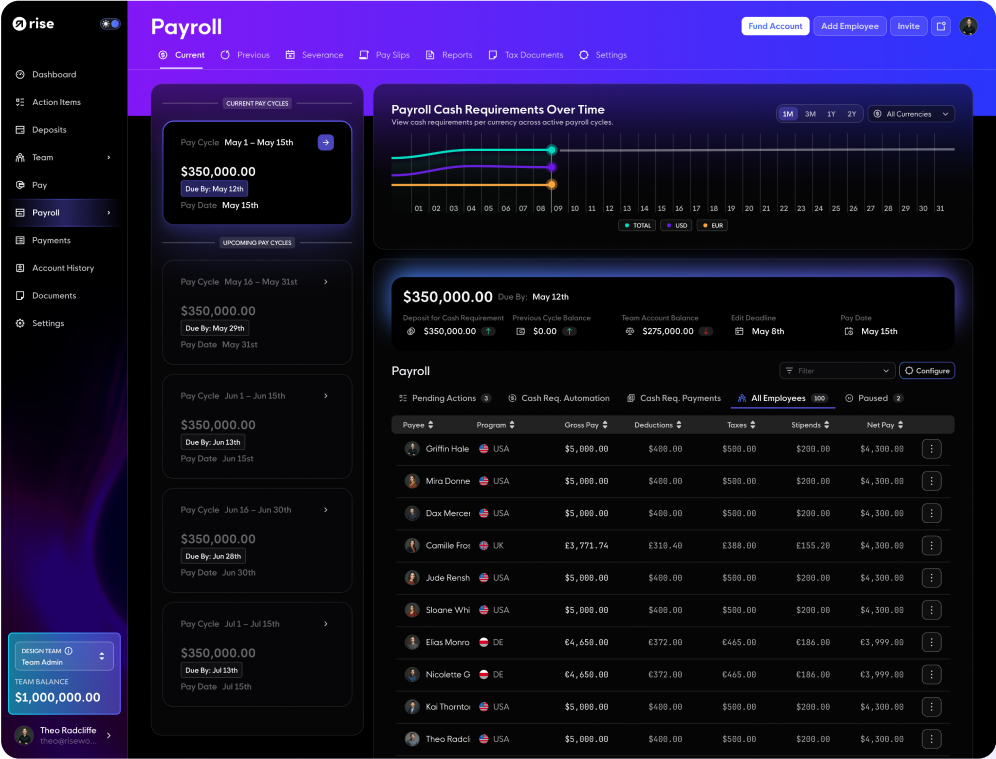
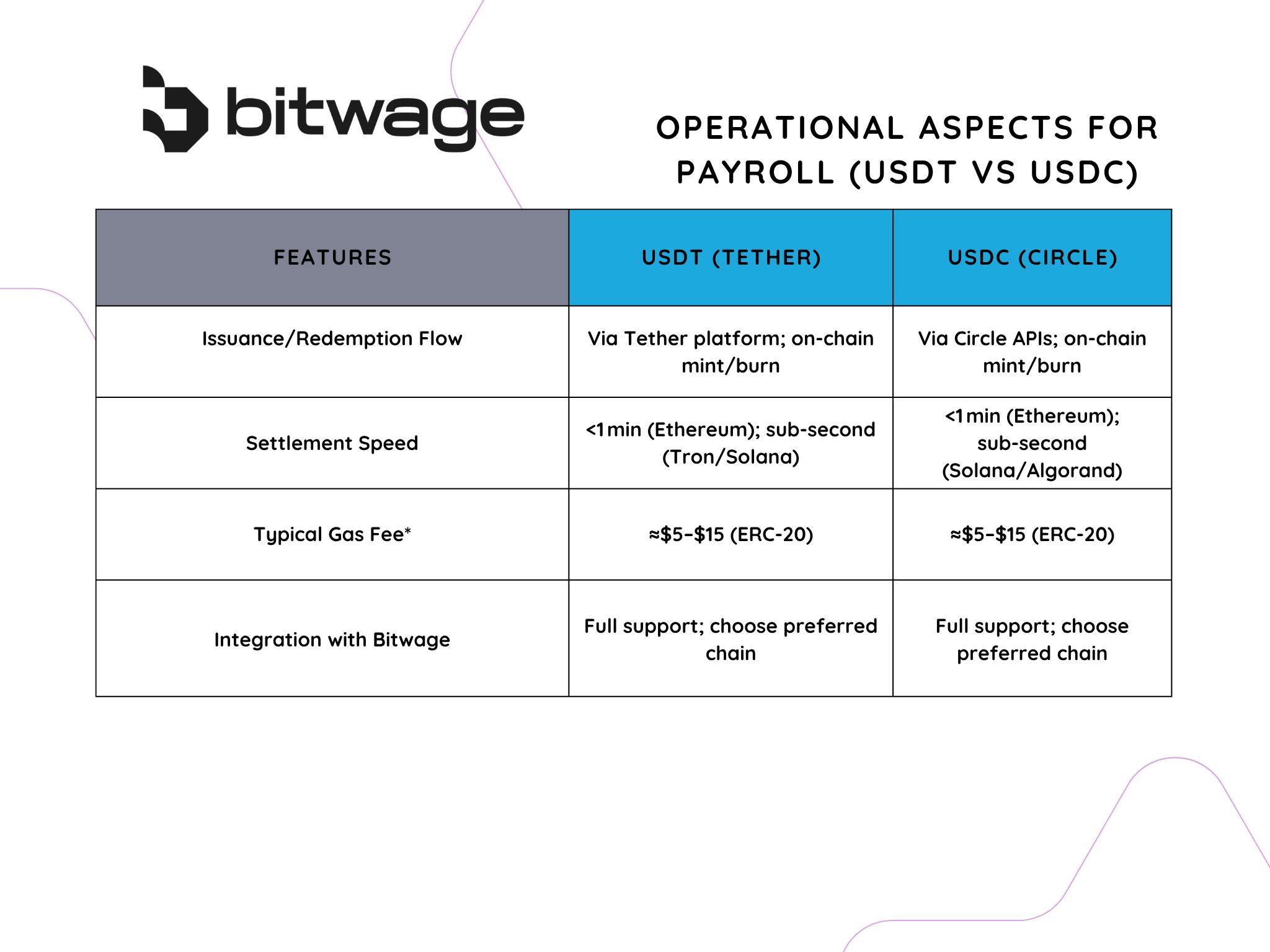
Selecting a provider for USDC payroll 2026 requires evaluating compliance infrastructure, fee structures, and supported blockchain networks. The market has consolidated around four primary platforms—Eco, Bitwage, Rise, and Toku—each offering distinct advantages for global payroll operations. Eco serves as an enterprise-grade infrastructure layer, while Bitwage specializes in converting fiat obligations into stablecoin disbursements. Rise and Toku provide mid-market solutions with varying degrees of multi-chain flexibility.
| Platform | Supported Chains | Compliance Features | Fee Structure |
|---|---|---|---|
| Eco | Ethereum, Polygon, Base | KYC/AML, SOC 2, Insurance | Volume-based |
| Bitwage | Ethereum, Polygon, Solana | KYC/AML, IRS Reporting | Per-payment fee |
| Rise | Ethereum, Polygon, Arbitrum | KYC/AML, Tax Forms | Subscription + per-pay |
| Toku | Ethereum, Base, Polygon | KYC/AML, Audit Trails | Flat monthly fee |
Eco operates as a comprehensive payroll infrastructure provider, supporting USDC across Ethereum, Polygon, and Base. Its compliance framework includes SOC 2 certification and insurance coverage, making it suitable for large enterprises with strict regulatory requirements. Bitwage focuses on the conversion of traditional payroll obligations into stablecoin payments, supporting USDC on Ethereum, Polygon, and Solana. It provides IRS-compliant reporting, which is critical for US-based employers managing remote teams.
Rise offers a subscription-based model combined with per-payment fees, supporting USDC on Ethereum, Polygon, and Arbitrum. Its platform emphasizes tax form generation and multi-chain flexibility, catering to mid-sized companies seeking cost predictability. Toku provides a flat monthly fee structure, supporting USDC on Ethereum, Base, and Polygon. It emphasizes audit trails and compliance documentation, appealing to organizations that prioritize transparent record-keeping for regulatory audits.
When evaluating these platforms, organizations must consider the total cost of ownership, including network gas fees and platform-specific charges. Eco’s volume-based pricing may offer advantages for high-frequency payroll cycles, while Toku’s flat fee could benefit smaller teams. Bitwage and Rise provide hybrid models that balance upfront costs with per-transaction expenses. All four platforms support USDC, but their secondary stablecoin support varies; Bitwage and Rise also support USDT, which may be relevant for jurisdictions where USDC faces regulatory scrutiny.
USDC payroll 2026 tax obligations
Implementing USDC payroll 2026 requires navigating a complex regulatory environment where digital asset payments do not exempt employers from traditional tax liabilities. While the settlement layer is blockchain-based, the underlying obligation remains a fiat-denominated debt to government authorities. Employers must ensure that the stablecoin amount disbursed to employees accurately reflects the gross pay required by local labor laws, including social security, Medicare, and income tax withholdings.
The primary compliance challenge lies in the timing of tax remittance. Federal and state tax agencies generally require withholding taxes to be deposited on specific schedules, often tied to the pay period end date rather than the blockchain transaction timestamp. In 2026, with 27 biweekly pay periods, the window for converting USDC to fiat or ensuring sufficient fiat reserves for tax deposits is tight. Failure to remit on time can result in significant penalties, regardless of whether the employee received their wages in stablecoins.
Reporting requirements also remain anchored in traditional financial systems. Employers must issue Form W-2s to employees and file Forms 941/944 with the IRS, documenting the fair market value of the USDC at the time of payment. The USDC payroll 2026 framework must integrate with existing payroll software to capture this valuation data accurately. Using provider-backed price widgets ensures that the reported income matches the market rate, providing an audit trail that satisfies both tax authorities and accounting standards.
Employers should consult with legal counsel and tax advisors to establish clear protocols for currency conversion and withholding. The USDC payroll 2026 model offers efficiency, but it operates within a rigid compliance structure that demands precise record-keeping and timely fiat settlement for tax purposes.
USDC payroll implementation steps
Implementing USDC payroll requires strict adherence to regulatory standards and technical precision. The process moves from vendor selection to employee onboarding, ensuring that every transaction settles securely on-chain while maintaining full audit trails for compliance officers.
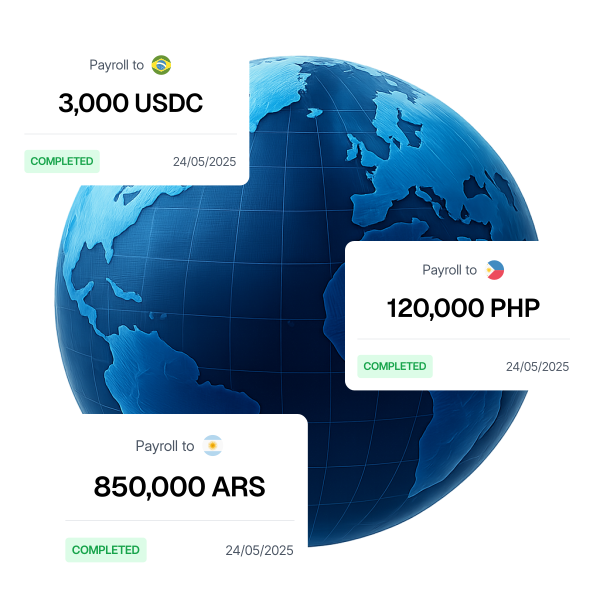
Choose a provider that supports USDC transfers and maintains necessary licensing. Verify that the vendor offers automated tax reporting and integrates with existing HR systems to minimize manual reconciliation errors.
Establish a dedicated treasury wallet for payroll operations. Fund this wallet with USDC from your corporate bank account via a regulated exchange, ensuring you retain records of the off-ramp transactions for audit purposes.
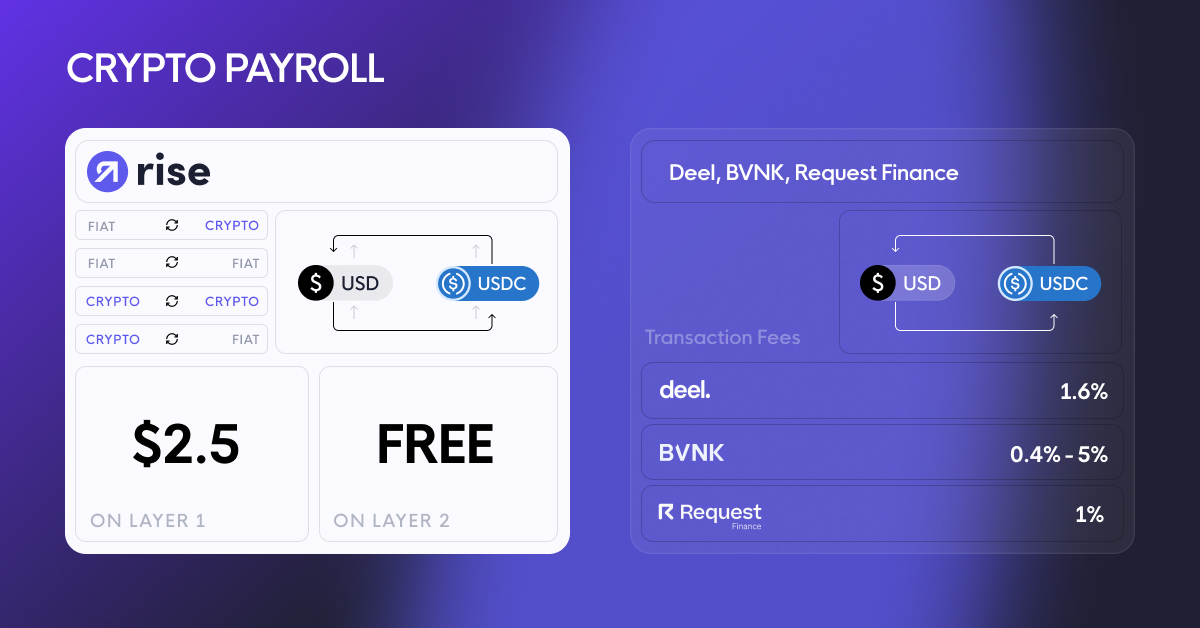
Require all employees to complete Know Your Customer (KYC) checks before receiving payments. Collect their public wallet addresses and verify them against identity documents to prevent fraud and ensure regulatory compliance.
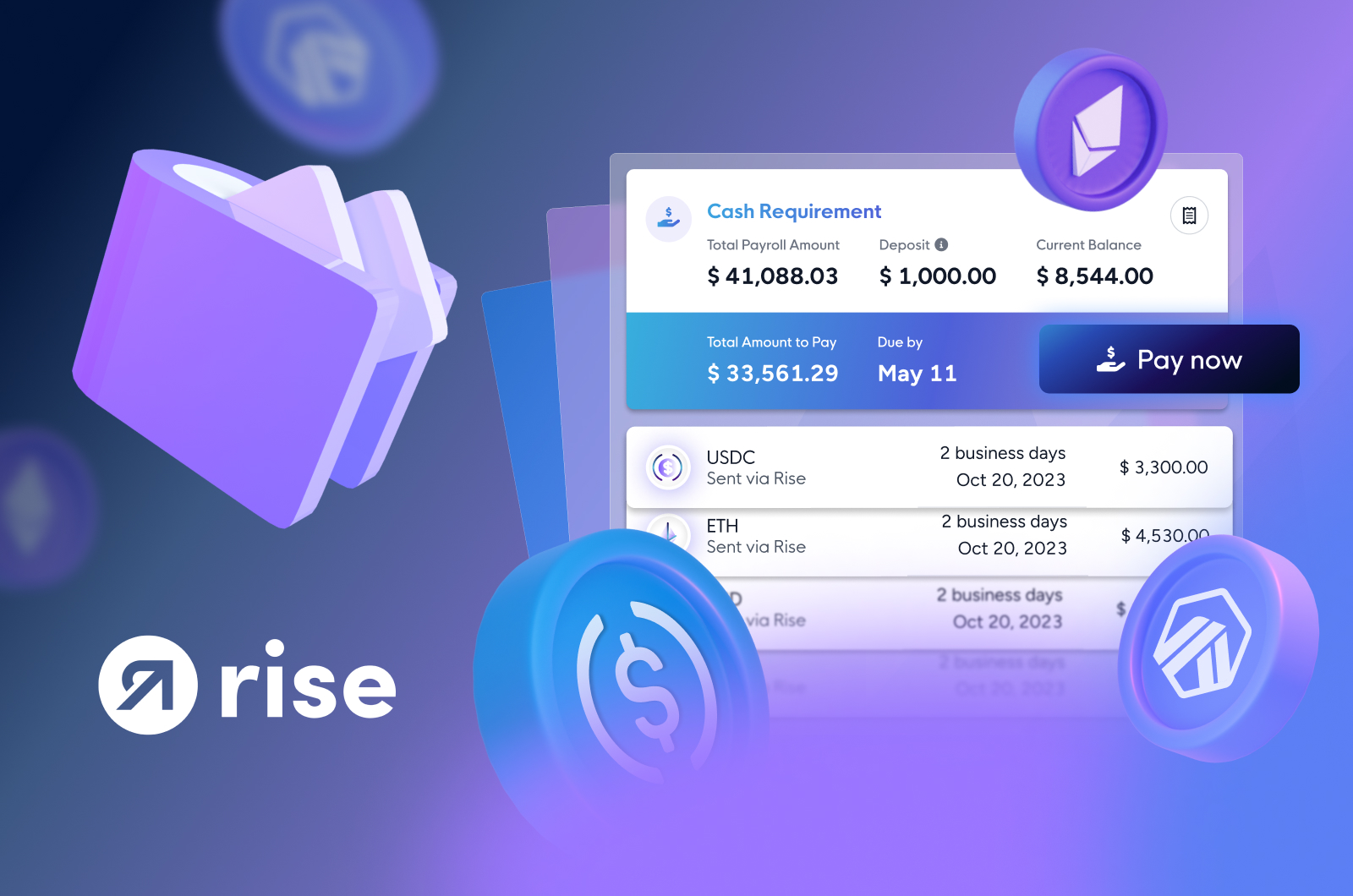
Run a small-scale pilot with a subset of employees before full deployment. This allows you to verify transaction speeds, confirm that employees can successfully withdraw funds to their personal wallets, and identify any system glitches.
Configure automated payroll schedules within your vendor dashboard. Align the run dates with your existing biweekly or monthly cycles, accounting for blockchain settlement times to ensure employees receive funds on the expected pay date.
No comments yet. Be the first to share your thoughts!