
Set up your payroll workflow
To pay remote teams in USDC compliantly, you need a structured setup that bridges traditional payroll requirements with blockchain mechanics. This process involves selecting a platform that supports stablecoin payouts, verifying employee wallets, and configuring payment schedules. The goal is to establish a workflow that handles tax reporting and compliance alongside the crypto transaction.

Select a payroll platform that explicitly supports USDC and handles regulatory reporting. Not all crypto payroll services support stablecoins, so verify that the provider can issue USDC payouts and generate necessary tax documents for your jurisdiction. Look for providers that integrate with existing HR systems to streamline the process.
Before the first payment, collect and verify the USDC wallet addresses for each team member. Ensure employees are using wallets that support the ERC-20 standard (or the relevant network your provider uses). Double-check addresses to prevent irreversible losses, as blockchain transactions cannot be reversed.

Set up recurring payment schedules and define the tax withholding rules. Since USDC is a stablecoin pegged to the USD, the value remains consistent, but tax liabilities still apply. Configure the platform to calculate and withhold taxes based on local regulations before converting or distributing the net pay.
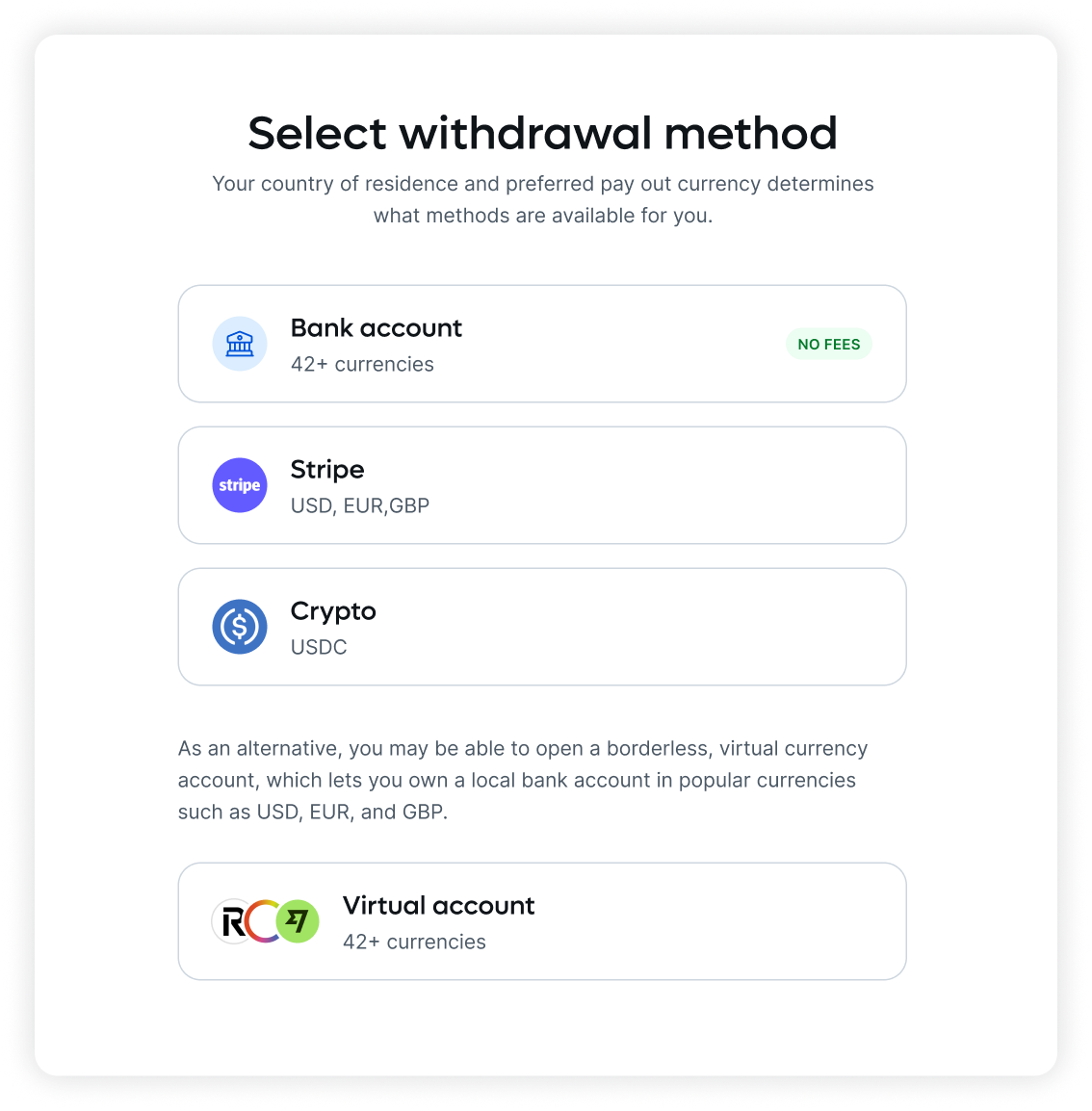
Deposit the required USDC into your payroll account or funding wallet. Ensure you have sufficient funds to cover both employee payouts and any platform fees. Some providers allow you to fund the account with fiat currency, which they then convert to USDC automatically.
This setup ensures that your USDC payroll workflow is secure, compliant, and ready for your first payout cycle. By following these steps, you establish a foundation for efficient global payments while maintaining necessary regulatory oversight.
Withhold and report taxes on crypto payroll
Treating USDC as a digital currency for payroll does not exempt you from standard tax obligations. The IRS classifies cryptocurrency, including USDC, as property. This classification means that every payment made to an employee in USDC is subject to the same federal and state income tax withholding, Social Security, and Medicare (FICA) requirements as a traditional fiat paycheck.
You must calculate withholding based on the fair market value of the USDC at the time the wages are paid. This value is determined by the exchange rate between USDC and the US dollar at the exact moment of transfer. You cannot use a static or historical price. If the value fluctuates between the time you accrue the liability and the time you remit the tax, the liability is fixed at the payment date value.
Reporting follows the same structure as traditional payroll. You must issue Form W-2 to employees, reporting the USD value of their USDC compensation in Box 1 (Wages, tips, other compensation). You must also file quarterly federal tax returns (Form 941) and annual employment tax returns (Form 940). State and local reporting requirements vary, but most jurisdictions follow the federal property classification, requiring you to report the USD equivalent of the crypto wages.
Failure to withhold or report correctly can result in significant penalties. The IRS does not distinguish between the medium of exchange when assessing compliance. Whether you pay in dollars or digital tokens, the legal duty to withhold and remit taxes remains identical. Ensure your payroll provider or accounting system captures the USD value at the moment of disbursement for accurate reporting.
Choose a compliant payroll provider
Selecting the right platform is the most critical step in USDC payroll. You need a provider that acts as a bridge between blockchain transparency and local tax law. The wrong choice can lead to frozen funds or missed filings; the right one automates the complexity.
Focus on three non-negotiable capabilities: multi-chain support, automated tax withholding, and regulatory licensing. Most modern platforms support USDC alongside USDT and other assets, but you must verify which networks (Ethereum, Solana, Polygon) your team prefers. Tax automation is equally vital; the system should generate W-2s, 1099s, or local equivalents without manual intervention.
| Feature | Rise | Bitwage | Eco | Multiplier |
|---|---|---|---|---|
| USDC Support | Yes (Multi-chain) | Yes | Yes | Yes |
| Tax Automation | Automated withholding | Manual calculation | Automated | Automated |
| Global Compliance | High | Medium | High | High |
| Fee Structure | Transparent | Per-transaction | Tiered | Subscription |
Rise and Bitwage are prominent contenders. Rise offers robust multi-chain support and internal volume data, making it suitable for tech-forward teams. Bitwage is a veteran in the space, though it may require more manual oversight for tax calculations. Eco provides a broader ecosystem of tools, while Multiplier excels in global compliance for diverse jurisdictions.
Compare these options against your specific needs. If your team is distributed across multiple countries, prioritize platforms with strong local compliance features. If speed and low fees are paramount, look at transaction structures. Always verify the provider’s licensing status in your primary jurisdiction before onboarding.
Avoid common compliance mistakes
Paying remote teams in USDC is straightforward, but the regulatory overhead is not. Skipping standard payroll controls exposes your business to tax penalties, money laundering fines, and employee disputes. Treat crypto payroll with the same rigor as traditional wire transfers.
Missed tax withholdings
The most frequent error is treating USDC as a tax-free bonus. It is compensation. You must withhold income tax, Social Security, and Medicare just as you would for fiat. Using a non-compliant wallet or manual transfer does not exempt you from these obligations. Rely on platforms that automate these calculations to avoid underpayment penalties.
Using personal wallets for business
Never pay employees from a personal wallet or a shared team address. This commingles funds and obscures the audit trail. If you cannot prove who sent the payment and why, regulators will view it as unreported income or unlicensed money transmission. Use a dedicated corporate wallet with clear, documented ownership.
Ignoring local labor laws
USDC moves globally, but labor laws do not. A platform that works in one jurisdiction may violate wage payment laws in another. For example, some regions require payment in local fiat or mandate specific pay frequencies. Check the 2026 payroll calendar for your specific jurisdiction to ensure your crypto disbursement dates align with local legal requirements.
Verify your payroll setup
Before processing your first USDC payroll, run through this final verification checklist. This step ensures your system is legally compliant and technically ready for global transfers.
Pre-payroll verification steps
- Confirm tax forms are ready: Ensure W-8BEN or W-9 forms are collected and stored for all employees before the first payment.
- Verify wallet addresses: Double-check that employee wallets are correct and belong to the intended recipients.
- Test with a small amount: Send a $1 test transaction to confirm the wallet is active and the platform processes USDC correctly.
- Check payroll calendar alignment: Align your USDC payment dates with your local payroll calendar to avoid late fees or compliance issues.
- Review compliance settings: Ensure your payroll platform is configured for the correct jurisdictions and stablecoin standards.
Final checks
-
Tax forms collected and stored
-
Wallet addresses verified
-
Test transaction completed
-
Payroll calendar aligned
-
Compliance settings reviewed
Once these steps are complete, you are ready to process your first USDC payroll. Remember to keep records of all transactions for audit purposes.
No comments yet. Be the first to share your thoughts!