
USDC payroll 2026 market shift
Stablecoin payroll has moved from a niche experiment to a mainstream compensation option in 2026. This shift is driven by broader USDC adoption and clearer regulatory frameworks that give employers and employees confidence in using digital assets for wages.
The transition is not uniform. As of Q1 2026, major platforms like Coinbase are limiting stablecoin payroll features to USDC on the Base network, excluding USDT and other chains. These features are currently available only to US-based employers, reflecting the cautious, compliance-first approach required for handling payroll liabilities.
Despite these platform-specific restrictions, the overall market trend is clear. Crypto payroll is becoming a serious part of global compensation, with USDC leading the charge due to its regulatory clarity and widespread institutional acceptance. This move signals a maturation of the stablecoin ecosystem, where utility and compliance outweigh speculation.
IRS crypto payroll rules for employers
The Internal Revenue Service treats cryptocurrency payments as property, not currency. When an employer pays wages in USDC, the transaction triggers the same federal tax obligations as paying in fiat dollars. The method of settlement does not change the nature of the income.
For employees, the fair market value of the USDC at the time of receipt is taxable wages. This value is subject to standard payroll deductions, including Social Security, Medicare, and federal income tax withholding. The employee must report this income on their W-2, regardless of whether they convert the stablecoin to USD immediately or hold it.
Employers face identical withholding requirements. You must calculate withholding based on the USDC’s dollar value at the time of payment. The employer is responsible for depositing these taxes and filing the necessary returns, just as with traditional bank transfers. Failure to treat the crypto payment as taxable wages can result in significant penalties.
The employer also bears the burden of determining the correct fair market value. This typically requires using a reliable exchange rate from a recognized trading platform at the exact time of payment. Documentation of this valuation is critical for both the employer’s payroll records and the employee’s tax filing.
While USDC is a stablecoin pegged to the US dollar, its value can fluctuate slightly in the short term. The tax liability is fixed at the moment of payment. Any subsequent appreciation or depreciation of the USDC is a separate capital gains or loss event for the employee, unrelated to the payroll withholding obligation.
##USDC Payroll 2026: Compliance Rules and Platform Options
State regulations on stablecoin wages
The legal landscape for paying employees in USDC is not a single federal rulebook but a patchwork of state-level statutes. Employers must navigate a fragmented environment where the legality of stablecoin compensation depends entirely on local jurisdiction. While some states have explicitly authorized digital assets for payroll, others impose strict prohibitions or lack clear guidance, creating compliance risks that vary by zip code.
Several states have taken proactive steps to clarify or enable stablecoin wages. California’s SB 444, signed in October 2023, amended the Labor Code to define "digital asset" as a lawful form of payment, provided the employee voluntarily opts in. This law effectively legalized USDC payroll in the state, setting a precedent for other tech-forward jurisdictions. Similarly, states like Texas and Florida have passed legislation recognizing digital assets as valid currency, reducing ambiguity for employers in those regions.
Conversely, many states maintain restrictive frameworks. Some jurisdictions still classify digital assets as speculative instruments rather than currency, making them ineligible for wage payments under existing labor laws. In these areas, paying in USDC could be interpreted as violating minimum wage or payment frequency statutes. Employers in these states must often convert USDC to fiat before disbursing wages, negating the benefits of on-chain payroll.
The divergence in state laws means that multi-state employers face a complex compliance matrix. A payroll platform may support USDC payouts, but that feature is only legal if the employer and employee are located in a state that permits it. As of Q1 2026, major platforms like Eco and Bitwage offer USDC payroll options, but their terms of service often restrict usage to compliant jurisdictions. Employers must verify local regulations before enabling stablecoin pay, as non-compliance can result in labor violations and financial penalties.
Top USDC payroll software compared
Selecting the right platform depends on how strictly you need to separate payroll compliance from crypto custody. The following comparison focuses on three leading providers: Rise, Bitwage, and Toku. Each handles the conversion of USDC to fiat or direct stablecoin distribution differently, which impacts both your operational workflow and the worker's tax reporting experience.
Rise
Rise is designed for high-volume USDC payroll. It supports direct USDC payments to workers while handling the underlying compliance infrastructure. Rise also integrates with Aave to allow idle USDC balances to earn variable APY, effectively turning payroll treasury into a yield-bearing asset. This model is particularly useful for companies that prefer to hold payroll funds in stablecoins rather than converting to fiat immediately.
Bitwage
Bitwage specializes in converting crypto wages into traditional fiat currency before distribution. This approach simplifies tax withholding because workers receive standard bank deposits rather than stablecoins. Bitwage supports USDC alongside other volatile assets, making it a flexible choice for employers who want to pay in crypto but ensure their team receives familiar currency. The platform handles the conversion logic, reducing the compliance burden on the employer.
Toku
Toku offers a streamlined interface for USDC contractor payments at scale. It focuses on ease of integration and transparent fee structures, allowing employers to manage payroll directly within a stablecoin framework. Toku is often chosen by organizations that prioritize speed and simplicity in cross-border payments, ensuring that contractors receive funds quickly without the friction of traditional banking rails.
Platform Comparison
The table below summarizes the core differences in USDC support, fee structures, and compliance features to help you align your choice with your operational needs.
| Platform | USDC Support | Fiat Conversion | Compliance Features |
|---|---|---|---|
| Rise | Direct USDC Payments | Optional APY Integration | Automated Tax Reporting |
| Bitwage | USDC & Other Assets | Automatic to Bank | Standard Withholding |
| Toku | Direct USDC Payments | None (Stablecoin Only) | Contractor-Focused Tools |
Implementation steps for USDC payroll
Integrating stablecoin payroll requires aligning your existing HR and finance workflows with blockchain infrastructure. The process moves from technical setup to legal compliance and final employee onboarding. Employers must treat USDC payouts with the same rigor as traditional wire transfers.
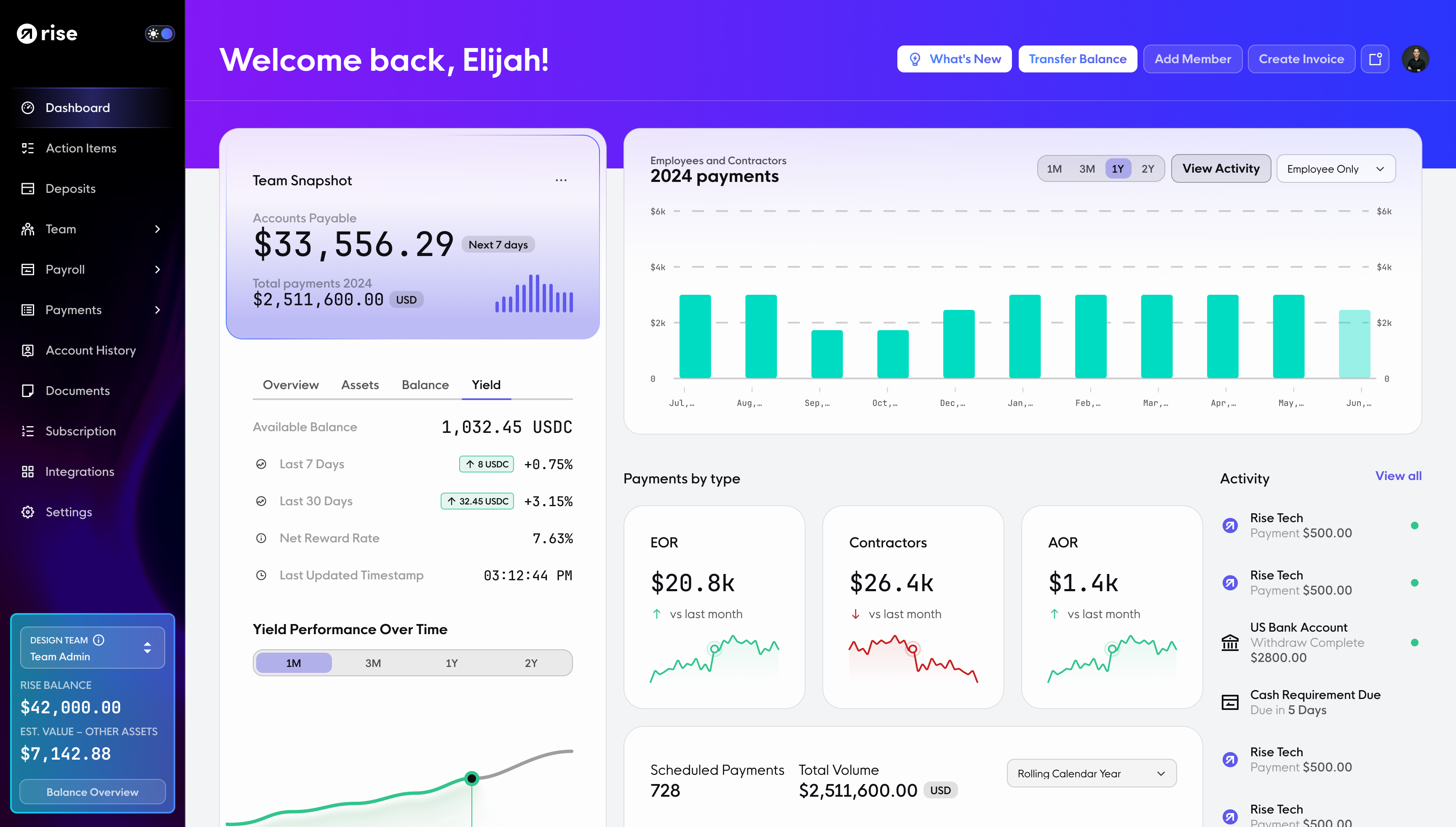
Select a platform that handles the conversion and distribution. Providers like Deel or Wayex offer direct-invoice flows for freelancers and employer-of-record structures for full-time staff. These platforms manage the wallet infrastructure, reducing your direct exposure to blockchain risks.
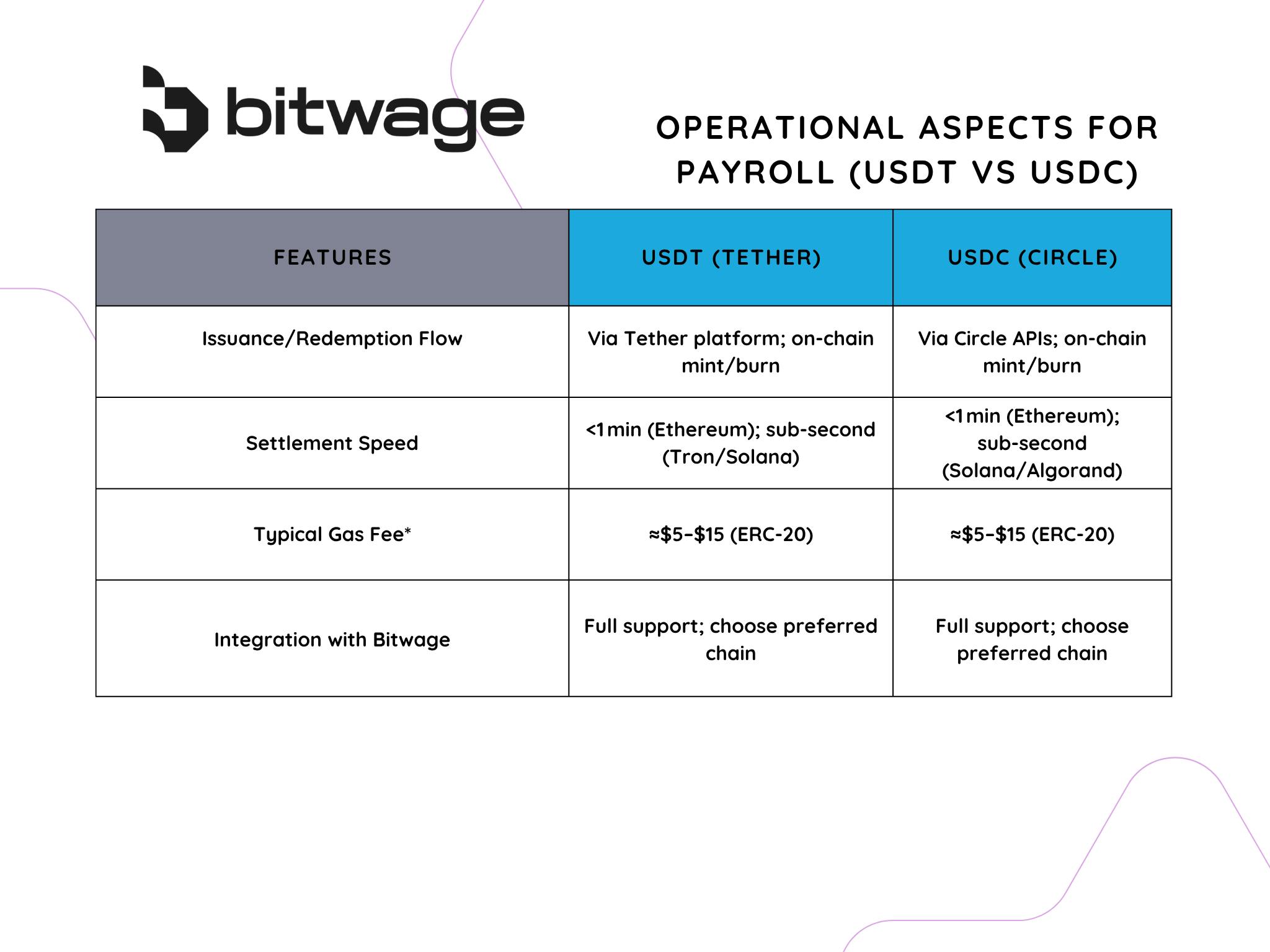
Link your corporate bank account to the payroll platform. The system will hold USDC in custody or move it through smart contracts. Ensure your treasury team understands the withdrawal limits and approval workflows required for each payout cycle.
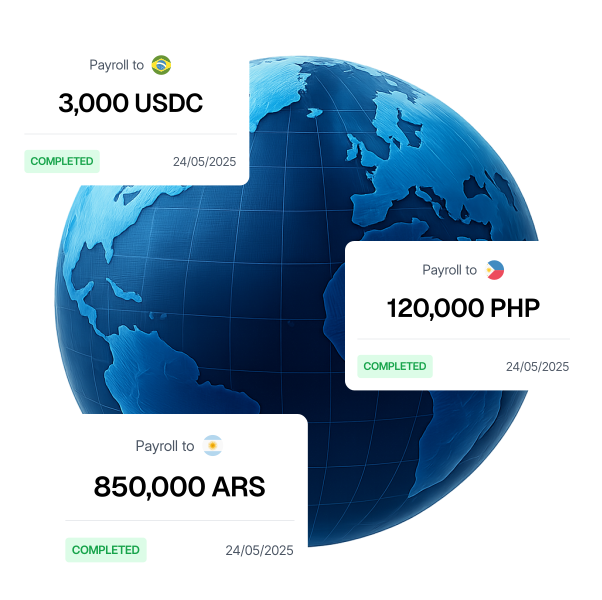
Employees need a way to receive USDC. Some platforms provide custodial wallets for workers who lack experience. Others allow direct transfers to personal non-custodial wallets. Verify that your payroll software supports the specific wallet types your team uses.

Stablecoin payments are generally treated as property for tax purposes in the United States. Configure your system to generate transaction records that include fair market value at the time of payment. This data is essential for issuing W-2s or 1099s and satisfying IRS reporting requirements.
Process a single pay period with a small group of volunteers. Test the speed of settlement, the accuracy of tax withholdings, and the clarity of the employee experience. Use this data to refine your internal policies before a full rollout.
No comments yet. Be the first to share your thoughts!