
Choose the right USDC payroll provider
Selecting a platform for USDC payroll requires balancing settlement speed with regulatory compliance. Your provider acts as the bridge between your corporate treasury and employees in different jurisdictions. A compliant platform handles the legal complexity of cross-border crypto payments, ensuring you avoid tax penalties and banking restrictions.
When comparing options, focus on three areas: regulatory standing, supported networks, and fee structures. The best stablecoin routes for cross-border payroll in 2026 highlight that orchestration fit and KYB (Know Your Business) models are just as critical as raw transaction speed. USDC is generally preferred for payroll due to its regulatory clarity and reserve transparency compared to other stablecoins, making it the safer choice for employee compensation.
| Provider | Compliance Features | Supported Networks | Fee Structure |
|---|---|---|---|
| Eco | Global KYB/AML, regulatory licenses | Multi-chain (ETH, Polygon, Solana) | Low flat fee per transaction |
| Toku | US-regulated, bank-grade custody | Ethereum, Polygon, Base | Subscription + network gas |
| Bitwage | US-based, IRS reporting tools | Bitcoin, Ethereum, USDC | Percentage of payroll + withdrawal fee |
| Deel | Global entity compliance, local labor laws | USDC (Ethereum, Polygon, Solana) | Platform fee + network gas |
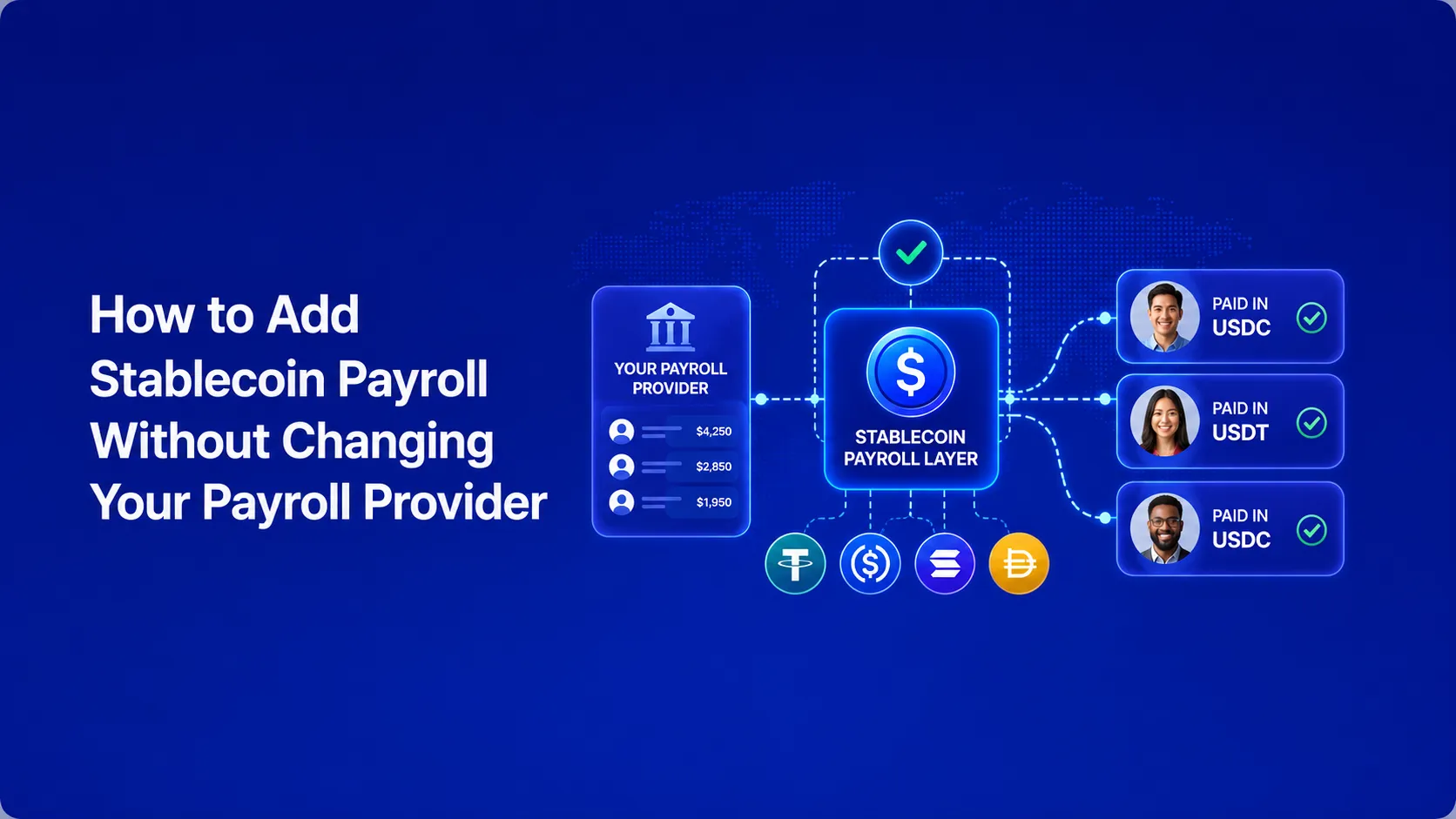
Configure tax withholding and compliance rules
Stablecoin payroll operates on a fundamental legal distinction: USDC is property, not currency. This classification triggers specific tax events upon receipt and conversion, creating a compliance landscape that differs significantly from traditional fiat payments. You must map these digital asset rules to your local jurisdictions to avoid legal risks.
1. Map Local Tax Obligations to Payment Workflow
Before integrating USDC into your payroll system, identify the specific tax implications in each country where your team resides. In the United States, the IRS treats cryptocurrency as property, meaning every payment is a taxable event for the employee. You must configure your payroll provider to report these transactions accurately.
For global teams, the complexity increases. Countries like Germany and Japan have distinct classifications for digital assets, while others may lack clear guidance. Consult local tax experts to determine if withholding is required at the point of issuance or upon conversion. Failure to map these obligations correctly can result in significant penalties for both the employer and the employee.
2. Configure Withholding Rules for Digital Assets
Traditional payroll systems are not designed to handle tax withholding in stablecoins. You need to calculate the fiat-equivalent value of the tax liability at the time of payment. Then, deduct the appropriate amount in USDC before distributing the net salary.
This process requires real-time price feeds to ensure accuracy. Use a payroll provider that supports automated fiat-equivalent calculations and stablecoin deduction. This ensures that the withheld amount matches the local tax authority's requirements, regardless of market volatility.
3. Establish Compliance Documentation
Maintain detailed records of all USDC transactions. This includes the date, time, fiat-equivalent value, and recipient wallet address. These records are essential for auditing and proving compliance with local tax laws.
Consider using a payroll provider that offers built-in compliance reporting. These tools can generate the necessary documentation for tax filings, reducing the administrative burden on your finance team. Regular audits of your payroll records will help identify and correct any discrepancies early.
Research the tax treatment of digital assets in each country where your employees are based. Consult local tax advisors to understand withholding requirements and reporting obligations for USDC payments.

Configure your payroll provider to calculate tax liabilities in fiat currency at the time of payment. Ensure the system deducts the correct amount in USDC to cover these obligations.
Enable automated compliance reporting features in your payroll system. This ensures that all transactions are documented and ready for tax filings, reducing the risk of errors and penalties.
4. Monitor Regulatory Changes
The regulatory landscape for stablecoin payroll is evolving rapidly. Stay informed about changes in tax laws and compliance requirements in your operating jurisdictions. Subscribe to updates from relevant tax authorities and industry associations.
Regularly review your payroll policies and procedures to ensure they remain compliant. Adjust your configurations as needed to reflect new regulations. Proactive monitoring will help you avoid legal issues and maintain trust with your employees.
Fund the payroll account in USDC
Before you can distribute wages, you need to move USDC into your payroll provider’s designated wallet address. This step transforms your corporate treasury balance into operational funds. The process varies slightly depending on whether you use Circle’s Cross-Chain Transfer Protocol (CCTP) or a centralized exchange like Coinbase.
Most payroll platforms provide a dedicated deposit address for each supported currency. Locate the USDC deposit section in your dashboard and copy the address. Double-check the network specification (e.g., Ethereum, Solana, or Polygon). Sending USDC to the wrong network results in permanent loss of funds.
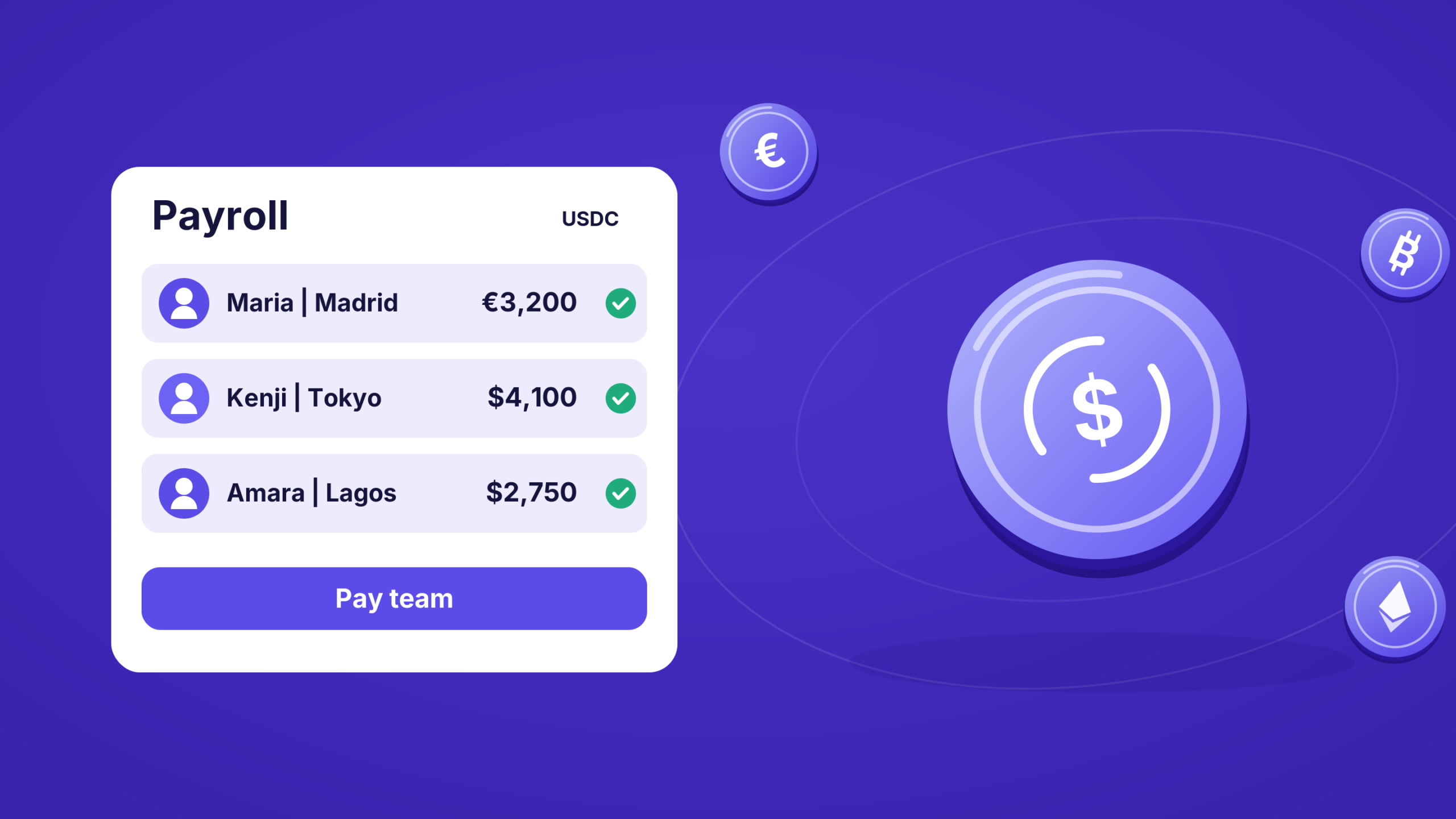
If you hold USDC on Coinbase, navigate to the Send/Transfer menu. Paste the payroll provider’s address as the recipient. Ensure the asset selected is USDC, not ETH or another token. Enter the exact amount required for the upcoming pay cycle. Review the network fee (gas) and confirm the transaction.
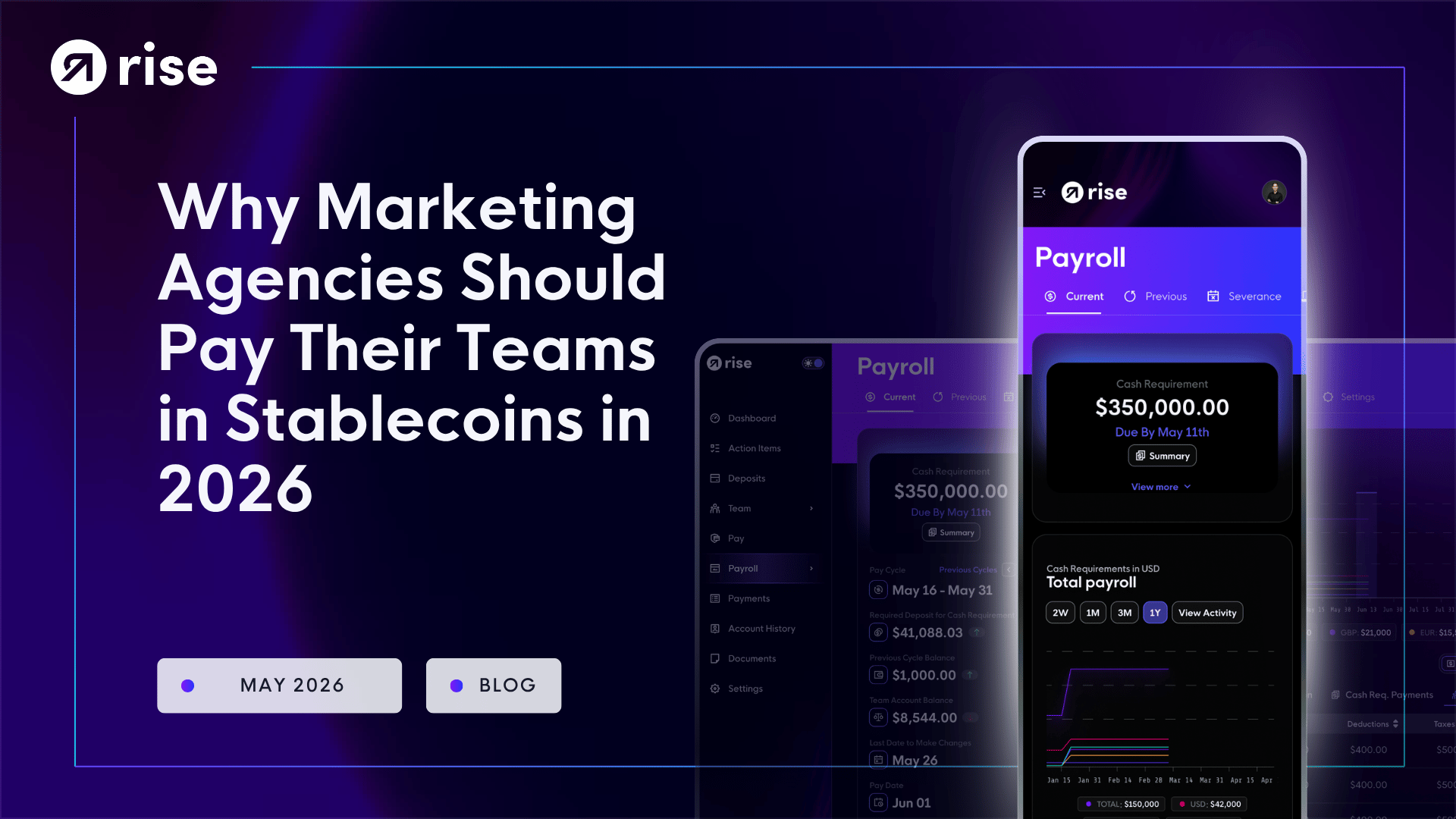
Wait for the required number of block confirmations. Once settled, the USDC appears in your payroll provider’s balance. Because payroll involves strict tax and labor compliance, ensure your internal finance team logs this transaction as a payroll expense in your accounting software. This step is critical for audit trails and tax reporting in 2026.
Using Circle CCTP allows you to move USDC natively across blockchains without bridging services, reducing counterparty risk. However, many payroll providers still rely on centralized exchange integrations for fiat off-ramps. Always prioritize the method recommended by your payroll vendor to avoid settlement delays.
Run the first USDC payroll batch
USDC Payroll for Global Teams works best as a sequence, not a scramble through settings. Do the minimum first: confirm compatibility, connect the core hardware, update only when needed, and test the result before adding optional features. That order keeps the task understandable and makes failures easier to isolate. After each step, pause long enough for the interface to finish syncing. Many setup problems are timing problems disguised as configuration problems. If the same step fails twice, record the exact error, restart the smallest affected piece, and retry before moving deeper.
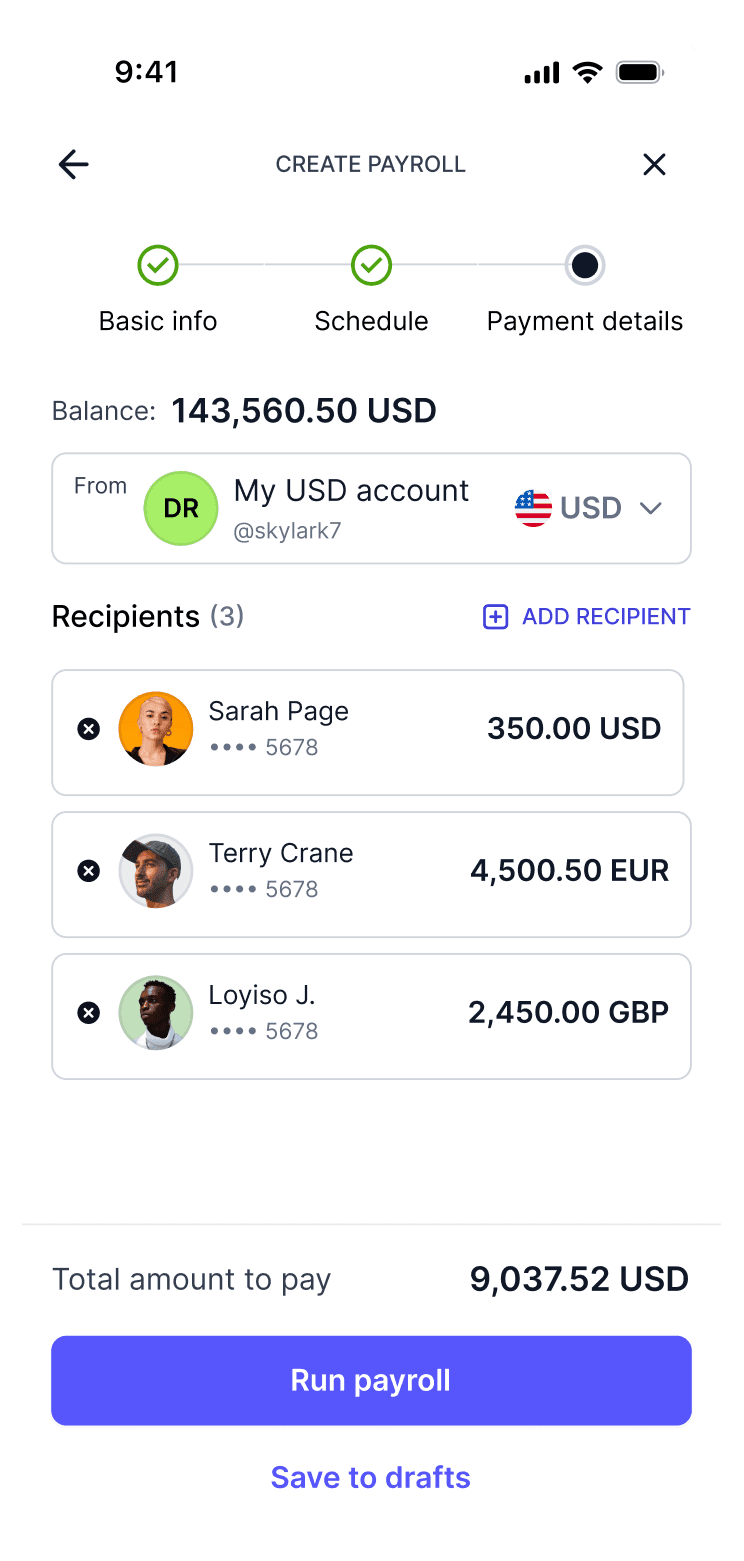

Common USDC payroll mistakes to avoid
Even with a streamlined USDC payroll workflow, technical and compliance errors can trigger frozen funds or tax penalties. The most frequent pitfalls involve network mismatches and ignoring local labor regulations. Address these issues before you process your first batch.
Sending USDC on the wrong network
USDC exists on multiple blockchains, including Ethereum, Solana, and Polygon. Sending tokens on an unsupported network results in permanent loss. Always verify the recipient’s wallet address and the specific chain ID in your payroll software before confirming the transaction. Cross-check the network against the employee’s receiving wallet to ensure compatibility.
Ignoring local labor laws
Paying in stablecoins does not exempt you from local employment regulations. Many jurisdictions require payroll taxes to be withheld and remitted in local fiat currency. Failing to account for these obligations can lead to significant fines. Consult with a local tax advisor to ensure your USDC payroll setup complies with regional wage and tax laws.
USDC payroll questions for 2026
Stablecoin payroll uses regulated, fiat-pegged digital tokens like USDC to settle salaries and contractor fees across borders. While this method simplifies cross-border transfers, it introduces distinct legal and technical considerations for global teams in 2026.
Below are the most common questions regarding compliance, volatility, and provider selection.
No comments yet. Be the first to share your thoughts!