
USDC payroll shifts in 2026
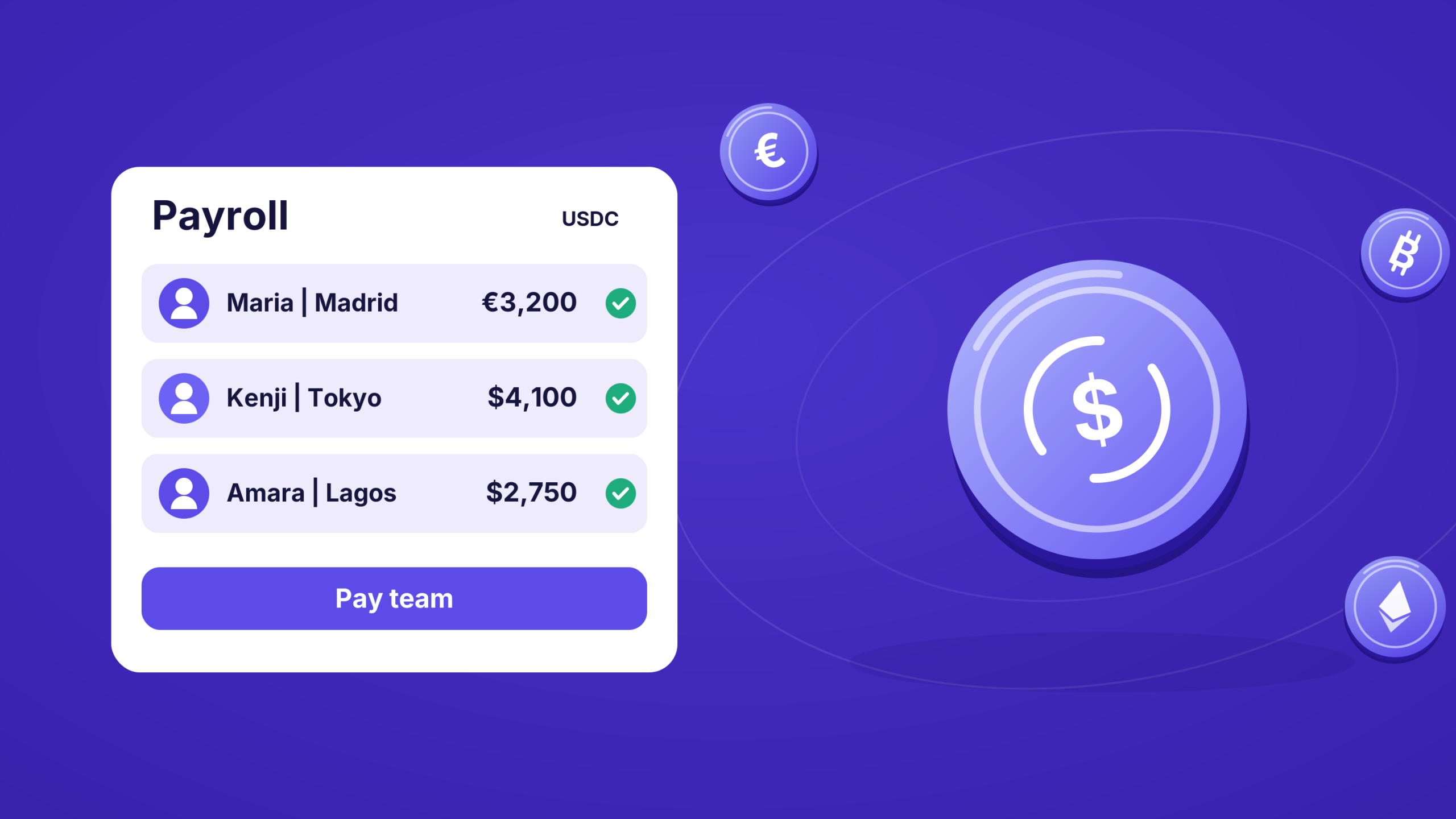
The 2026 payroll landscape is undergoing a structural shift as companies move away from volatile crypto assets toward stablecoin infrastructure. USDC payroll is gaining traction because it offers the speed of blockchain settlement with the price stability required for wage compliance. This transition allows organizations to bypass slow traditional banking rails and reduce the foreign exchange friction that often delays global team compensation.
This shift is not merely technological but regulatory. In 2026, more companies are turning to USDC payroll and stablecoin payroll to bypass slow rails and give workers faster access to earnings. The focus has moved from speculative crypto holdings to utility-driven payment systems that settle in seconds with minimal gas costs. This stability makes USDC a viable alternative for high-stakes compensation, aligning with the need for predictable, auditable, and compliant wage disbursement.
The move toward stablecoin payroll reflects a broader acceptance of digital dollars as a standard for global labor. By leveraging USDC, employers can streamline international payments, reducing the overhead and delays associated with wire transfers. This efficiency supports the growing trend of remote and distributed workforces, where timely and accurate payment is critical to retention and operational continuity.
Tax withholding and reporting rules
Paying salaries in USDC does not exempt employers from local tax withholding obligations. Tax authorities generally treat stablecoin distributions as taxable income events for employees and contractors at the moment of receipt. The digital nature of the asset does not change the underlying liability for income tax, social security, or payroll taxes.
Employers must determine how their jurisdiction classifies the asset. In the United States, the IRS treats cryptocurrencies as property. This means the fair market value of the USDC at the time of payment is the basis for withholding calculations. If the value fluctuates between the payroll date and the distribution date, the employer remains liable for the amount withheld based on the initial valuation. Other jurisdictions may treat stablecoins as currency, but the requirement to report and withhold remains identical.
Reporting requirements also apply to independent contractors. Under current U.S. tax law, payments of $600 or more to non-employees in the course of a trade or business must be reported on Form 1099-NEC. This applies regardless of whether the payment was made via wire transfer or stablecoin. The employer must calculate the fiat equivalent of the USDC sent to determine the correct reporting amount.
Failure to properly withhold taxes or report payments can result in significant penalties for the employer. It is critical to integrate stablecoin payroll systems with existing payroll software that can automatically capture the fiat value at the time of transaction. This ensures that both the employer and the employee have accurate records for filing annual tax returns.
For broader market context, monitoring stablecoin performance can help predict volatility impacts on payroll costs.
Comparing USDC payroll platforms
Selecting a USDC payroll provider requires evaluating how each platform handles regulatory reporting, cross-chain settlement, and tax compliance. The market distinguishes between native stablecoin processors and legacy payroll systems that have added crypto support. Each option presents different trade-offs regarding fee structures, supported networks, and the depth of audit trails required for high-stakes legal compliance.
The following comparison outlines the core capabilities of leading providers. This assessment focuses on multi-chain availability, tax reporting automation, and fee models that impact net payroll costs.
| Provider | Supported Chains | Tax Reporting | Fee Structure |
|---|---|---|---|
| Rise | Ethereum, Polygon, Arbitrum | Automated 1099-NEC generation | 0.5% per transaction |
| Bitwage | Bitcoin, Lightning Network | Manual payroll integration | Flat monthly fee |
| Eco | Multi-chain (EVM, Solana) | API-driven reporting | Volume-based tiers |
| Base Pay | Base only | Limited native support | Pay-as-you-go |
Providers like Rise and Eco support broader multi-chain environments, allowing employers to settle payroll on lower-cost networks such as Polygon or Arbitrum. This flexibility reduces gas fees during high-network congestion periods. In contrast, Base Pay is restricted to the Base network, which offers speed but limits chain diversity for global teams operating across multiple jurisdictions.
Tax reporting remains the most complex aspect of USDC payroll. Platforms with automated 1099-NEC generation, such as Rise, reduce the administrative burden on finance teams. Legacy systems like Bitwage often require manual integration with existing payroll software, increasing the risk of human error in tax filings. For organizations prioritizing compliance, automated reporting capabilities should be a primary selection criterion.
Fee structures vary significantly. Rise charges a percentage per transaction, which may scale with payroll volume. Eco offers volume-based tiers that can lower costs for larger enterprises. Base Pay’s pay-as-you-go model suits smaller, irregular payments. Employers must calculate the total cost of ownership, including both platform fees and network gas costs, to determine the most economical solution for their specific payroll frequency.
usdc price and market trends
USDC has maintained its peg to the US dollar with high precision, a stability requirement for payroll processing where wage volatility is unacceptable. For 2026, the asset continues to trade within a tight band, ensuring that the value of compensation remains consistent from issuance to employee receipt.
The following chart illustrates the recent price action of USDC against the US dollar. The minimal deviation confirms the asset’s reliability for recurring payroll obligations.
This stability is underpinned by Circle’s 1:1 reserve structure, which holds assets in cash and short-dated US Treasuries. Unlike volatile cryptocurrencies, USDC’s market performance is defined by its adherence to parity, making it a predictable tool for budgeting and tax withholding.
Setting up compliant USDC payroll
Implementing USDC payroll requires a structured approach to legal compliance, vendor selection, and tax reporting. Unlike traditional fiat rails, stablecoin transactions are immutable and public, meaning the setup phase must prioritize regulatory alignment and auditability from day one.
Before processing any payments, verify the legality of stablecoin payroll in your jurisdiction. In the United States, the IRS treats cryptocurrency as property, requiring fair market value calculations at the time of payment. Consult legal counsel to ensure your structure meets local labor laws and tax withholding requirements.
Choose a payroll provider that specializes in crypto payments and maintains strict KYC/AML protocols. Vendors like Bitwage or Rise handle the conversion, tax withholding, and fiat settlement to employees’ bank accounts, reducing your operational burden. Ensure the vendor provides detailed transaction records for your annual tax filings.
Set up your payroll software to calculate federal, state, and local taxes based on the USD value of USDC at the time of disbursement. The system must generate accurate W-2s or 1099s. Because USDC prices are pegged to the dollar, volatility risk is low, but timestamp accuracy is critical for tax compliance.
Provide employees with a clear onboarding process. Most payroll vendors allow employees to receive their wages directly to their personal bank accounts via fiat conversion, or to a self-custody wallet if they prefer. Ensure employees understand the tax implications of receiving stablecoin wages and provide access to transaction history for their personal records.
| Feature | Traditional Payroll | USDC Payroll |
|---|---|---|
| Settlement Time | 1-3 business days | Seconds to minutes |
| Cross-Border Fees | High (3-5%) | Low (<1%) |
| Tax Reporting | Automated W-2/1099 | Vendor-dependent or manual |
| Regulatory Status | Established | Evolving, jurisdiction-dependent |
Common usdc payroll: what to check next
Employers moving to stablecoin compensation often encounter specific technical and compliance hurdles. The following addresses frequent queries regarding network selection, tax treatment, and platform capabilities.
Network and Stability
Choosing the right network is critical for payroll efficiency. While Ethereum Mainnet offers security, transaction fees can erode small payroll amounts. Layer-2 solutions like Base provide faster settlement and lower costs, making them ideal for frequent, smaller payments.
Platform Compatibility
Not all payroll providers support stablecoins natively. Platforms like Bitwage and Rise support USDC alongside other volatile assets. Always verify that your payroll processor can handle the specific stablecoin and network you intend to use before onboarding employees.
No comments yet. Be the first to share your thoughts!