
Why USDC payroll matters in 2026
The global compensation landscape has shifted. Crypto payroll is no longer a niche experiment for tech startups; it is a serious component of global compensation in 2026, particularly through stablecoins like USDC and USDT. Industry projections estimate the stablecoin payroll market will reach between $390 billion and $400 billion this year, reflecting a massive migration of corporate treasury and payroll functions onto blockchain rails [1].
For remote teams, USDC offers a distinct advantage over volatile cryptocurrencies. Unlike Bitcoin or Ethereum, USDC is designed for predictability. Each token is backed 1:1 with US dollars held in regulated financial institutions, providing the speed of blockchain settlement without the price risk that complicates payroll accounting [2]. This regulatory backing is essential for compliance-focused organizations that must navigate complex tax jurisdictions and reporting requirements.
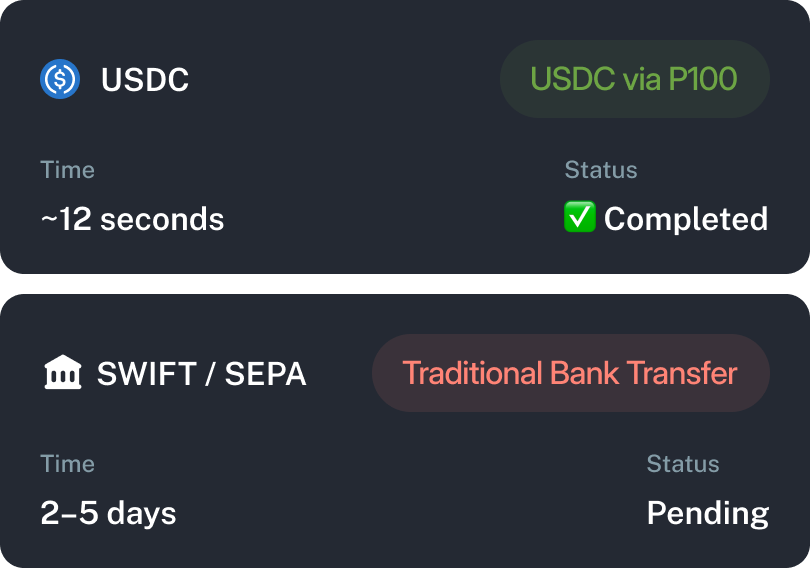
The shift toward USDC payroll is driven by the need for efficiency and transparency. Traditional cross-border payments often suffer from high fees and multi-day settlement times. USDC enables near-instant transfers, allowing companies to pay contractors and employees globally with lower friction. As regulatory frameworks evolve, platforms that integrate USDC with automated tax compliance are becoming the standard for responsible payroll management.
Top USDC payroll platforms compared
Choosing the right payroll infrastructure for stablecoin compensation requires balancing regulatory compliance with operational simplicity. While USDC offers speed and transparency, the legal obligations for tax withholding and reporting remain identical to traditional fiat payments. The platforms listed below—Deel, Toku, and Rise—represent the leading options for businesses seeking to automate these complex requirements.
Deel has integrated USDC funding directly into its treasury management, allowing companies to cover global payroll costs using their Coinbase accounts. This approach simplifies the funding side of the equation but relies on Deel’s existing compliance framework to handle the conversion and distribution to employees. It is a robust option for teams already embedded in the Deel ecosystem who want to reduce currency conversion friction without managing separate crypto wallets.
Toku offers a more specialized approach for international teams, focusing on the end-to-end flow from treasury funding to local payroll execution. Their platform is designed to handle the nuances of paying full-time international employees in USDC while ensuring that net pay is delivered correctly according to local labor laws. This model is particularly useful for companies that need granular control over how stablecoin funds are converted and distributed across different jurisdictions.
Rise provides a comprehensive review of stablecoin payroll capabilities for 2026, emphasizing multi-chain support and internal volume data. Their platform is built to handle the volatility and technical complexities of cross-chain transactions, making it a strong candidate for organizations that require flexibility in which blockchain networks they use for payroll disbursements. Rise focuses on providing the infrastructure for companies to manage their own stablecoin payroll operations with greater autonomy.
Platform Feature Comparison
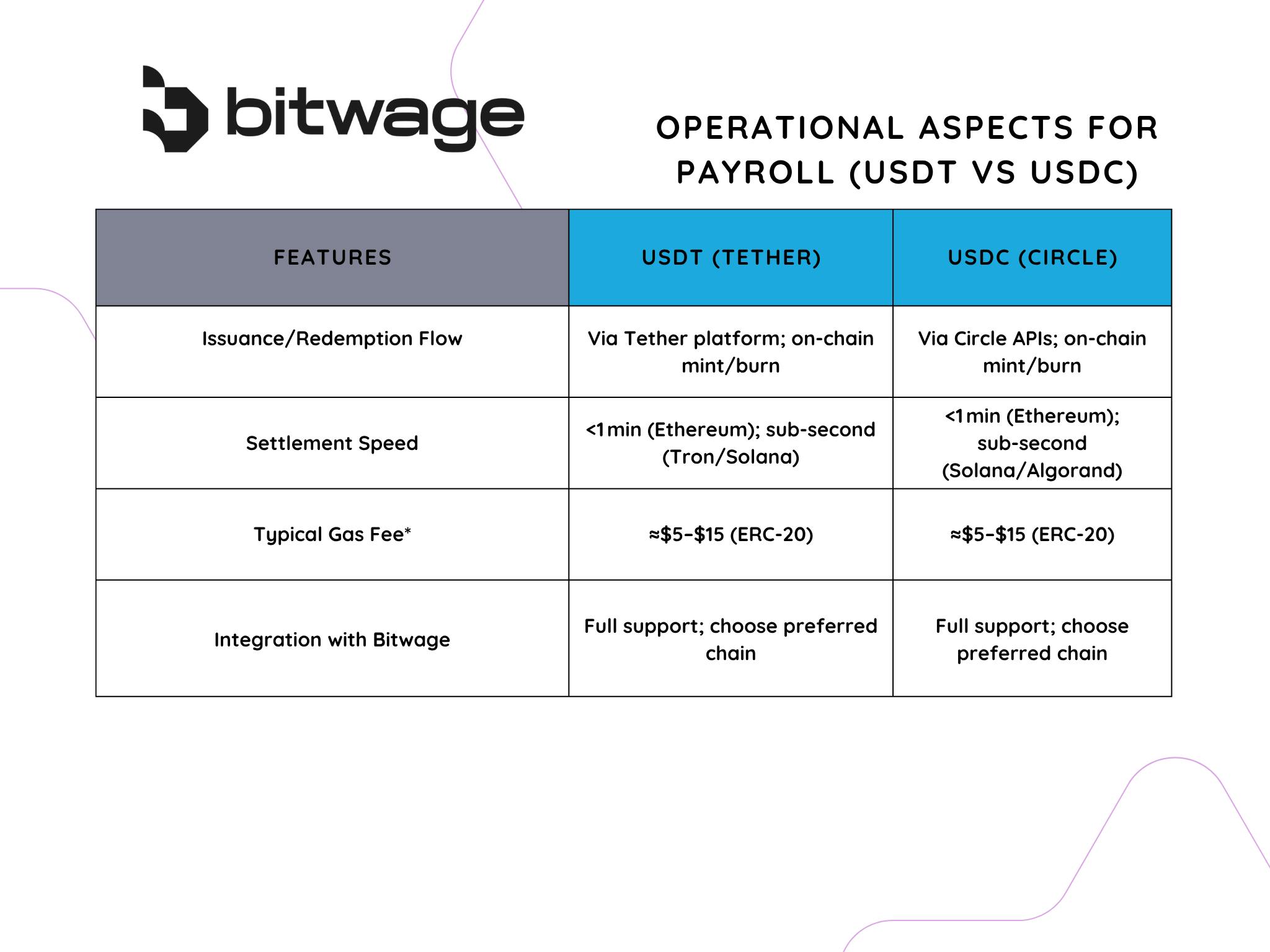
The following table compares the core USDC capabilities of these three platforms, focusing on their approach to tax handling and supported blockchain networks.
| Platform | USDC Funding | Tax Withholding | Supported Chains |
|---|---|---|---|
| Deel | Via Coinbase integration | Platform-managed | Ethereum, Polygon |
| Toku | Direct treasury funding | Local payroll conversion | Ethereum, Solana |
| Rise | Multi-chain treasury | Configurable compliance | Multi-chain native |
Essential Payroll Compliance Tools
While software handles the digital transactions, maintaining a compliant payroll operation also requires reliable administrative tools. The following products are commonly used by payroll managers to support their daily operations.


As an Amazon Associate, we may earn from qualifying purchases.
Tax withholding and compliance rules
Paying employees in USDC does not exempt employers from local tax laws or reporting obligations. Stablecoins are treated as property by the IRS, meaning every transaction carries the same legal weight as traditional fiat payroll. Employers must calculate federal and state withholdings based on the fair market value of the tokens at the time of payment.
The legal requirement is clear: you must report wages in US dollars. If an employee earns $1,000 in USDC, you must withhold the applicable percentage for income tax, Social Security, and Medicare as if they had been paid in cash. Failure to do so can result in severe penalties for both the employer and the employee.
Warning: Paying in USDC does not replace local payroll tax obligations. Consult legal counsel.
Employers must also adhere to standard payroll calendars. Whether you use a bi-weekly or semi-monthly schedule, the withholding deadlines remain fixed. For instance, federal deposits for withheld taxes must be made according to the schedule mandated by the IRS, regardless of when the USDC is transferred to the employee’s wallet.
Compliance also extends to reporting. W-2 forms must reflect the USD value of the USDC paid. Employers should maintain detailed records of the exchange rate used for each payroll period to ensure accuracy during audits. This documentation is critical for defending against any discrepancies in tax filings.
To manage these complexities, many companies use specialized payroll software that integrates with crypto payment gateways. These tools automate the conversion of USDC to USD for tax calculations, reducing the risk of human error. However, the ultimate responsibility for compliance lies with the employer.
When selecting a payroll platform, look for features that support multi-currency transactions and automated tax filing. The right tool can streamline the process, but it cannot absolve you of your legal duties. Always verify that your platform is compliant with current IRS guidelines.
For those looking to streamline their payroll operations, here are some recommended tools available on Amazon that can help manage the complexity of crypto payroll:


As an Amazon Associate, we may earn from qualifying purchases.
Setting up a compliant USDC treasury
USDC Payroll works best as a sequence, not a scramble through settings. Do the minimum first: confirm compatibility, connect the core hardware, update only when needed, and test the result before adding optional features. That order keeps the task understandable and makes failures easier to isolate. After each step, pause long enough for the interface to finish syncing. Many setup problems are timing problems disguised as configuration problems. If the same step fails twice, record the exact error, restart the smallest affected piece, and retry before moving deeper.
Frequently asked questions about USDC payroll
Is it safe to be paid in USDC?
USDC payroll refers to the process of paying employees or contractors using USDC, a dollar-pegged stablecoin issued by Circle. Unlike volatile cryptocurrencies like Bitcoin or Ethereum, USDC is designed for predictability. Each token is backed 1:1 with US dollars held in regulated financial institutions, making it a stable medium for compensation when handled through compliant platforms.
How to run payroll for yourself in 2026?
Running self-employment payroll requires strict adherence to federal and state reporting. First, calculate payroll taxes and deductions based on the W-4 form to determine net pay. Next, pay and report withheld taxes to the IRS. Finally, file federal taxes and forms along with state tax reports to maintain compliance. Missing these steps can result in significant penalties.
Can I pay international employees in USDC?
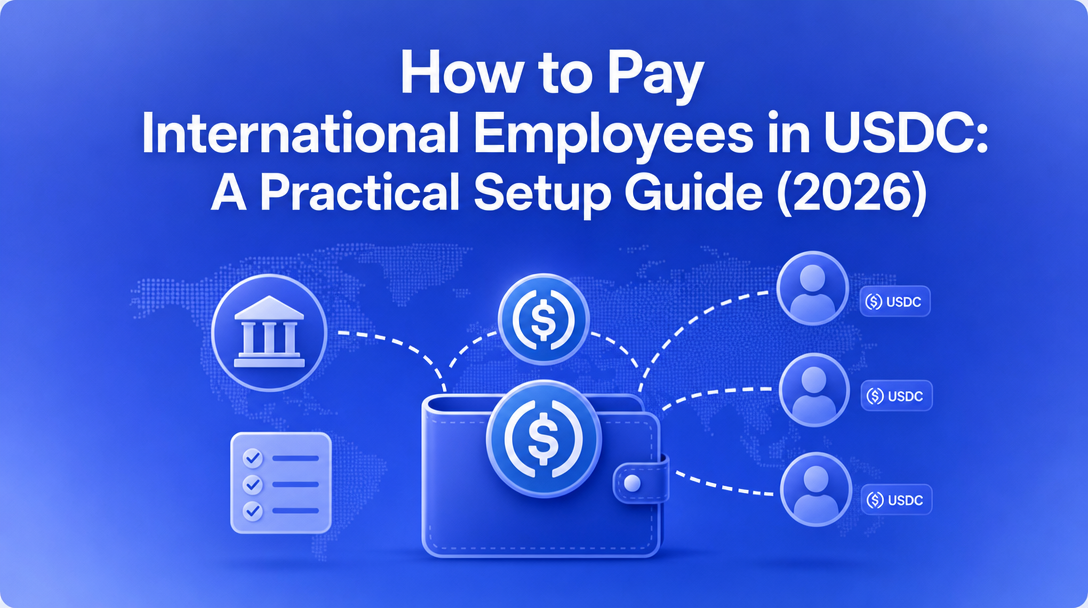
Yes, but you must ensure local compliance. Paying full-time international employees in USDC involves funding a treasury, running compliant local payroll, and delivering net pay. Platforms like Toku provide step-by-step setups to navigate these cross-border regulations, ensuring that your crypto payments align with local labor laws and tax obligations.
No comments yet. Be the first to share your thoughts!