
USDC payroll in 2026: market shift
The use of USDC for payroll has transitioned from experimental pilot programs to a core operational component for global compensation strategies. In 2026, stablecoins are no longer viewed as speculative assets but as a serious infrastructure layer for cross-border payments. This shift is driven by the need for speed, transparency, and reduced friction in managing distributed workforces.
The market data supports this operational maturity. Circle reported that USDC circulation rose 28% year-over-year to $77 billion in the most recent quarter, while on-chain transaction volume surged 263% to $21.5 trillion. These figures indicate that USDC is handling significant real-world economic activity, providing the liquidity and stability required for regular salary disbursements.
This growth reflects a broader institutional acceptance. Crypto payroll is becoming a standard part of global compensation, particularly through regulated stablecoins like USDC. By settling in seconds with minimal fees, USDC offers a reliable alternative to traditional banking rails, allowing companies to pay global teams safely and compliantly without the delays of international wire transfers.
Tax compliance and withholding rules
Paying payroll in USDC introduces a distinct regulatory layer that traditional fiat does not carry. The IRS treats stablecoins as property, not currency. This classification means every USDC payment triggers a taxable event for the employer. You must calculate the fair market value of the tokens in U.S. dollars at the exact moment of transfer. This requirement applies regardless of whether the employee or contractor receives the funds directly or through a payroll processor.
Withholding obligations remain anchored to the U.S. dollar. Employers must determine the dollar-equivalent value of the wages at the time of payment to calculate federal income tax, Social Security, and Medicare withholdings. If the value of USDC fluctuates between the time you authorize the payment and the time it settles, the difference affects your payroll liability. This volatility requires precise timing and often automated tools to capture the correct spot rate.
Contractors face similar complexities. They must report income based on the dollar value received on the payment date. If they hold the USDC and its value rises before they convert it to fiat, they may incur capital gains tax upon conversion. Employers must issue Form 1099-NEC for contractors and W-2 for employees based on these dollar-equivalent amounts, ensuring that reporting aligns with the property classification rules.
Top USDC payroll platforms compared
Selecting a vendor for USDC payroll requires aligning technical infrastructure with regulatory exposure. The market has consolidated around four primary providers—Eco, Rise, Bitwage, and Toku—each offering distinct approaches to compliance, chain support, and fiat settlement. Understanding these differences is essential for employers managing payroll liabilities in a high-stakes legal environment.
Eco and Rise have positioned themselves as comprehensive infrastructure providers, supporting USDC across multiple networks including Base and Ethereum. Eco’s platform, for instance, supports USDC on Base, a chain favored for its low transaction costs and speed, though currently restricted to US-based employers as of Q1 2026 [[src-serp-4]]. Rise similarly offers multi-chain support, allowing employers to choose between cost-efficient Layer 2 solutions and the broader Ethereum ecosystem. These platforms generally provide robust API integrations for enterprise resource planning (ERP) systems, streamlining the reconciliation process.
Bitwage and Toku take a more specialized approach, often focusing on the employee experience and immediate liquidity. Bitwage is widely recognized for its ability to convert crypto wages into fiat currency automatically, mitigating the volatility risk for employees who require traditional bank deposits. Toku emphasizes simplicity and accessibility, often targeting smaller teams or specific verticals with streamlined onboarding. While Bitwage and Rise may support additional stablecoins like USDT, a strict USDC-only strategy simplifies compliance reporting and reduces the regulatory ambiguity associated with non-USDC assets.
The following table summarizes the core capabilities of these leading platforms. Employers should verify current support for specific chains and jurisdictions, as regulatory landscapes shift rapidly.
| Vendor | USDC Chains | Compliance Focus | Target Audience |
|---|---|---|---|
| Eco | Base, Ethereum | US-focused, Multi-chain | Enterprise |
| Rise | Base, Ethereum, Others | Multi-chain, Global | Mid-market |
| Bitwage | Ethereum, Polygon | Fiat auto-convert, Tax | SMEs, Global |
| Toku | Ethereum, Base | Simplified, USDC-only | Small teams |
When evaluating these options, prioritize vendors that offer transparent audit trails and clear tax reporting mechanisms. The stability of USDC relies on its backing by regulated financial institutions, but the payroll platform itself must ensure that every transaction is recorded in a manner that satisfies local labor and tax authorities [[src-serp-2]]. For employers, the choice is not just about technology, but about liability management.
Settlement Speed and Fraud Risk
The operational shift from fiat to USDC payroll is defined by a trade-off between settlement velocity and fraud exposure. Traditional ACH and wire transfers require 2–5 business days to clear, creating a liquidity lag that complicates cash flow management. USDC transactions settle on-chain in seconds, providing immediate finality regardless of weekends or holidays.
This speed introduces distinct risk controls. Because blockchain transactions are irreversible, the burden of verification shifts entirely to the sender. A single error in an address or network selection results in permanent loss of funds, unlike fiat systems where chargebacks and reversals offer a safety net. Companies must implement strict internal controls to prevent unauthorized disbursements.
To mitigate these risks, payroll providers use multi-signature wallets and automated compliance checks. These tools verify recipient addresses against sanctions lists before execution. The trade-off is clear: USDC offers near-instant settlement but requires rigorous operational discipline to manage the absence of transaction reversals.
Implementation checklist for employers
Deploying USDC payroll requires strict adherence to tax codes and internal controls. Treat digital asset disbursements as taxable income events from the moment of issuance.

Consult legal counsel to confirm USDC payroll compliance in your jurisdiction. Ensure your payroll provider meets all anti-money laundering (AML) and know-your-customer (KYC) requirements.
Integrate your chosen stablecoin payroll platform with existing accounting systems. Define wallet addresses for recipients and set up automated transaction limits.
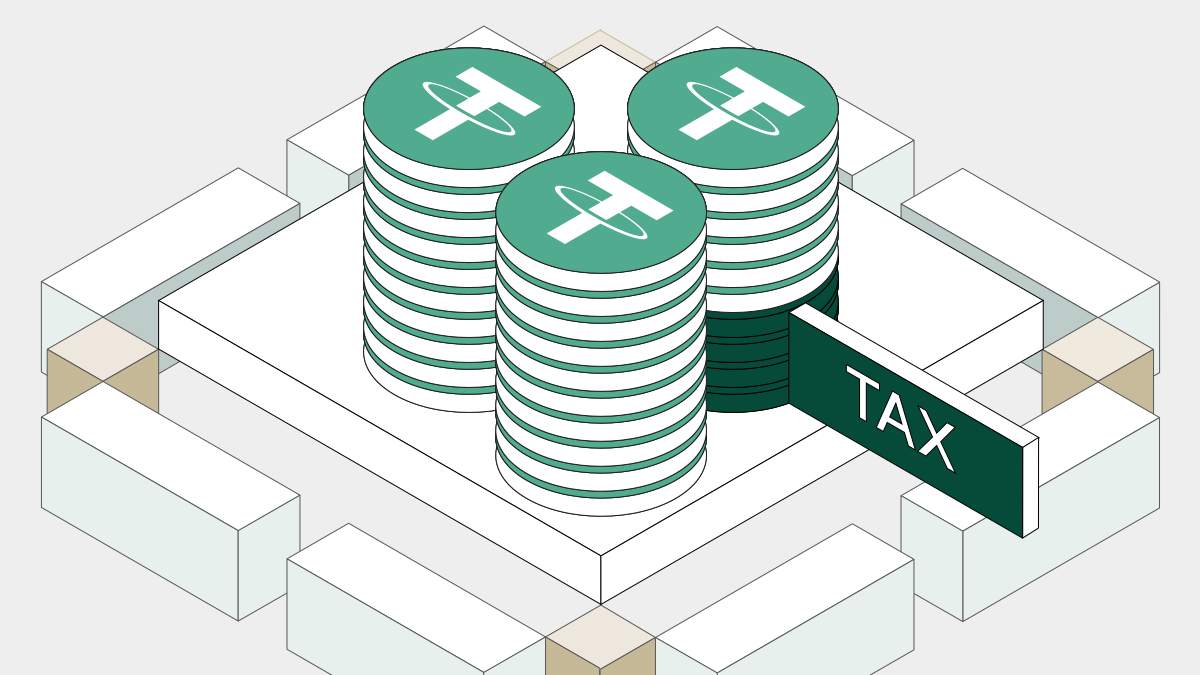
Determine the fair market value of USDC at the time of payment. Configure your system to calculate and withhold federal and state taxes based on this value, treating it identically to fiat currency.
Run a small-scale pilot with a single employee or contractor. Verify that funds settle correctly, tax documents are generated accurately, and recipients can access their wallets.

Maintain detailed records of all on-chain transactions. Regularly audit your payroll logs against tax filings to ensure full compliance with IRS regulations.
This chart illustrates USDC's stability against the US dollar, a critical factor for consistent payroll valuation.
Common usdc payroll: what to check next
Addressing specific concerns about stability, mechanics, and market adoption is essential for compliance and operational clarity.
Is it safe to be paid in USDC?
USDC is issued by regulated financial institutions and combines the stability of traditional currency with the transparency of blockchain technology. Every unit is backed by real-world assets held in U.S.-regulated banks, making it one of the most trusted stablecoins globally. This regulatory backing provides a layer of security comparable to traditional banking reserves.
What is the USDC base pay?
USDC on Base is a fully-backed digital dollar that settles in seconds with minimal gas costs. Base Pay allows employers to accept these dollars with a single click, eliminating card processing fees, foreign exchange (FX) costs, and chargebacks. The system works with every Base Account (smart-wallet) out of the box, streamlining the payment process for global teams.
How fast is USDC growing?
Circle’s core stablecoin business continues to expand rapidly. Circulation of USDC rose 28% year over year to $77 billion in the last quarter, while on-chain transaction volume surged to $21.5 trillion, a 263% increase from the prior year. This growth indicates increasing institutional and individual adoption for payroll and settlement purposes.
No comments yet. Be the first to share your thoughts!