
Why switch to USDC payroll in 2026
Traditional banking rails impose a significant time tax on global operations. When you issue a wire transfer, the money is often gone from your account immediately, but it takes 2–5 business days to actually land in your contractor’s or employee’s bank. This lag creates cash flow friction and administrative overhead as you track pending transactions across different time zones.
USDC payroll removes this waiting period. Because stablecoin transactions settle near-instantly on supported blockchains, funds are available to recipients within minutes, regardless of where they are located. This speed is not just a convenience; it is a competitive advantage for hiring globally.
USDC payroll refers to the process of paying employees or contractors using USDC, a dollar-pegged stablecoin issued by Circle. Unlike volatile cryptocurrencies like Bitcoin or Ethereum, USDC is designed for predictability. Each token is backed 1:1 with US dollars held in regulated financial institutions.
By switching to USDC, you align payment speed with modern work expectations. Contractors no longer need to wait for international clearing houses, and your finance team spends less time reconciling delayed transfers. As noted in the State of Crypto Payroll Report 2026, stablecoins are becoming a serious part of global compensation specifically because they eliminate the friction of traditional cross-border banking.
The efficiency gain is immediate. Instead of managing multiple banking relationships and waiting days for settlement, you can send payments once and know they have arrived. This simplicity reduces the risk of errors and late fees, making USDC a practical upgrade for any business operating across borders.
Compare USDC payroll platforms
Choosing the right USDC payroll provider depends on your team's distribution needs and compliance requirements. The leading platforms—Rise, Eco, Bitwage, and Toku—offer distinct advantages for different organizational structures. Rise and Eco provide broad multi-chain support, while Bitwage specializes in converting crypto to fiat for traditional banking integration. Toku focuses on automated tax withholding for global contractors.
The table below summarizes the core capabilities of each platform. Use this comparison to determine which tool aligns with your payroll workflow.
| Platform | Supported Chains | Tax Withholding | Fiat Off-ramp | Compliance |
|---|---|---|---|---|
| Rise | Ethereum, Polygon, Solana | Manual reporting | Direct to bank | SOC 2 |
| Eco | Ethereum, Arbitrum, Optimism | Automated 1099 | Native off-ramp | SOC 2, ISO 27001 |
| Bitwage | Ethereum, Polygon | Full payroll integration | Direct to bank | SOC 2 |
| Toku | Ethereum, BSC, Polygon | Automated global tax | Multi-currency | SOC 2, ISO 27001 |
Rise is often preferred for teams already deep in the Solana or Polygon ecosystems due to its low-cost transaction speeds. Eco offers a more traditional user interface with robust automated tax forms, making it suitable for US-based entities with complex contractor mixes. Bitwage acts as a bridge, allowing employees to receive USDC while the employer pays the fiat equivalent to the employee's bank account, minimizing volatility risk. Toku’s strength lies in its automated tax handling for international teams, reducing the administrative burden of cross-border payments.
When evaluating these options, verify that the platform supports the specific blockchain your treasury holds USDC on. Additionally, confirm whether the platform’s fiat off-ramp partners operate in your employees' countries to ensure timely access to funds.
Set up your business account
Before you can send payroll, you must establish a verified business identity and a dedicated funding source. This process separates your operational funds from personal assets and satisfies regulatory requirements for stablecoin transactions.

Choose a payroll provider or custodial wallet that supports USDC. Submit your business registration documents, tax ID, and proof of address. Unlike personal wallets, business accounts require Know Your Business (KYB) checks to verify ownership and prevent fraud. This step typically takes 1–3 business days.
USDC exists on multiple blockchains, including Ethereum, Solana, Polygon, and Base. Choose a network based on transaction speed and fees. Ethereum offers the highest liquidity but carries higher gas costs. Solana and Polygon provide faster settlement and lower fees, making them efficient for frequent payroll runs. Ensure your provider supports your chosen network.
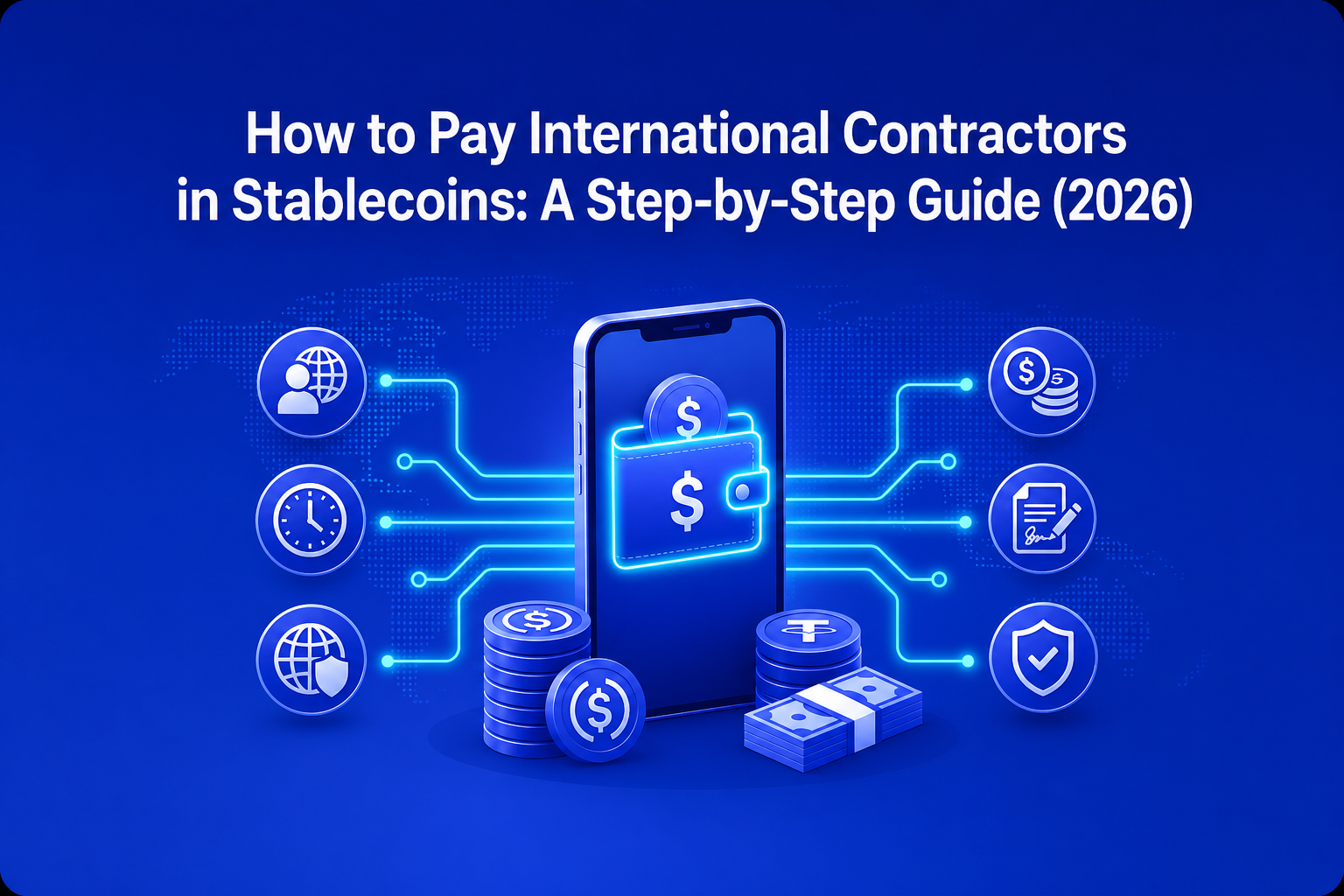
Transfer USDC from your corporate bank account or existing crypto holdings into the verified business wallet. Start with a small test amount to confirm the deposit address and network compatibility. Once confirmed, fund the wallet with enough USDC to cover the upcoming payroll cycle, including a buffer for network gas fees.
Onboard employees and contractors
Setting up USDC payroll requires a structured onboarding sequence. Unlike traditional bank transfers, stablecoin payments involve verifying digital identity and configuring wallet or fiat off-ramp preferences. This section outlines the exact steps to invite team members, complete compliance checks, and finalize their payment setup.
Send an invitation to each employee or contractor. Most payroll platforms generate a unique onboarding link or email invite. Ensure the invitation clearly explains that compensation will be paid in USDC, a dollar-pegged stablecoin issued by Circle. Unlike volatile cryptocurrencies like Bitcoin, USDC is designed for predictability, with each token backed 1:1 with US dollars held in regulated financial institutions. Provide a brief FAQ or resource link to help non-crypto-native team members understand the basics before they begin.
Before any funds are disbursed, complete Know Your Customer (KYC) and Anti-Money Laundering (AML) checks. This step mirrors traditional payroll onboarding but happens digitally. Collect government-issued ID, proof of address, and tax forms (such as W-9 or W-8BEN for international contractors). Use a payroll provider that integrates seamlessly with identity verification services to automate this process. Failure to complete this step correctly can result in frozen accounts or regulatory penalties.
Ask each team member to choose their preferred payout method. Options typically include:
- Crypto Wallet: Direct transfer to a self-custody wallet (e.g., MetaMask, Coinbase Wallet) or a custodial exchange account. Provide clear instructions on how to generate a receiving address.
- Fiat Off-Ramp: Automatic conversion to local currency via integrated partners like Stripe, Circle, or local banking rails. This is often preferred by employees who do not want to manage crypto assets directly. Allow users to update these preferences at any time, but note that changes may affect the timing of the next payroll cycle.
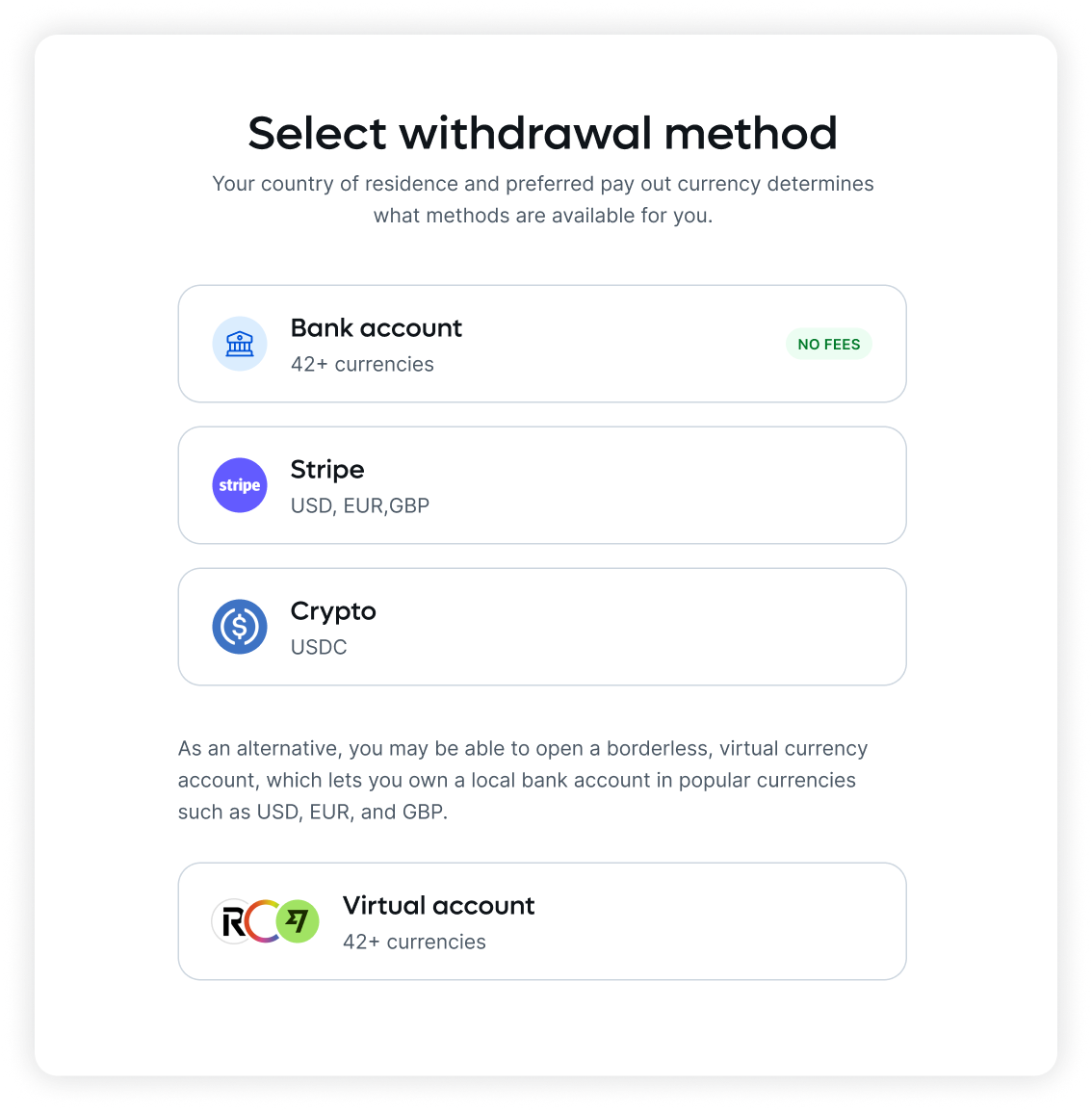
Before running full payroll, send a test transaction of $1–$10 to each new participant. This confirms that the wallet address is correct, the network is functioning, and the recipient can successfully receive and, if needed, convert the funds. Test transactions also help identify any potential issues with network congestion or wallet compatibility early, avoiding embarrassment or delays during the actual pay cycle.
Handle tax withholding and reporting
Paying in USDC does not erase your tax obligations. The stablecoin nature of the asset simplifies valuation, but it does not remove the requirement to withhold local taxes and file standard reports. Your payroll platform must automate these steps to keep you compliant.
Configure automated deductions
Set up your platform to calculate withholding rates based on the employee’s jurisdiction. The system should deduct income tax, social security, and other mandatory contributions before converting USDC to fiat or distributing it. This ensures the net pay matches local labor laws. If your platform supports multi-chain distributions, verify that the deduction logic applies correctly across all networks.
Generate 1099 and W-2 equivalents
At the end of the tax year, you must provide employees with accurate earnings statements. For USDC payroll, this means generating digital 1099 forms for contractors and W-2s for employees. The platform should automatically aggregate transaction history into these reports. Ensure the data includes the fiat value at the time of each payment, as required by the IRS and other tax authorities.
Maintain an immutable audit trail
Blockchain transactions provide a permanent, tamper-proof record. Use this feature to maintain your audit trail. Each payment should be linked to a specific payroll run, employee ID, and tax period. This transparency simplifies audits and reduces the risk of errors. Regularly reconcile your on-chain data with your internal accounting records to ensure accuracy.
Run your first USDC payroll cycle
Execute the pay run by importing employee data and salary amounts into your payroll platform. Ensure the data matches your approved timesheets or contracts. The system will calculate gross pay and apply any required tax withholdings before converting the fiat amount to USDC.
Verify the transaction details on the blockchain dashboard. Confirm that the recipient wallet addresses are correct and that the network fees are covered. Once confirmed, the USDC transfers settle near-instantly, bypassing the 2–5 business days typical of traditional wire transfers RiseWorks.
Upload your approved timesheets or contract details. The platform maps these entries to each employee’s designated USDC wallet address.
The system converts your local currency amount to USDC at the current rate. It applies statutory tax withholdings and calculates the net pay for each recipient.
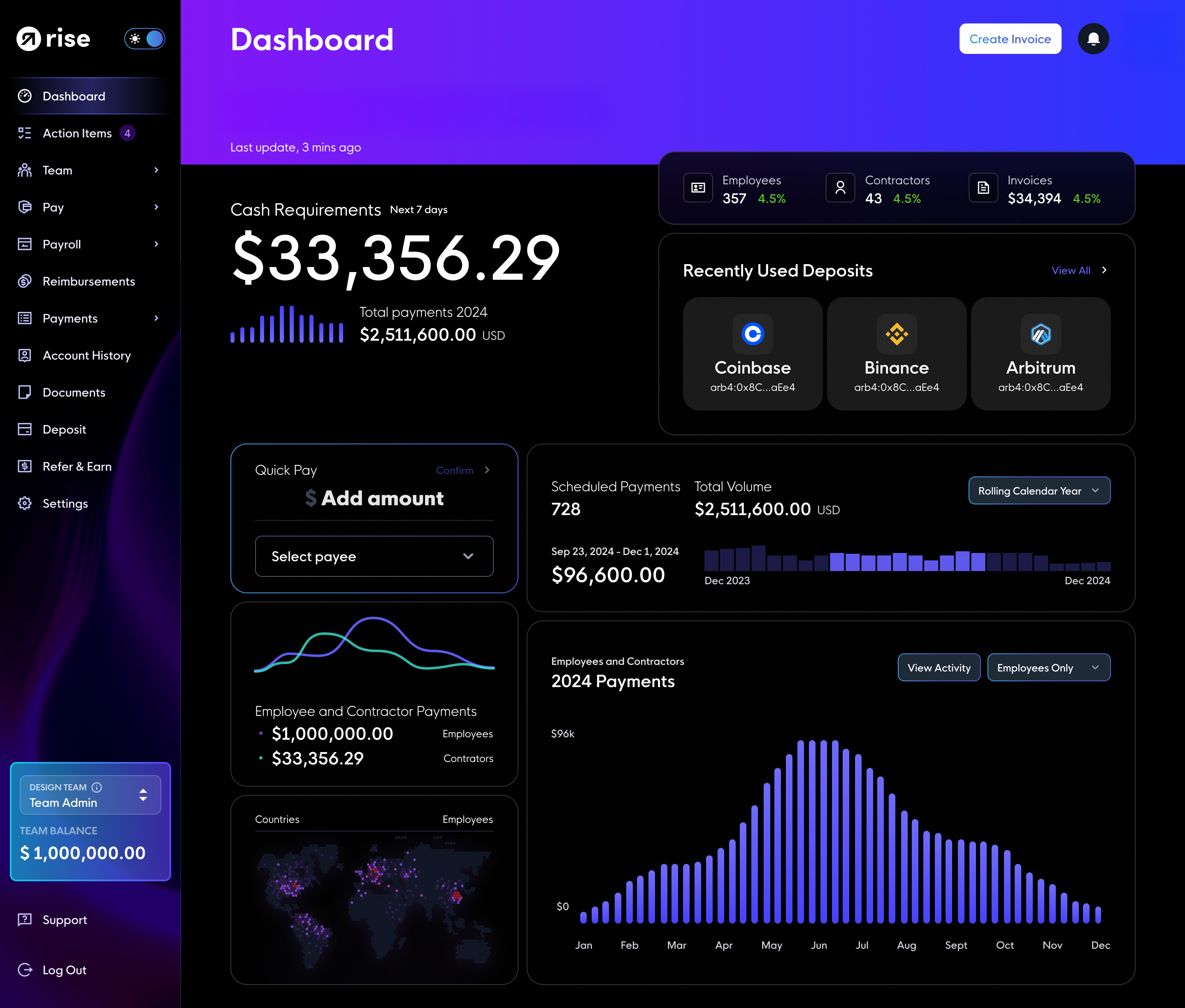
Check the transaction summary for accuracy. Verify wallet addresses and network fees. Click confirm to broadcast the batch to the blockchain.

Watch the transaction status in your dashboard. USDC transfers typically settle within minutes, providing immediate proof of payment to your employees.
Before initiating the transfer, verify employee data, confirm tax withholdings, check wallet balances, and review transaction fees.
-
Verify employee data
-
Confirm tax withholdings
-
Check wallet balances
-
Review transaction fees
Is it safe to be paid in USDC?
USDC payroll refers to the process of paying employees or contractors using USDC, a dollar-pegged stablecoin issued by Circle. Unlike volatile cryptocurrencies like Bitcoin or Ethereum, USDC is designed for predictability. Each token is backed 1:1 with US dollars held in regulated financial institutions, ensuring that the value remains stable regardless of broader crypto market fluctuations.
The safety of USDC stems from its regulatory compliance and transparency. Circle publishes monthly attestation reports from independent accounting firms to verify that reserves fully back the circulating supply. This structure minimizes the risk of de-pegging, making it a reliable medium for salary payments.
While the asset itself is stable, users must still manage the security of their digital wallets. Using reputable wallets and enabling two-factor authentication protects your funds from unauthorized access. For most employees, the primary risk is not the stability of USDC, but the security of the platform used to store it.
No comments yet. Be the first to share your thoughts!