
USDC Payroll Adoption Trends
USDC has become the dominant stablecoin for payroll, capturing 63% of all crypto payrolls in 2024. This surge reflects a shift toward faster, cost-effective global settlement, with stablecoin payroll volume tripling from 3% in 2023 to 9.6% in 2024. However, this growth occurs under intense regulatory scrutiny, as IRS rules continue to complicate compliance for employers and employees alike.
The preference for USDC stems from its regulatory clarity and integration with established financial infrastructure. Circle provides the building blocks for global payroll solutions, emphasizing near-instant settlement and cost efficiency. For organizations navigating cross-border payments, USDC offers a predictable alternative to volatile cryptocurrencies, aligning with the stable value required for wage distribution.
Despite its market leadership, compliance remains a significant hurdle. The IRS treats cryptocurrency transactions as property, meaning each payroll payment may trigger taxable events. Employers must carefully track cost basis, fair market value at the time of payment, and withholding obligations. Failure to navigate these rules can result in penalties, making legal and tax advice essential for any organization considering USDC payroll.
The stability of USDC against the US dollar is evident in its trading chart, which shows minimal deviation from parity. This stability is critical for payroll, where predictability in wage value is paramount. While volume fluctuates with market activity, the price remains anchored, reinforcing USDC's role as a practical tool for regular compensation rather than a speculative asset.
Tax withholding and reporting rules
Paying employees in USDC does not exempt employers from local tax obligations. The IRS treats digital assets, including stablecoins, as property rather than currency. This classification creates a complex compliance landscape where every payroll transaction triggers potential taxable events for the employer, regardless of the coin’s peg to the US dollar.
Employers must calculate withholding based on the fair market value of the USDC at the exact moment of transfer. Because stablecoins are property, any fluctuation in value between the time the funds are acquired and the time they are distributed can result in capital gains or losses for the business. This dual-layer tax burden—income tax for the employee and potential capital gains tax for the employer—requires precise accounting.
Compliance requires rigorous documentation. Employers must report wages paid in USDC on standard payroll forms, converting the digital asset value to USD at the time of payment. Failure to accurately report these values can lead to significant penalties. Thomson Reuters data indicates that while stablecoin payroll adoption has tripled since 2023, many employers remain unprepared for the associated reporting complexities.
The regulatory scrutiny is intensifying. As USDC accounts for 63% of all crypto payrolls, tax authorities are increasingly focused on ensuring that digital asset compensation is reported correctly. Employers must integrate crypto-aware payroll software that can handle real-time valuation and automated tax reporting to mitigate risk.
Platform comparison for stablecoin payroll
Choosing the right infrastructure for USDC payroll requires balancing regulatory compliance against operational efficiency. The landscape is dominated by specialized providers like Deel, Rise, and Toku, each offering distinct advantages for global teams. Deel leverages its established payroll infrastructure to integrate USDC funding seamlessly, allowing businesses to bypass traditional fiat conversions for international payments. Rise focuses on a streamlined, step-by-step onboarding process designed to minimize friction for contractors and employees alike. Toku differentiates itself by embedding yield generation and spending capabilities directly into the payroll flow, effectively turning payroll into a treasury tool.
The following comparison highlights the core differences in fees, supported chains, and compliance features. This data reflects current provider specifications as of 2026.
| Provider | Fee Structure | Supported Chains | Key Compliance Feature |
|---|---|---|---|
| Deel | Transaction fee + exchange spread | Ethereum, Polygon, Arbitrum | Full KYC/KYB integration |
| Rise | Flat fee per payment | Ethereum, Solana, Base | Automated tax reporting |
| Toku | Yield offset model | Ethereum, Optimism, Arbitrum | On-chain audit trails |
Deel is the safest option for enterprises already using its fiat payroll system, as it minimizes disruption by treating USDC as a funding source rather than a separate payment rail. Rise offers a lower barrier to entry for smaller teams due to its flat-fee structure, though its compliance tools are less comprehensive than Deel's. Toku appeals to treasury-focused organizations that want to offset payroll costs through yield, but this model introduces additional complexity regarding yield reporting and tax implications.
When selecting a provider, prioritize those with robust KYC/KYB integration and clear audit trails. Regulatory scrutiny on stablecoin payroll is increasing, and providers that cannot demonstrate full compliance with IRS and local labor laws pose a significant liability risk. Always verify that the provider supports the specific blockchain networks your team prefers to minimize transaction costs and latency.
Settlement speed and FX cost benefits
Traditional cross-border payroll is a friction-heavy process defined by latency and hidden taxation. In the legacy banking system, international transfers are subject to the SWIFT network’s slow settlement cycles, which can take three to five business days to finalize. During this window, capital is trapped in transit, and companies face the risk of fluctuating exchange rates that can erode margins before the funds even reach the recipient.
USDC payroll eliminates these structural inefficiencies by leveraging blockchain settlement. Transactions on supported networks like Solana or Ethereum finalize in seconds, providing immediate liquidity to contractors and employees regardless of their location. This speed is not merely a convenience; it is a compliance advantage. By reducing the time capital sits in transit, organizations minimize exposure to regulatory scrutiny regarding unremitted wages and ensure that payroll obligations are met with precise, auditable timestamps.
The financial impact extends beyond speed to the direct costs of foreign exchange. Traditional wire services often impose flat fees of $15 to $50 per transaction, layered with opaque FX markups ranging from 2% to 4% on the conversion rate. For a global team, these costs compound rapidly. Using USDC, the exchange rate is fixed at the point of transaction, effectively eliminating FX markup risk. The only remaining costs are network gas fees, which are negligible compared to traditional wire fees, particularly when utilizing high-throughput chains.
Implement compliant USDC payroll
Deploying USDC for payroll introduces distinct regulatory exposures. Unlike traditional fiat transfers, crypto payments trigger complex tax reporting requirements under Internal Revenue Service rules and potential sanctions violations. The operational workflow must prioritize audit trails and legal verification at every stage to avoid penalties.
Choose a platform that integrates with established payroll software and maintains strict adherence to anti-money laundering (AML) standards. The provider must facilitate transparent transaction records required by the IRS for wage reporting. Avoid decentralized protocols lacking centralized compliance oversight for regular payroll distribution.
Conduct rigorous identity verification before onboarding. Collect standard tax forms (W-4 or W-9) and validate the employee’s eligibility to work. This step is non-negotiable for maintaining legal standing and ensuring that payroll deductions align with federal and state tax obligations.
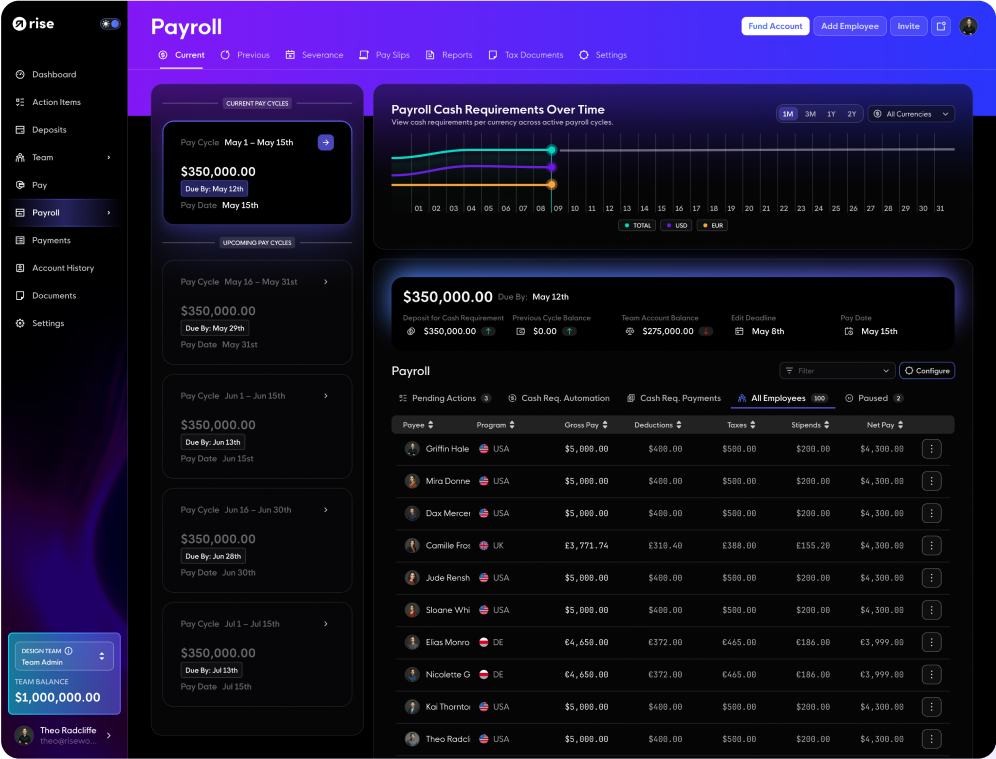
Securely store employee wallet addresses within the payroll system. Establish clear internal policies regarding the conversion of USDC to fiat currency, as employees may face immediate tax liabilities upon receipt. Ensure the system supports automatic tax withholding calculations based on the USD value at the time of transfer.
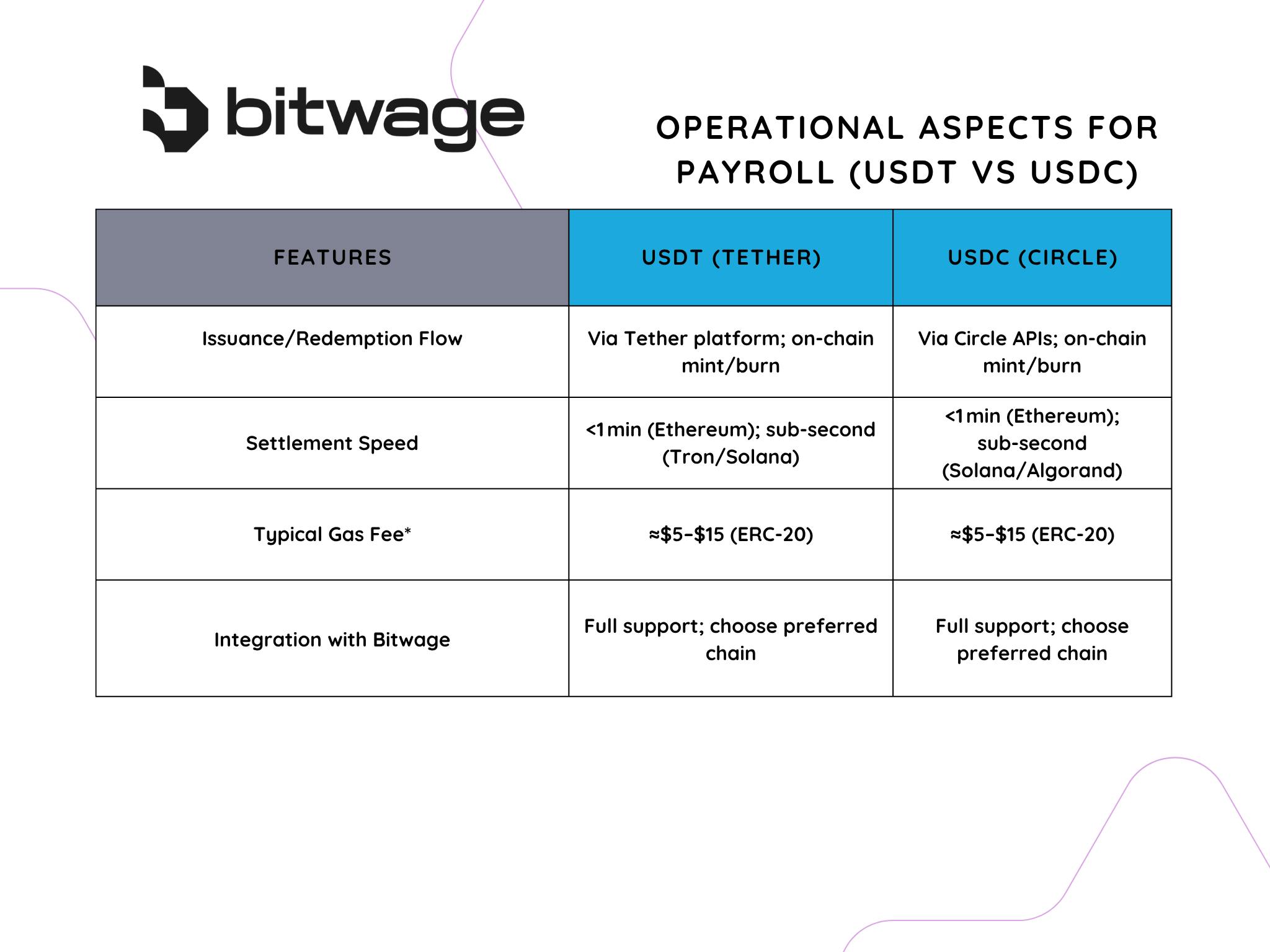
Process payments only after finalizing tax calculations and verifying wallet addresses. Generate detailed transaction receipts that link the crypto transfer to specific pay periods. These records are essential for year-end tax filing and defending against potential regulatory audits regarding wage payments.
The transition to USDC requires a disciplined approach to compliance. By embedding verification and tax reporting into the core workflow, organizations can mitigate the high stakes associated with digital asset payroll.
No comments yet. Be the first to share your thoughts!