
The state of USDC payroll in 2026
By 2026, USDC payroll has moved beyond early experimentation into core financial infrastructure. According to the 2026 Stablecoin Momentum Report, stablecoins have crossed a critical threshold, offering businesses a reliable alternative to traditional banking rails. The primary driver is speed: blockchain payments settle near-instantly, compared to the two to five business days required for standard wire transfers or ACH payments.
This shift is not just about speed; it is about predictability. USDC is a dollar-pegged stablecoin issued by Circle, meaning each token is backed 1:1 with US dollars held in regulated financial institutions. Unlike volatile cryptocurrencies like Bitcoin, USDC is designed for wage payments where employees need to know exactly what their paycheck will be worth when it arrives. This stability makes it a practical tool for both full-time employees and independent contractors.
The operational impact is significant. Companies switching to USDC payroll report faster settlement times and reduced transaction fees. For global teams, this eliminates the friction of currency conversion delays and high international wire costs. As the infrastructure matures, the focus has shifted from "if" to "how," with clear tradeoffs between compliance overhead and operational efficiency.
Usdc payroll 2026 choices that change the plan
Choosing USDC payroll means trading traditional banking familiarity for speed and lower costs. The decision hinges on your team's composition and your risk tolerance. Below is a direct comparison of the primary operational factors.
| Factor | USDC Payroll | Traditional Fiat |
|---|---|---|
| Settlement Speed | Near-instant (minutes) | 2-5 business days |
| Cross-Border Fees | $0.01 - $0.50 | $15 - $50+ |
| Exchange Rate Risk | Low (pegged to USD) | None |
| Compliance Burden | High (KYC/AML) | Standard |
| Banking Dependency | Low | High |
Speed and Liquidity
USDC settles on-chain in minutes, not days. This eliminates the cash flow gaps inherent in ACH or wire transfers. For global teams, this means employees receive funds immediately, regardless of time zones or weekends. The tradeoff is that liquidity depends on the employee's wallet provider. If their platform has low liquidity, they may face delays converting to local currency.
Cost Structure
Traditional wire transfers often charge $15-$50 per transaction, plus hidden FX spreads. USDC transactions typically cost pennies. Over a year, a company with 50 remote employees can save tens of thousands in fees. However, these savings assume employees can access low-cost on-ramps. If your team uses expensive exchanges to cash out, the net benefit shrinks.
Compliance and Risk
USDC is a regulated stablecoin, but payroll platforms must still comply with anti-money laundering (AML) and know-your-customer (KYC) rules. This creates a higher initial setup burden than traditional payroll. Additionally, while USDC is pegged to the dollar, it is not FDIC-insured. Employees bear the counterparty risk of the issuer and the platform. For most, this risk is negligible, but it is a distinct shift from bank-guaranteed deposits.
How to choose the right payroll path
Deciding between USDC and traditional fiat payroll comes down to three variables: speed, cost, and employee readiness. The choice isn't binary; it is a strategic alignment of your operational rhythm with your team's financial habits.
1. Assess settlement speed needs
Traditional bank transfers (ACH) take 2–5 business days to clear, creating cash flow friction. USDC settles near-instantly on the blockchain. If your business relies on rapid liquidity turnover or operates across multiple time zones, stablecoin settlement removes the waiting period entirely.
2. Calculate cost differences
Fiat payroll involves wire fees, ACH charges, and currency conversion margins that eat into margins. USDC transactions typically cost a fraction of a cent. For high-volume or cross-border teams, these savings compound significantly over a fiscal year, effectively increasing net compensation without raising gross spend.
3. Evaluate employee readiness
Not all employees are comfortable holding or spending stablecoins. Survey your team to determine if they have existing wallets or if they need a seamless off-ramp to their local bank account. If your workforce is crypto-native, USDC is a powerful retention tool. If they are traditional, ensure your payroll provider offers automatic conversion to fiat upon receipt.
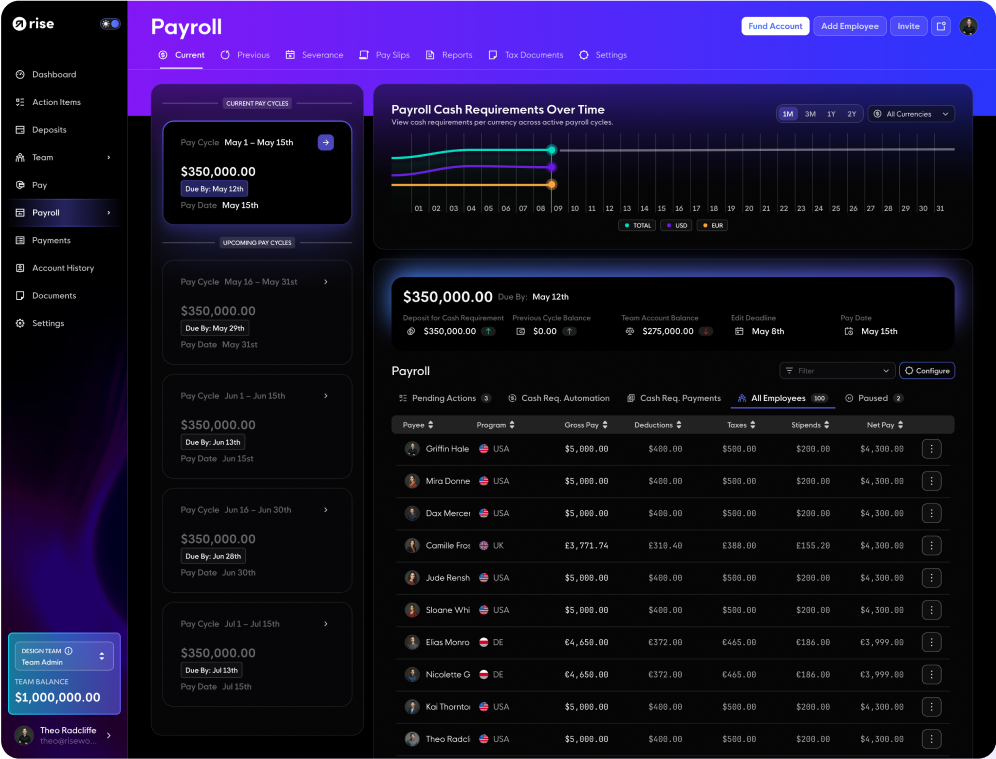
Start by identifying your biggest pain point: is it the delay in funds arriving, the high fees for international transfers, or the complexity of managing multiple banking relationships? Your answer dictates whether USDC is a luxury or a necessity.
Before switching, ask your employees how they prefer to be paid. Some may want to hold USDC for yield; others may want it converted to their local currency immediately. Your payroll provider should support both options to ensure broad adoption and satisfaction.
Instead of overhauling your entire payroll system, test USDC payments with a small group of independent contractors. This low-risk trial lets you verify settlement times, tax reporting accuracy, and employee feedback before committing to full-time staff.
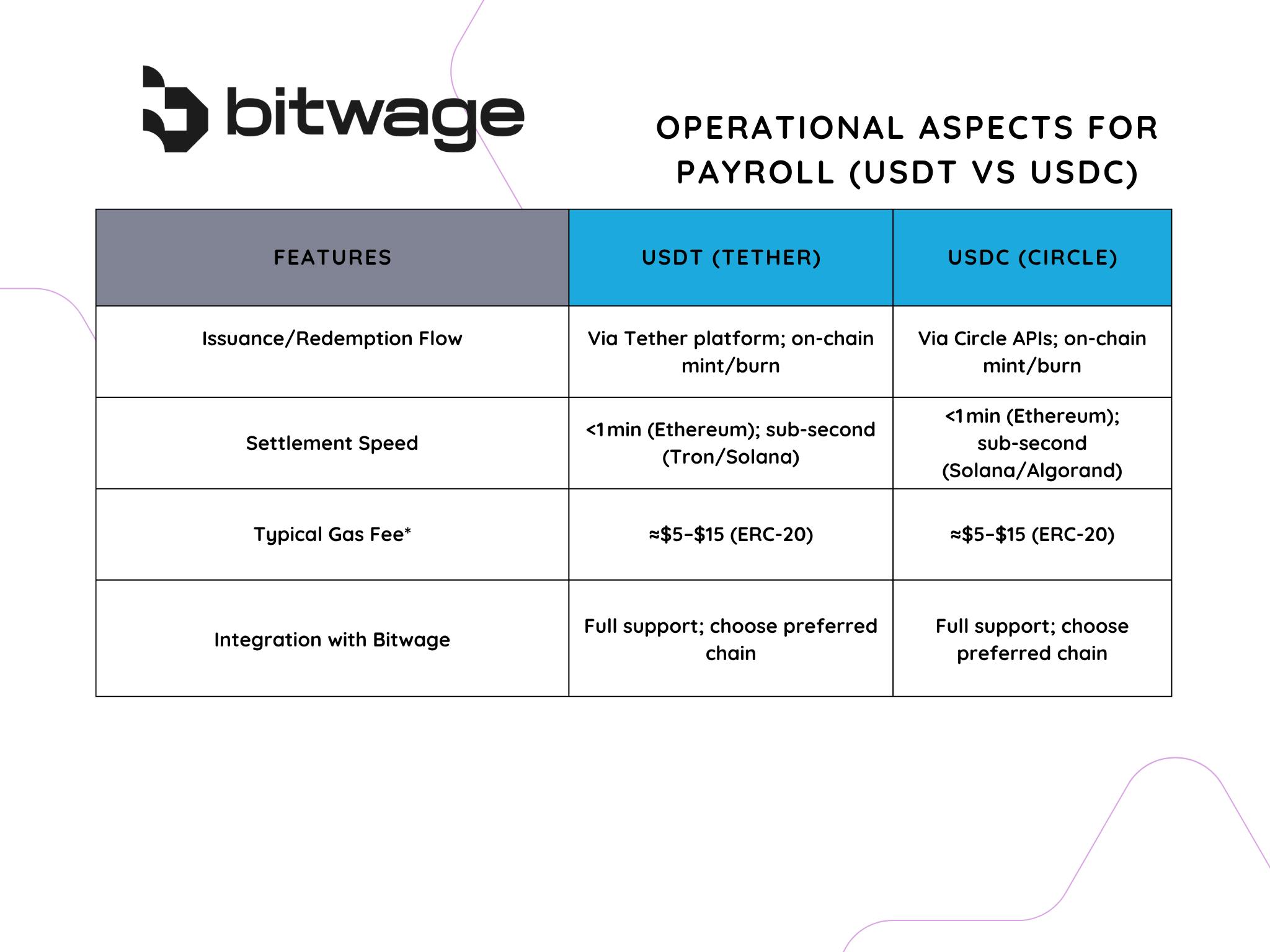
Choose a payroll platform that handles the regulatory heavy lifting. Look for providers that integrate with Circle for USDC issuance and offer built-in tax withholding and reporting tools. This ensures you stay compliant with local labor laws while leveraging blockchain efficiency.
| Feature | Fiat Payroll | USDC Payroll |
|---|---|---|
| Settlement Time | 2-5 business days | Near-instant |
| Cross-Border Fees | High ($10-$50+ per transfer) | Minimal (<$0.01) |
| Availability | Weekdays only | 24/7/365 |
| Employee Control | Low (Bank dependent) | High (Self-custody options) |
Watch for weak options and misleading claims
USDC payroll promises speed, but the reality involves friction that can undermine retention if handled poorly. The 2026 Stablecoin Momentum Report notes that stablecoins have crossed into core financial infrastructure, yet many employers still treat them as experimental rather than operational. This gap creates risk for both payroll teams and employees.
Common Mistakes to Avoid
Ignoring volatility exposure. Even though USDC is pegged to the dollar, exchange rates fluctuate during settlement windows. If your payroll provider does not auto-convert to fiat upon receipt, employees bear the risk. Always verify that your provider offers instant settlement or immediate conversion.
Overlooking tax complexity. Crypto wages are taxable income in most jurisdictions. Failing to integrate with payroll software that handles crypto-specific tax reporting can lead to compliance errors. Use a provider that supports W-2 or 1099 generation with accurate fair-market-value snapshots at the time of payment.
Assuming "safe" means "simple." USDC is backed by regulated financial institutions, but it is not FDIC-insured. Employees may panic if they do not understand the difference between a stablecoin and a bank deposit. Clear communication is essential to prevent unnecessary turnover.
The Verdict
USDC payroll is viable for tech-forward companies with crypto-literate workforces. For traditional firms, the administrative burden may outweigh the cost savings. Prioritize providers with robust compliance tools and employee education resources.
No comments yet. Be the first to share your thoughts!