
Why USDC payroll 2026 matters for global teams
The 2026 crypto payroll landscape is shifting from experimental to essential. With stablecoin adoption accelerating, global teams are increasingly turning to USDC to manage cross-border compensation. This shift is driven by the need for speed and cost efficiency in an environment where traditional banking rails remain slow and expensive.
Market data indicates that crypto payroll is becoming a serious component of global compensation strategies. Industry reports project the total crypto payroll volume to reach between $390 billion and $400 billion in 2026. This surge reflects a broader acceptance of stablecoins like USDC and USDT as reliable settlement layers for salary disbursement.
For multinational organizations, this volume represents more than just a trend; it signals a structural change in how labor is compensated. The regulatory environment is maturing, allowing companies to integrate USDC into their payroll systems with greater confidence. This transition reduces the friction of currency conversion and eliminates the delays associated with SWIFT transfers, providing employees with immediate access to their funds.
The move toward USDC payroll is not merely about technology; it is about operational resilience. As global teams expand, the ability to pay employees instantly and transparently becomes a competitive advantage. Companies that adopt these systems in 2026 are positioning themselves to handle the complexities of a decentralized workforce more effectively than those relying on legacy banking infrastructure.
Step 1: Verify employee eligibility and local laws
Before initiating any USDC payroll transactions, you must confirm that the payment method is legally permissible in the employee’s jurisdiction. Paying staff in stablecoins is not a universal right; it is a contractual option that depends entirely on local labor laws, tax codes, and currency regulations. Some jurisdictions explicitly require wages to be paid in local fiat currency, while others treat digital assets as property rather than legal tender, imposing strict reporting requirements on employers.
Check local labor laws
Start by reviewing the labor codes in the country where the employee performs work. In many regions, such as parts of the European Union and Asia, labor laws mandate that wages be paid in the official currency of that state. Paying in USDC may violate these statutes unless the employee has explicitly consented to a hybrid payment structure or the local law permits digital currency as a valid settlement method. Consult local legal counsel to verify that stablecoin payments do not breach minimum wage or payment frequency laws.
Confirm currency regulations
Next, verify the central bank’s stance on digital assets. Some countries, like El Salvador, have adopted Bitcoin as legal tender, creating a more permissive environment for other stablecoins. Others, like China and India, have historically restricted or banned the use of cryptocurrencies for payments. Even in jurisdictions where crypto is not banned, banking regulations may prohibit employees from receiving crypto payments into standard bank accounts, creating a compliance gap between your payroll system and the employee’s ability to access funds.
Document consent and policy
If local laws permit USDC payments, you must secure explicit, written consent from each employee. This consent should be part of the employment contract or a separate addendum that clearly states the employee’s voluntary agreement to receive wages in USDC. Include a clause that allows the employee to opt out and switch to fiat payment without penalty. This documentation protects your organization from future disputes or regulatory scrutiny regarding forced digital asset payments.

Identify the specific labor statutes in the employee’s country of residence. Look for clauses mandating fiat currency payment or restricting digital asset transactions.
Check the central bank’s official position on stablecoins. Determine if USDC is recognized as a valid payment method or if it is classified as a prohibited financial instrument.

Draft a consent form that explicitly authorizes USDC payments. Ensure the employee understands the volatility risks and tax implications, even though USDC is a stablecoin.
Configure tax withholding and reporting
Paying employees in USDC does not exempt you from standard payroll tax obligations. The Internal Revenue Service treats cryptocurrency payments as property, meaning each transaction is a taxable event that must be recorded in U.S. dollars at the time of payment. Your primary responsibility is to ensure that federal, state, and local taxes are withheld and reported with the same precision as fiat payroll.
1. Classify workers correctly
Before processing any payments, verify whether each recipient is an employee or an independent contractor. This classification dictates the tax forms you must file. Employees require W-4 forms to determine withholding allowances, while contractors receive Form 1099-NEC. Misclassification is a common audit trigger; if the worker controls how the work is done, they are likely a contractor.
2. Calculate withholding in USD
Even though the payout occurs in USDC, all tax calculations must be anchored to the U.S. dollar. Convert the gross pay amount to USD using the exchange rate at the exact moment the payment is authorized. Use this USD value to calculate federal income tax, Social Security, and Medicare withholdings. Your payroll provider should handle this conversion automatically, but you must verify the source rate is accurate.
3. Record transactions for compliance
Maintain a detailed ledger of every USDC transfer. Each record must include the date, the USD equivalent value at the time of payment, and the recipient’s wallet address. This documentation is critical for year-end reporting. The IRS requires you to report the fair market value of the property paid, not the amount of stablecoins transferred. Without this USD conversion trail, your business cannot substantiate its tax filings.
4. File year-end tax forms
At the end of the tax year, issue the appropriate forms to workers and the relevant agencies. For employees, this is Form W-2. For contractors, it is Form 1099-NEC. Ensure these forms reflect the total USD value paid throughout the year. File these forms with the IRS by the standard deadlines. Failure to report crypto payments accurately can result in significant penalties and interest.
-
Verify worker classification (W-2 vs. 1099-NEC)
-
Convert all USDC payouts to USD at time of payment
-
Calculate and withhold federal, state, and local taxes
-
Maintain a USD-valued transaction ledger for audits
-
Issue W-2 or 1099-NEC forms by annual deadlines
Step 3: Select a compliant payroll processor
USDC Payroll works best as a clear sequence: define the constraint, compare the realistic options, test the tradeoff, and choose the path with the fewest hidden costs. That order keeps the advice usable instead of decorative. After each step, pause long enough to check whether the recommendation still fits the reader's actual situation. If it depends on perfect timing, unusual access, or a best-case budget, include a simpler fallback.
| Factor | What to check | Why it matters |
|---|---|---|
| Fit | Match the option to the primary use case. | A good deal still fails if it does not fit the job. |
| Condition | Verify age, wear, and service history. | Hidden condition issues erase upfront savings. |
| Cost | Compare purchase price with likely upkeep. | The cheapest option is not always the lowest-cost option. |
Execute the first USDC payroll cycle
The initial payout requires strict adherence to funding and verification protocols to prevent compliance failures. Treat this cycle as a controlled test; any deviation in wallet validation or batch approval can result in irreversible fund loss or regulatory scrutiny.
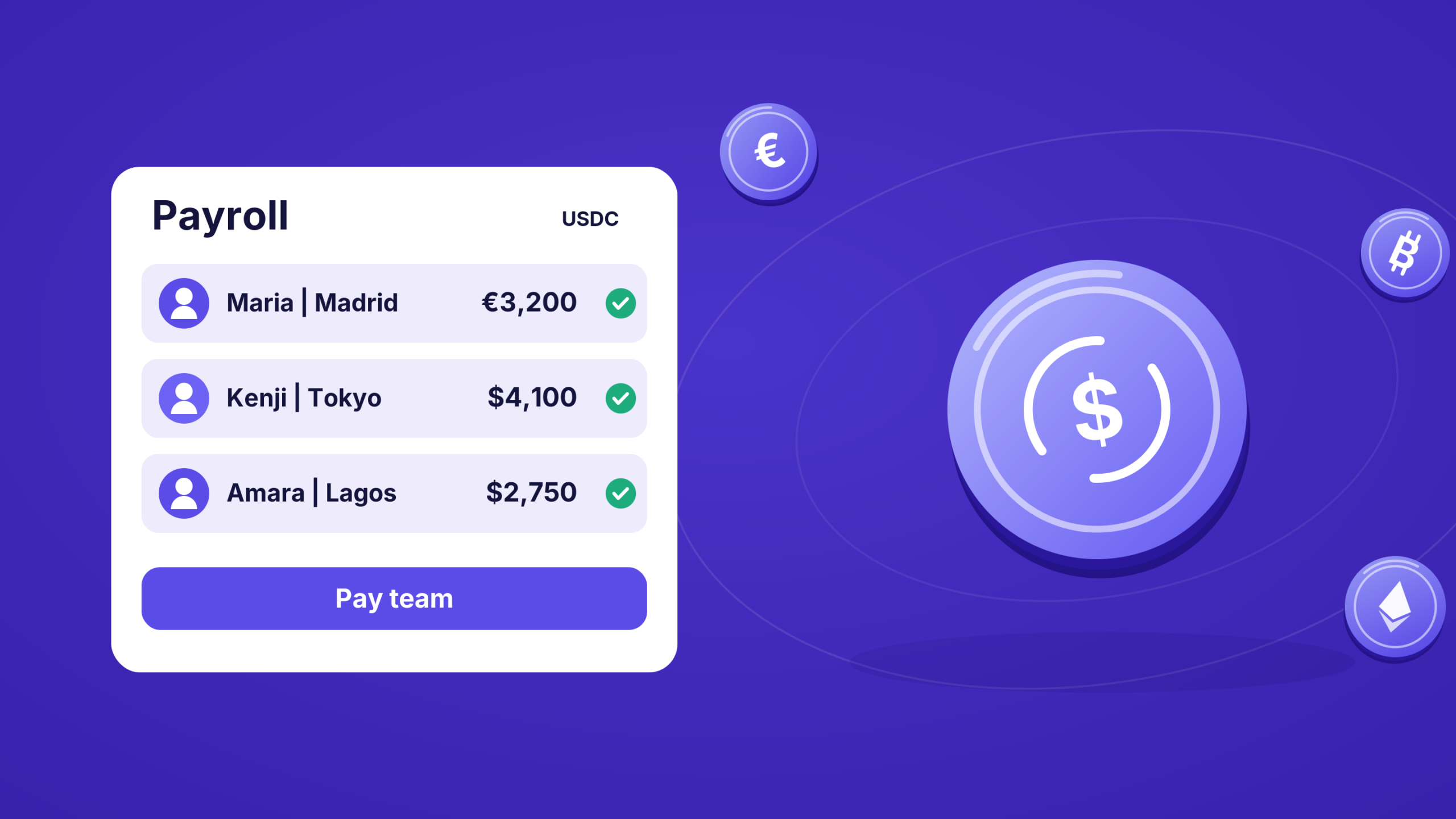
Transfer the required USDC amount from your corporate treasury to the designated payroll wallet. Ensure the transfer covers both employee wages and network gas fees. Verify the deposit confirms on-chain before proceeding, as insufficient balances will halt the entire batch.
Cross-reference the employee wallet addresses against your internal HR records. Validate that each address is active and matches the designated recipient. Incorrect addresses cannot be reversed once broadcast, making this the most critical compliance checkpoint.
Input the wage calculations into your payroll software and generate the transaction batch. Submit the batch for multi-signature approval if your treasury requires it. Confirm that the total output matches the funded amount minus network fees.
Broadcast the approved transaction and monitor the blockchain explorer for confirmation. Once confirmed, notify employees that funds have been settled. Retain the transaction hash (TXID) for your tax reporting and audit trail.
Common mistakes in USDC payroll 2026
Stablecoin payroll introduces technical friction that traditional banking systems hide. Employers often underestimate the operational overhead required to process crypto payments correctly. Missing these details can result in failed transactions, unexpected tax liabilities, or stranded funds.
Ignoring network gas fees
USDC transactions require native tokens (ETH, MATIC, AVAX) to pay for gas. If you send USDC without ensuring the recipient holds the corresponding network token, the transaction fails or the employee cannot access the funds. Always budget for gas fees separately from the payroll amount, or use a payroll provider that subsidizes these costs.
Failing to update tax forms
The IRS treats cryptocurrency as property, not currency. Paying in USDC does not exempt you from standard withholding obligations. You must ensure your payroll software correctly reports USDC payments on W-2s and 1099s based on the fair market value at the time of payment. Failure to do so creates significant compliance risks during an audit.
Using unsupported networks
Not all USDC versions are compatible. Sending USDC on the Ethereum mainnet to a wallet expecting USDC on Solana results in lost funds. Verify the supported network for every employee’s wallet address before initiating the batch payout. Stick to widely supported, low-fee networks like Polygon or Arbitrum for routine payroll to minimize costs and delays.
No comments yet. Be the first to share your thoughts!