
How USDC payroll works
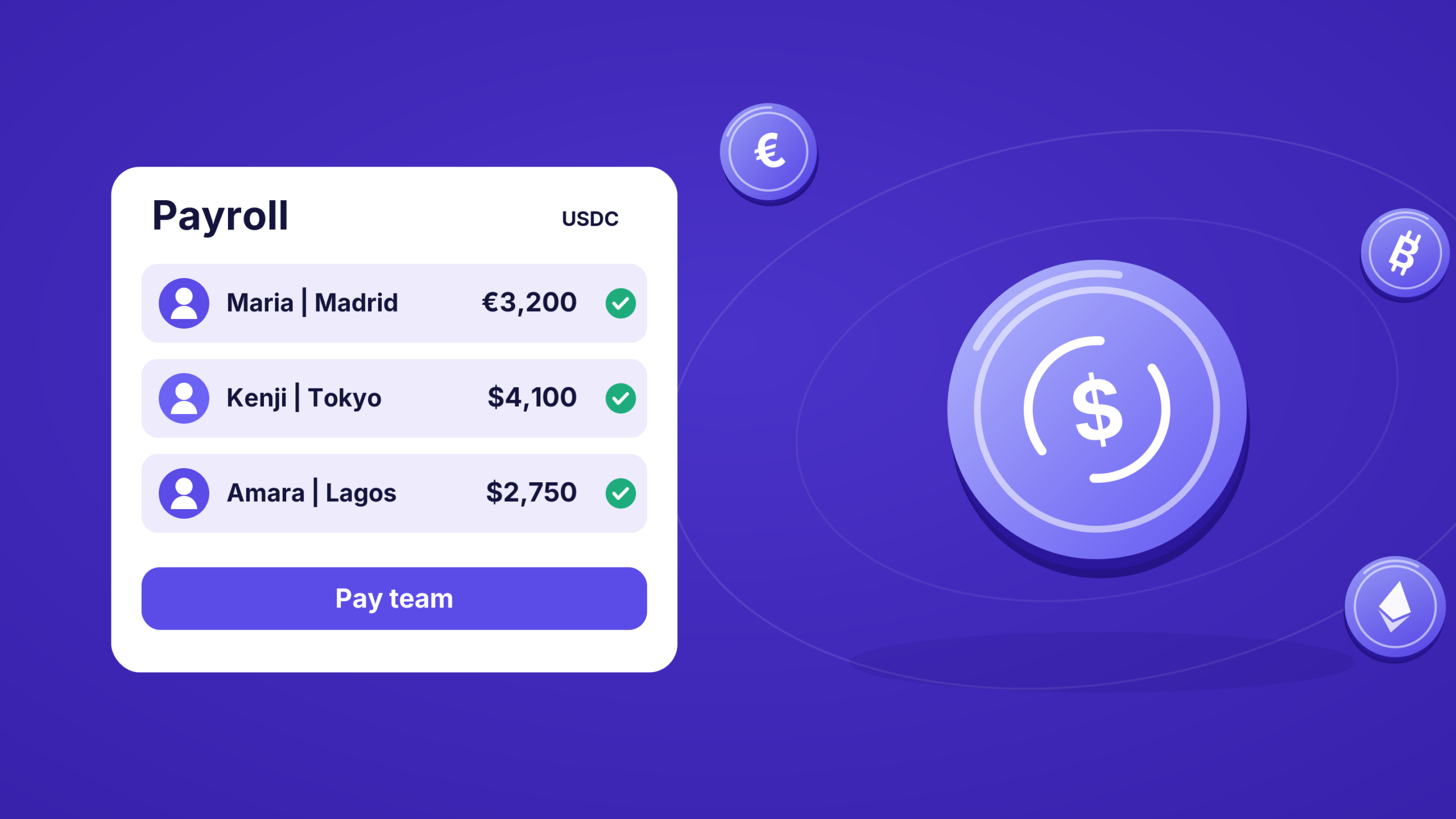
USDC payroll is the process of compensating employees or contractors with USDC, a dollar-pegged stablecoin issued by Circle. Unlike volatile assets like Bitcoin, USDC is designed for predictability, with each token backed 1:1 by US dollars held in regulated financial institutions.
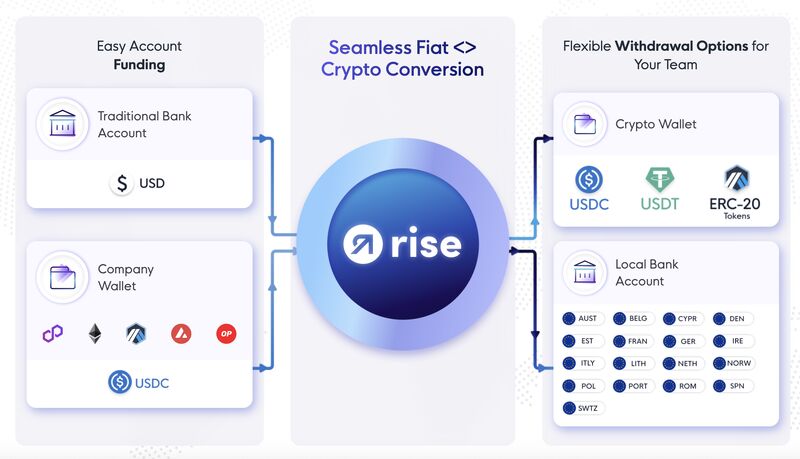
The workflow follows a clear sequence. First, your company converts fiat currency into USDC. Next, you distribute payments directly to your team’s digital wallets via the blockchain. This method bypasses traditional banking rails, offering significantly lower transaction fees and faster settlement times compared to international wire transfers.
Compliance remains a priority. While the speed and cost benefits are clear, you must still handle tax withholding and reporting according to IRS rules. Recent data shows stablecoin payroll adoption is growing, with USDC accounting for 63% of all crypto payrolls in 2024, but regulatory clarity is essential for long-term success.
Choose a compliant payroll provider
Building your own crypto payroll infrastructure from scratch introduces significant legal and operational risk. You must navigate varying tax reporting requirements, employee onboarding compliance, and the technical complexity of stablecoin transactions across borders. Instead of managing these liabilities internally, select a provider that specializes in global payroll and handles the regulatory heavy lifting.
When evaluating providers, focus on three critical capabilities: tax compliance automation, supported countries, and fee structures. A provider that automates tax reporting ensures you remain compliant in each jurisdiction without hiring local counsel for every new hire. Look for platforms that integrate directly with major exchanges like Coinbase to allow funding payroll in USDC, streamlining the cash flow process.
Compare the following options based on their ability to handle these complexities:
| Provider | Tax Handling | Supported Countries | Fees |
|---|---|---|---|
| Deel | Automated compliance | 150+ | ~2% per payment |
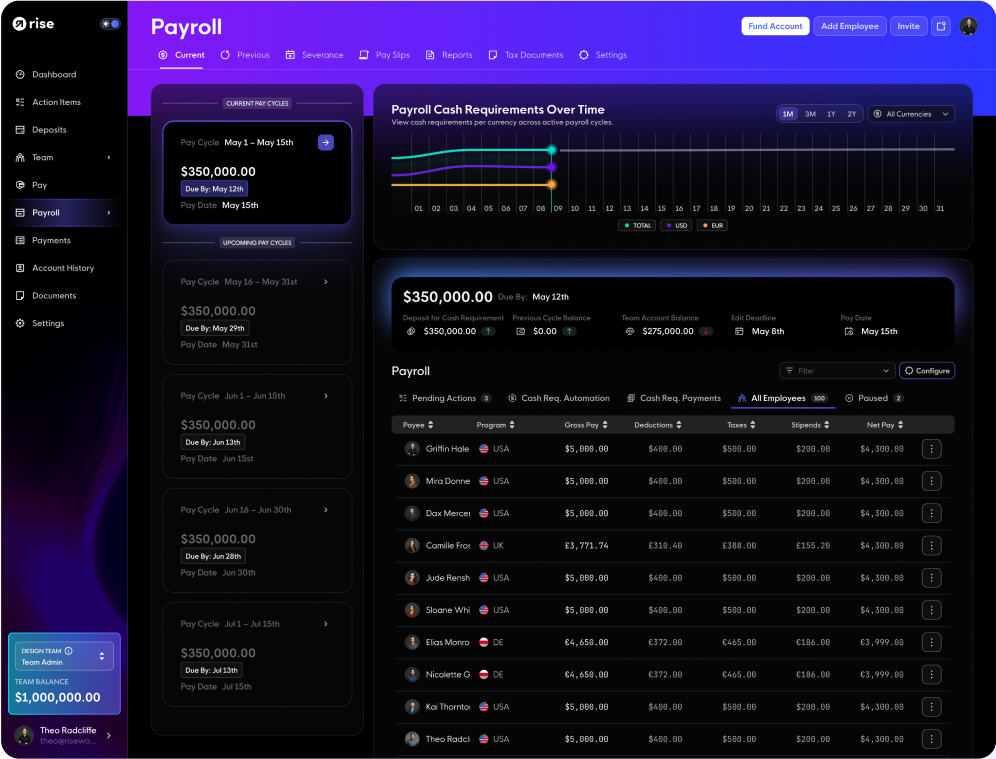
| Rise | Contractor-focused | 100+ | ~1% per payment |
| Toku | Compliance engine | 90+ | ~1.5% per payment |
Deel allows companies to fund payroll directly in USDC via Coinbase, making it a strong choice for teams already holding stablecoins. Rise offers a streamlined onboarding process for contractors, while Toku provides additional features like yield generation on payroll balances and Visa card integration for employees. Ensure your chosen provider supports the specific tax forms required in your employees' countries before committing.
Fund your payroll wallet in USDC
USDC Payroll for Global Teams works best as a sequence, not a scramble through settings. Do the minimum first: confirm compatibility, connect the core hardware, update only when needed, and test the result before adding optional features. That order keeps the task understandable and makes failures easier to isolate. After each step, pause long enough for the interface to finish syncing. Many setup problems are timing problems disguised as configuration problems. If the same step fails twice, record the exact error, restart the smallest affected piece, and retry before moving deeper.

Onboard employees and contractors
USDC Payroll for Global Teams works best as a sequence, not a scramble through settings. Do the minimum first: confirm compatibility, connect the core hardware, update only when needed, and test the result before adding optional features. That order keeps the task understandable and makes failures easier to isolate. After each step, pause long enough for the interface to finish syncing. Many setup problems are timing problems disguised as configuration problems. If the same step fails twice, record the exact error, restart the smallest affected piece, and retry before moving deeper.
Handle tax withholding and reporting
Paying global teams in USDC is not just a treasury operation; it is a tax compliance event. The IRS treats cryptocurrency as property, not currency. This classification means that every payroll disbursement can trigger a taxable event for the recipient and creates a complex reporting trail for the employer.
Treat USDC as Property
Because the IRS views crypto as property, the fair market value of USDC at the exact moment of payment determines the taxable wage amount. You must convert the USDC to USD using a reliable, real-time exchange rate at the time of the transaction. This USD value becomes the basis for calculating withholding taxes, regardless of whether the employee holds the stablecoin or converts it immediately.
Accurate 1099 and W-2 Filing
Your payroll provider must generate accurate tax forms based on the USD value at payment time. For contractors, this means issuing Form 1099-NEC with the correct USD equivalent. For employees, wages must be reported on W-2s reflecting the USD value at the time of payout. Discrepancies between the crypto amount and the USD value can lead to underreporting income, which exposes the company to penalties.
Track Basis and Cost Basis
Employees need to know their cost basis in the USDC they received to calculate capital gains when they eventually sell or swap it. Your payroll system should automatically record the USD value at the time of payment as the employee's cost basis. This ensures that when they move funds to a fiat bank account, they can accurately report any subsequent gains or losses on their personal tax returns.
Document Your Process
Maintain clear records of the exchange rates used and the transaction hashes for every payroll run. This documentation is your primary defense during an audit. If the IRS questions the valuation of your crypto payroll, you need to prove that you used a consistent, reputable source for USD conversion. Stability coins like USDC offer predictability, but the tax treatment remains volatile and strict.
Common USDC payroll mistakes
Even with Circle’s regulated infrastructure, setting up USDC payroll for global teams requires careful attention to operational details. A single misstep in configuration can lead to lost funds, compliance violations, or frustrated contractors. The following errors are the most frequent pitfalls in stablecoin payroll implementation.
Choosing the wrong network
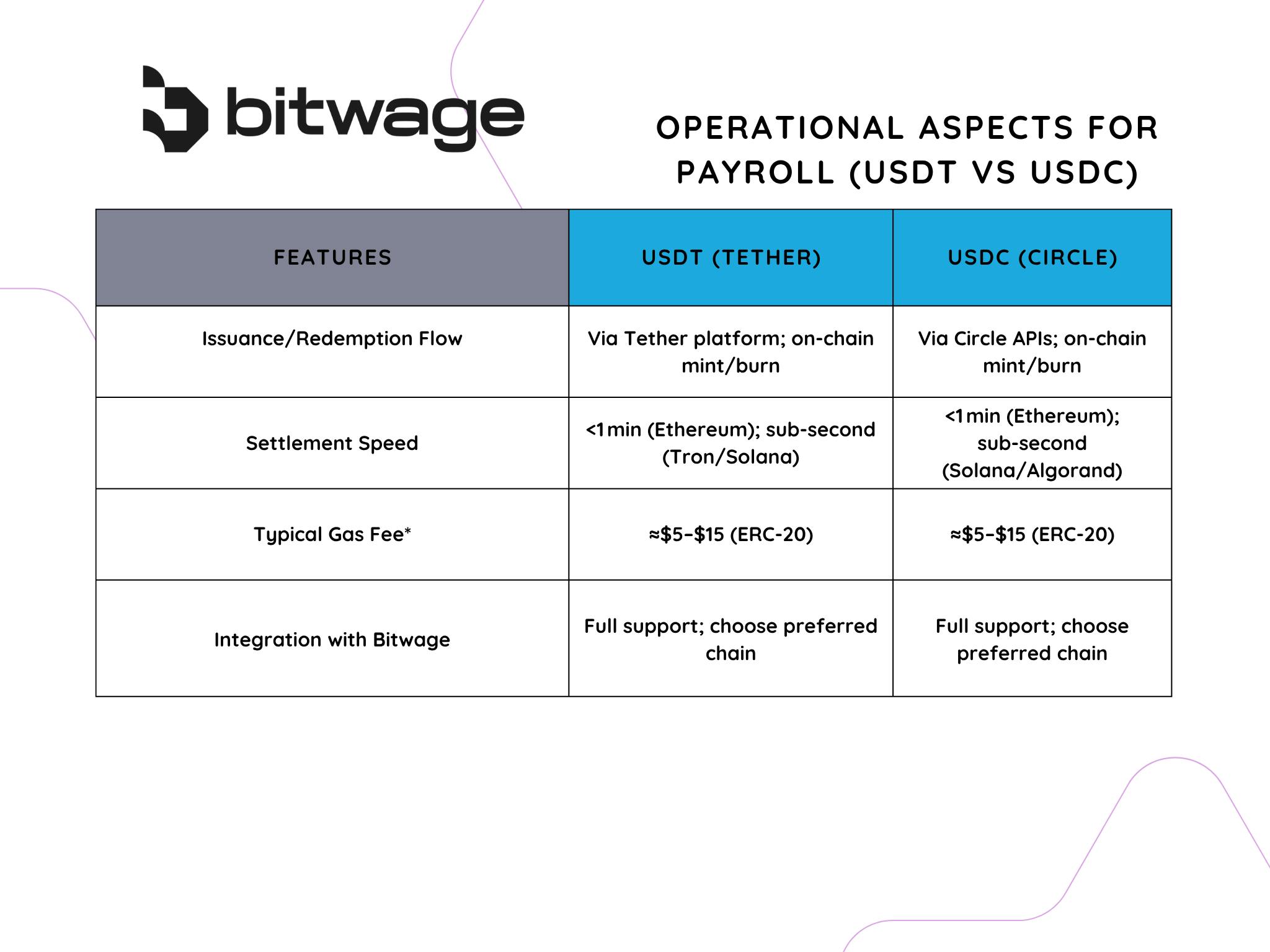
Sending USDC on an incompatible blockchain is the most common technical error. USDC exists on multiple networks, including Ethereum, Solana, Polygon, and Avalanche. If your payroll provider supports only specific chains, sending payments on an unsupported network will result in lost funds. Always verify the supported network list in your provider’s documentation before initiating bulk payouts.
Ignoring gas fees
Network transaction fees (gas) vary significantly by chain and network congestion. On Ethereum, fees can sometimes exceed the value of small contractor payments. Always account for gas fees when budgeting payroll. Some providers offer fee subsidies or use Layer 2 solutions like Polygon to minimize costs, but you must configure these settings explicitly.
Overlooking local labor laws
Compensating workers in cryptocurrency is illegal or heavily restricted in several jurisdictions. In the United States, the IRS treats cryptocurrency as property, meaning each payment triggers a taxable event. In the European Union, MiCA regulations impose strict requirements on stablecoin issuers and users. Consult legal counsel in every country where you hire to ensure compliance with local tax and labor laws.
No comments yet. Be the first to share your thoughts!